

Standard Qualification for the M4

M4 Qualification Standards We are going to start a discussion on qualification standards. Specifically, we are going to address what the standard is for qualification with the M4. The references for this is TC 3-22.9, change 1 dated January 2017. When the ALT-C Course Applies Appendix F of TC 3-22.9 Change 1 states that “The … Read more

Rates of Fire for the M4 and M4A1

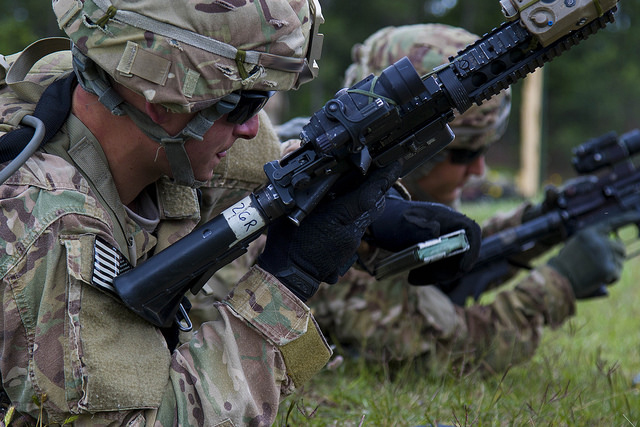
We are continuing our discussion on control. Specifically we will be addressing the rates of fire for the M4 and M4A1 platforms. The Reference for this discussion is TC 3-22.9 Change 1 dated January 2017. The Three M4 and M4A1 Rates of Fire The Paratrooper needs to determine what rate of fire meets the needs … Read more

Fire Control for Machine Guns

We are continuing our discussion on Fire control for machine guns. Specifically, we are addressing what fire control is, and what methods are available to the Paratrooper. The reference for this discussion is ATP 3-21.8 dated April 2016. Fire control includes all the actions the Paratrooper does in planning, preparing, and applying fire on a … Read more

Aimpoint T-1 Pistol Mounting: Historical Reliability Lessons

Historical equipment note: This article documents failures involving older Aimpoint Micro T-1 sights mounted to reciprocating pistol systems in 2016–2017. It does not establish compatibility or reliability for current Aimpoint products, mounts, or pistols. Confirm present guidance with the optic and mount manufacturers.

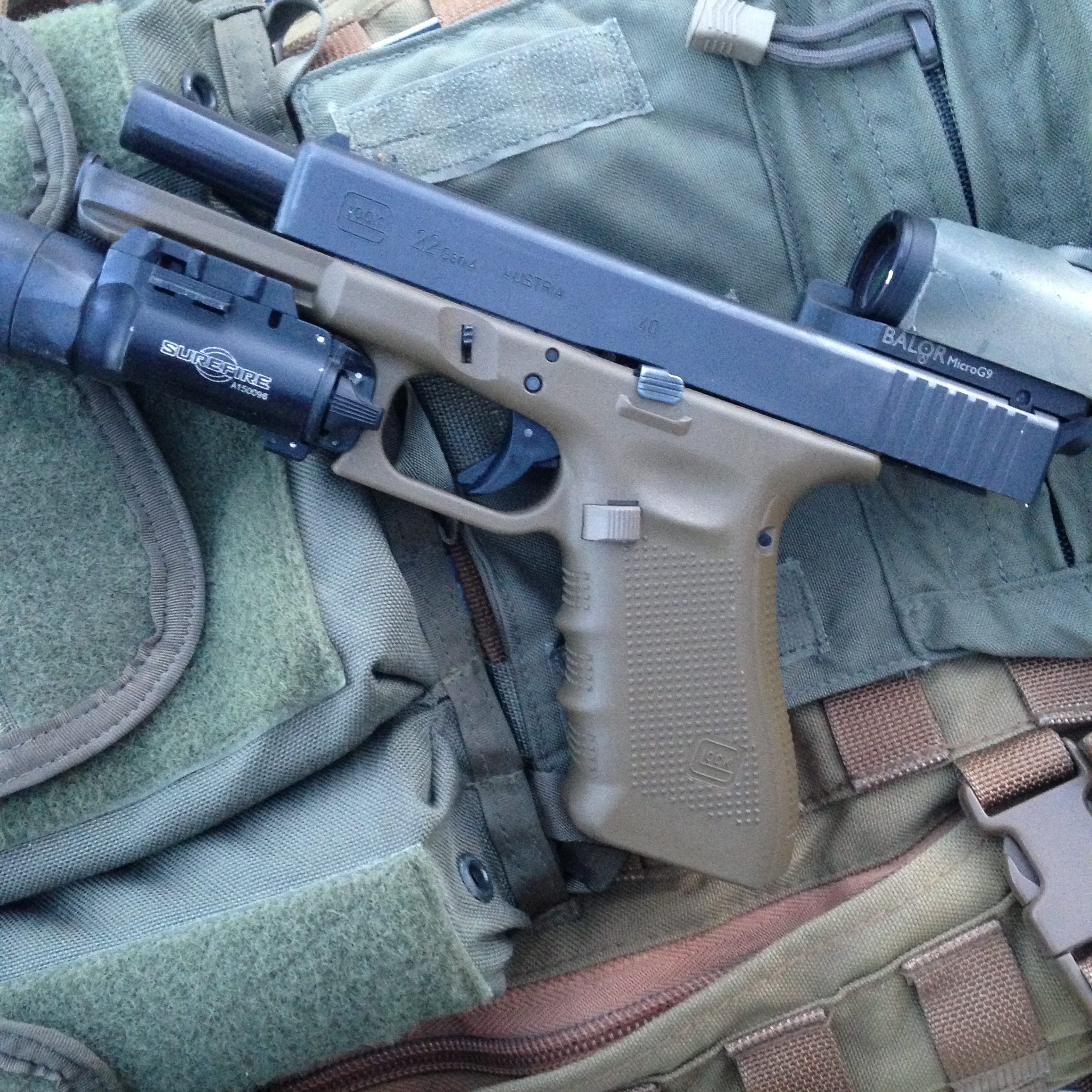
After moving to a red-dot-equipped Glock, I mounted a well-used, pre-2009 4-MOA Aimpoint T-1 on an ALG Defense 6 Second Mount fitted to a Gen 4 Glock 22. Roughly 100 rounds into learning the setup, the dot disappeared. Aimpoint replaced the older sight with a newer 2-MOA T-1 under warranty.

Aimpoint Micro sight mounted to a Glock pistol using an ALG Defense 6 Second Mount

Another older 4-MOA T-1 ran temporarily without trouble. Later, that sight was installed on a test example of the Raven Concealment Systems Balor mount on the same pistol. After approximately 200 rounds, its dot or adjustment assembly failed as well. Aimpoint again handled the warranty service promptly.

The battery-contact observation

During the subsequent discussion, Aimpoint advised that multiple older T-1 sights had failed in pistol-mounted use, although the information available did not prove that slide or pistol mounting was the sole cause. The visible distinction discussed at the time involved the battery contact.

An older example used three raised contact points on the copper disc:
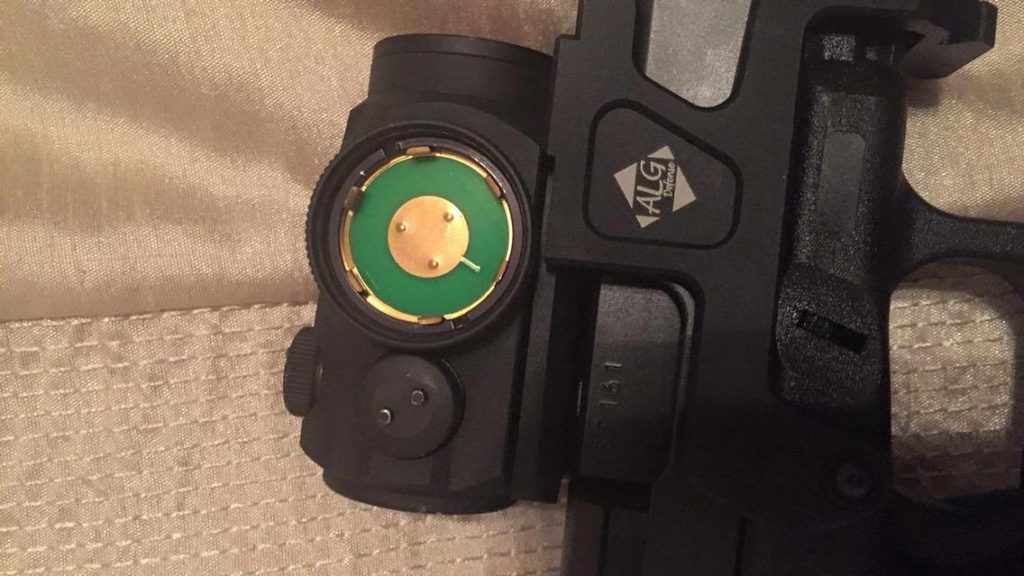
Older Aimpoint T-1 battery contact with three raised contact points

A later-production example used a greater number of smaller contact points:
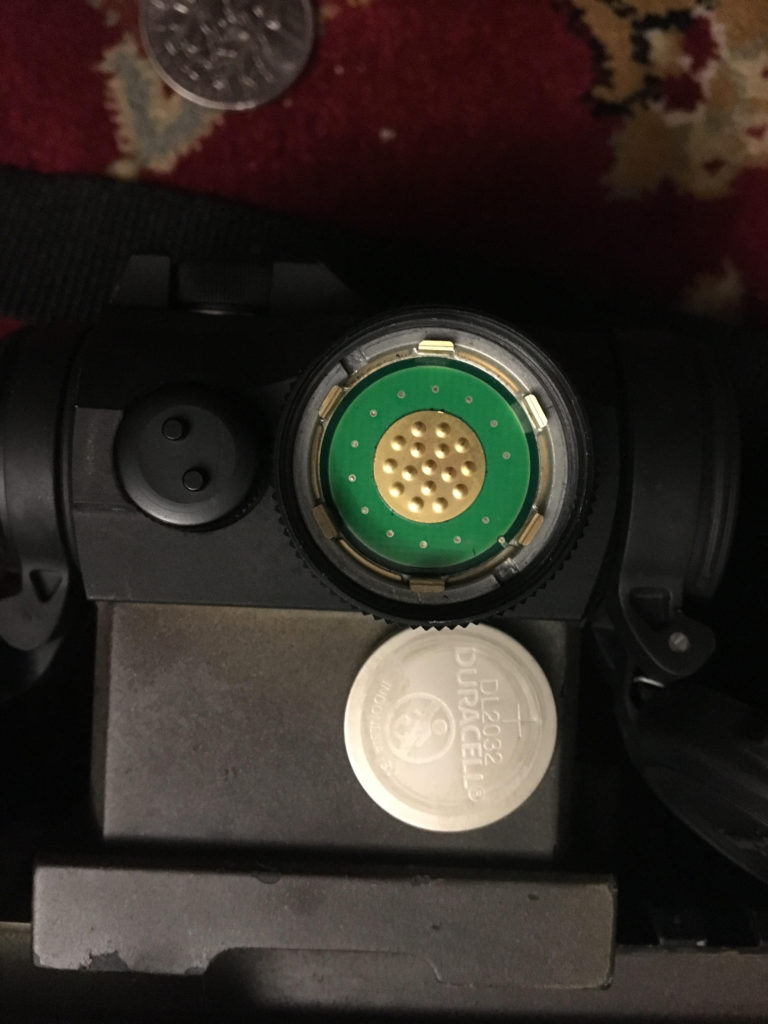
Later Aimpoint T-1 battery contact with multiple raised contact points

Production date and dot size were not reliable substitutes for inspecting the actual sight; existing inventory could remain in distribution after a production change.

Lessons for unusual optic applications

  • Verify that the optic and mount are intended for the recoil environment and installation method.
  • Follow current torque, fastener, thread-locking, and inspection guidance.
  • Establish a live-fire test and record round count and failures.
  • Check battery contacts, brightness controls, mount movement, zero, and intermittent operation.
  • Do not generalize from an old model to a current product without current manufacturer evidence.

This remains useful as a record of early experimentation with large-format enclosed optics on pistols. Current buyers should use the Optics and Red Dots Hub and manufacturer documentation for present options.

More Zeroing With Boresight

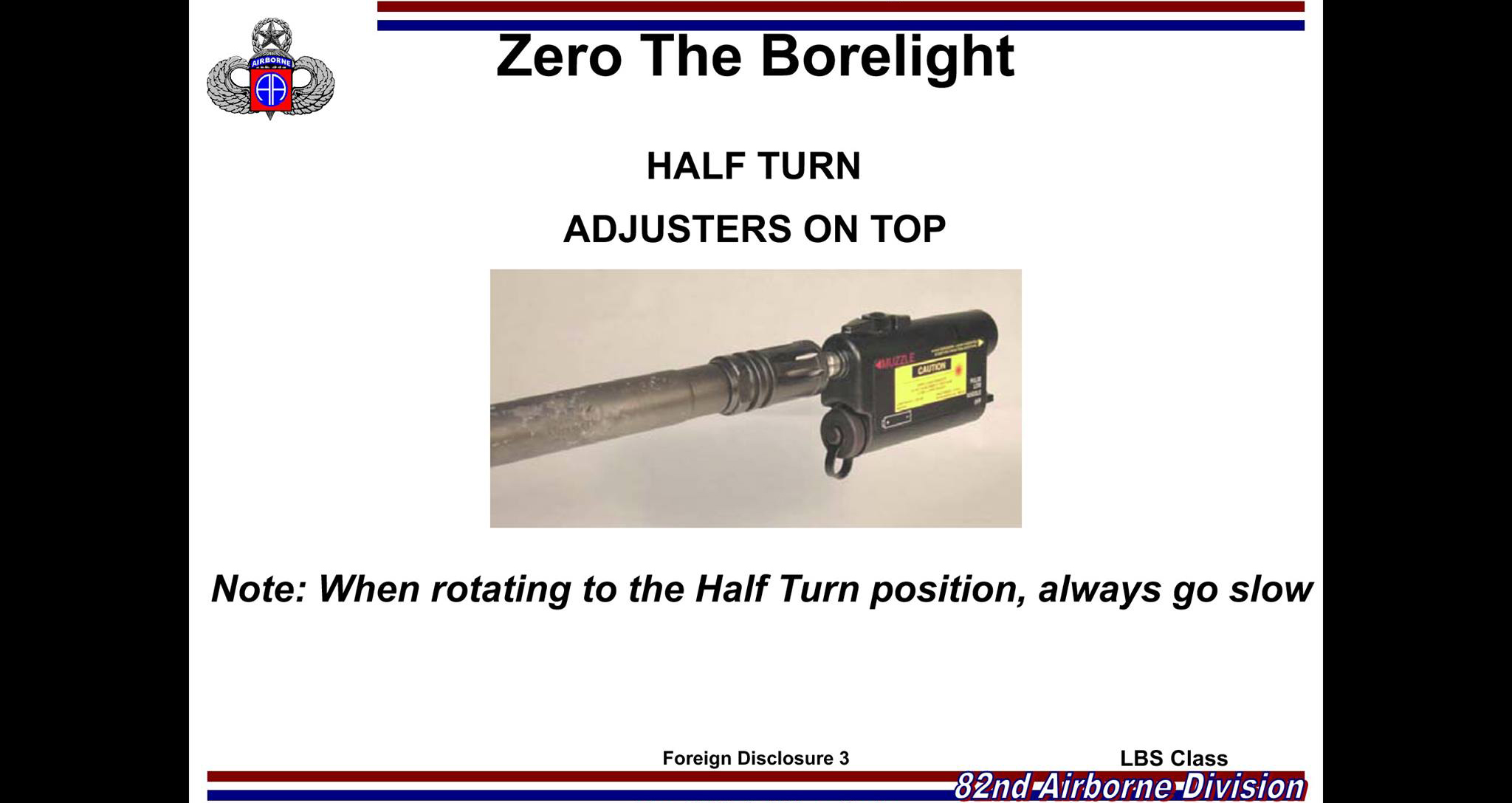
We are going to continue our discussion on the Laser Boresight. Specifically, we are going to talk about how to zero the enabler with a zeroed LBS. The reference for this is TM 9-5860-226-13&P dated August 2007. To learn how to zero the Laser Boresight, and why it is important to do this, reference the … Read more

Follow Up on TC 3-22.9

A year ago, we finished the last edits on the TC 3-22.9 that published in May of 2016. For those that have taken the time to read this book, you know it’s very different than the books we have used since the 1970’s.  For those that haven’t, this post will hold less value because you … Read more

How To Zero The Laser Boresight To A Weapon

Zeroing a Laser Boresight to a Weapon We’re going to do a talk through on how to zero the laser boresight to a weapon. If you have any questions on what this piece of kit is, and why it is important, check our TTP post from before. What the Laser Boresight Does The Laser Boresight … Read more

The Do Everything Carbine

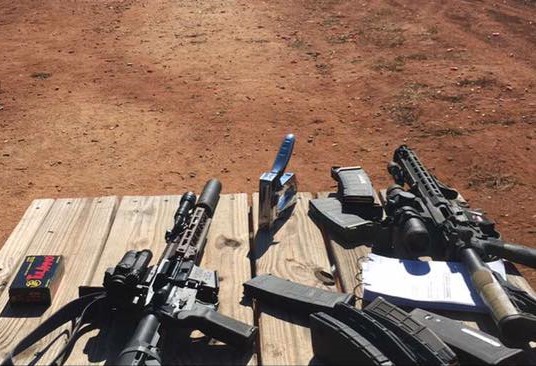
We see rifles set up for Close Quarte Battle (CQB), Designated Marksman (DM), Special Purpose Rifle (SPR), General Purpose (GP) and a myriad of other acronyms. While I fully support building of fine firearms, I just wanted to talk about a Do Everything carbine. First off, we must look at our application of the rifle. … Read more

Why PMAGs Are Better Than Aluminum USGI Mags

This subject is currently at some higher levels and I put this together to give some end user perspective. I’ve been involved with PMAGs since almost the beginning and I have not found another magazine which meets my requirements or that I trust unequivocally, like the PMAG. The below is an attempt to describe why … Read more