
Doctrine note: This article explains ammunition-planning principles. Current weapon manuals, service doctrine, mission orders, logistics guidance, and unit SOP control actual rates, quantities, barrel-change requirements, and employment.
Machine-gun ammunition planning connects the fire-support plan to what gun teams can realistically carry, sustain, control, and resupply. It should begin during mission analysis—not after the support-by-fire position is occupied.
Start with the mission and weapon
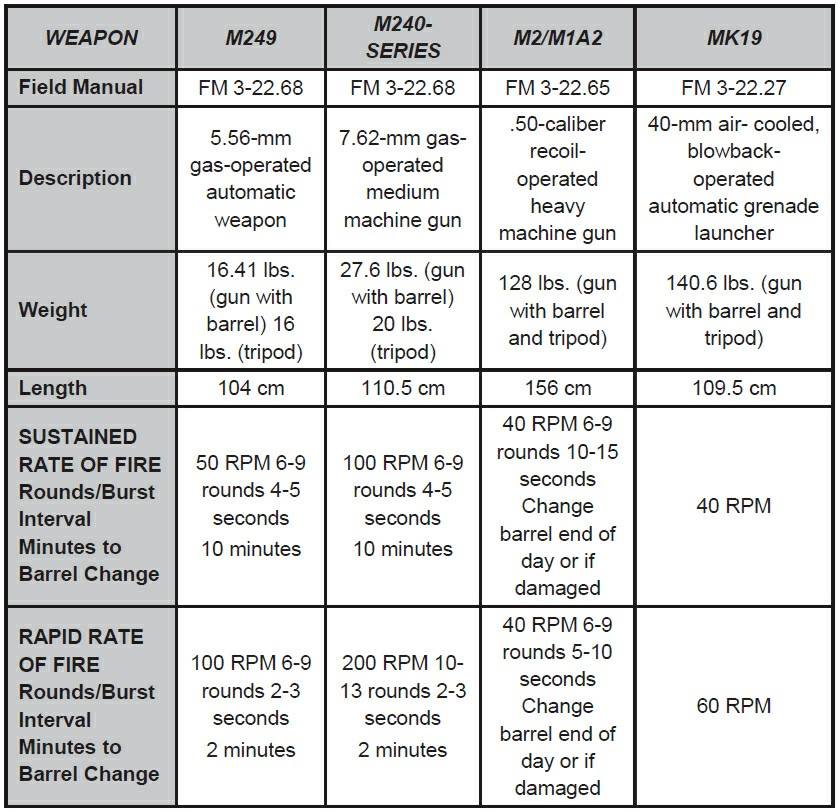
Planners need the current doctrinal rates of fire, ammunition configuration, barrel and equipment requirements, expected engagement distances, and the weapon’s role in each phase. A generic rounds-per-minute figure is not enough because practical expenditure depends on burst length, interval, duration, target, visibility, control, and changes in rate.
Identify ammunition-consuming events
Break the operation into events rather than applying one total to the entire mission. Examples may include establishing fires, maintaining suppression, shifting, lifting, engaging a priority target, displacing, consolidating, and retaining ammunition for contingencies.
For each event, identify:
- which gun or guns fire;
- the planned rate and method of control;
- the expected duration or trigger for transition;
- the ammunition type required;
- the amount carried at the gun and elsewhere;
- the resupply method and timing; and
- the minimum reserve needed for later tasks.
Check weight, distribution, and resupply
A mathematically sufficient quantity may still be impractical if it cannot be carried, accessed, protected, or redistributed. Assign ammunition across gun teams and supporting personnel deliberately, account for packaging and linked configuration, and plan how expenditure will be reported.
Resupply requires a route, responsible personnel, timing, communications, and a method that does not compromise the position or interrupt essential fires.
Reconcile the plan
Add the requirements for all planned events, compare them with ammunition on hand, then adjust the fire plan, distribution, resupply, or request. Include training or mission-specific allowances required by current guidance, but do not substitute expenditure for effects.
- Confirm current weapon data and doctrine.
- Map events and fire-control measures.
- Calculate by gun, event, and ammunition type.
- Compare the requirement with carry and resupply capacity.
- Protect an appropriate reserve.
- Brief transition and reporting criteria.
- Reassess as the mission changes.
The purpose of ammunition planning is controlled, sustainable support—not firing as much as possible. Good planning ensures that the guns can produce the required effect at the decisive time and still support what happens next.
Related: Machine-Gun Classes of Fire Explained.