







Historical equipment note: This article documents failures involving older Aimpoint Micro T-1 sights mounted to reciprocating pistol systems in 2016–2017. It does not establish compatibility or reliability for current Aimpoint products, mounts, or pistols. Confirm present guidance with the optic and mount manufacturers.
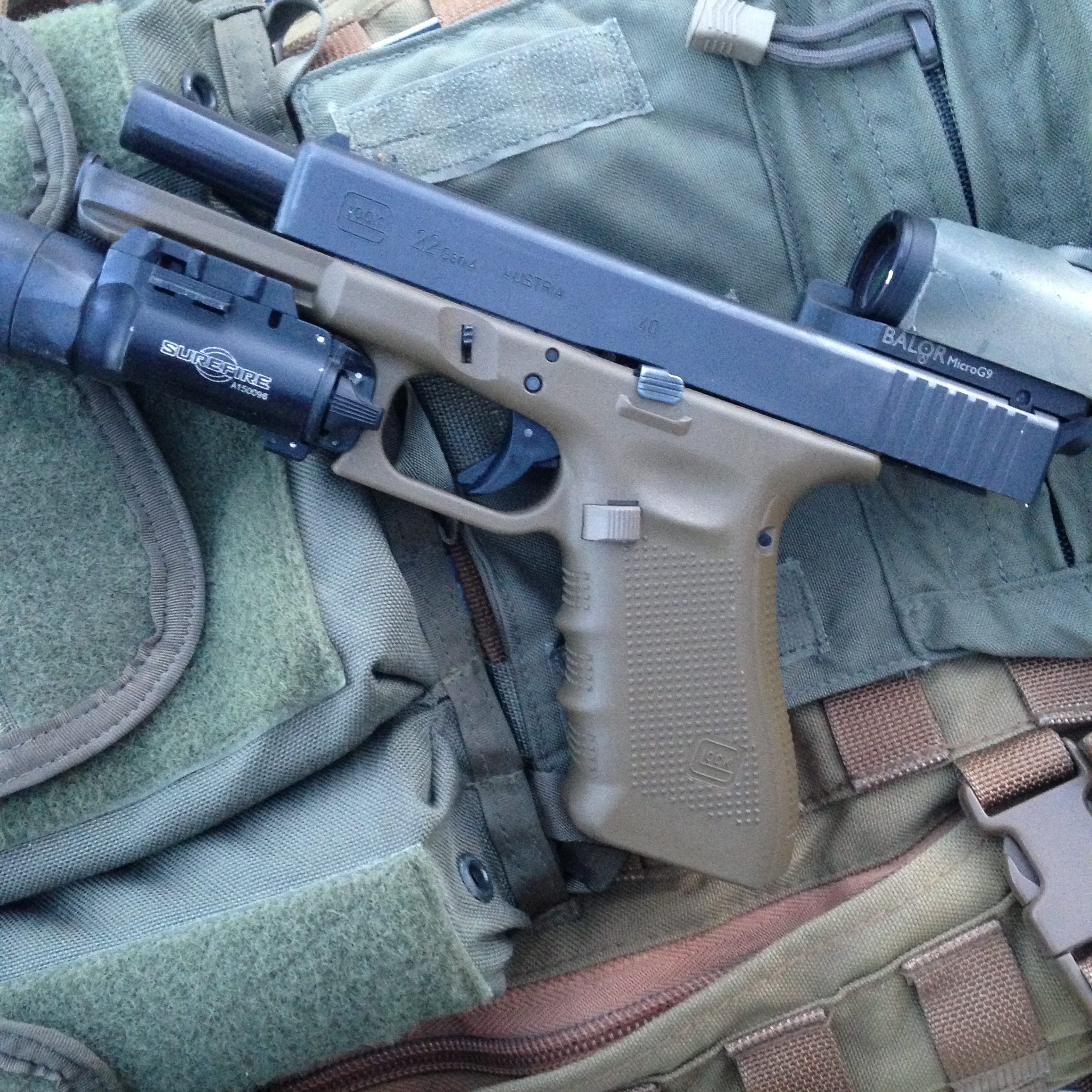
After moving to a red-dot-equipped Glock, I mounted a well-used, pre-2009 4-MOA Aimpoint T-1 on an ALG Defense 6 Second Mount fitted to a Gen 4 Glock 22. Roughly 100 rounds into learning the setup, the dot disappeared. Aimpoint replaced the older sight with a newer 2-MOA T-1 under warranty.

Another older 4-MOA T-1 ran temporarily without trouble. Later, that sight was installed on a test example of the Raven Concealment Systems Balor mount on the same pistol. After approximately 200 rounds, its dot or adjustment assembly failed as well. Aimpoint again handled the warranty service promptly.
The battery-contact observation
During the subsequent discussion, Aimpoint advised that multiple older T-1 sights had failed in pistol-mounted use, although the information available did not prove that slide or pistol mounting was the sole cause. The visible distinction discussed at the time involved the battery contact.
An older example used three raised contact points on the copper disc:
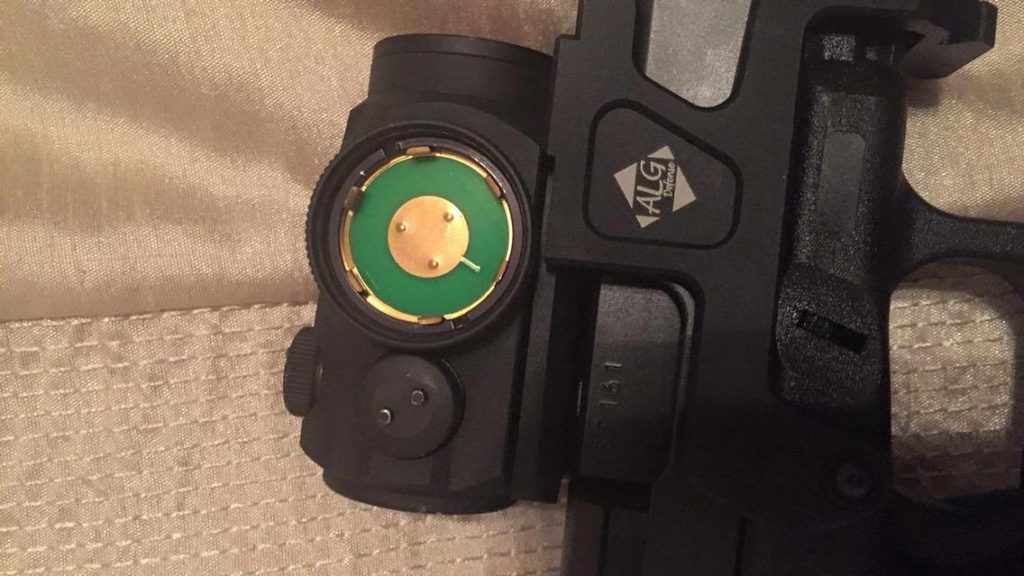
A later-production example used a greater number of smaller contact points:
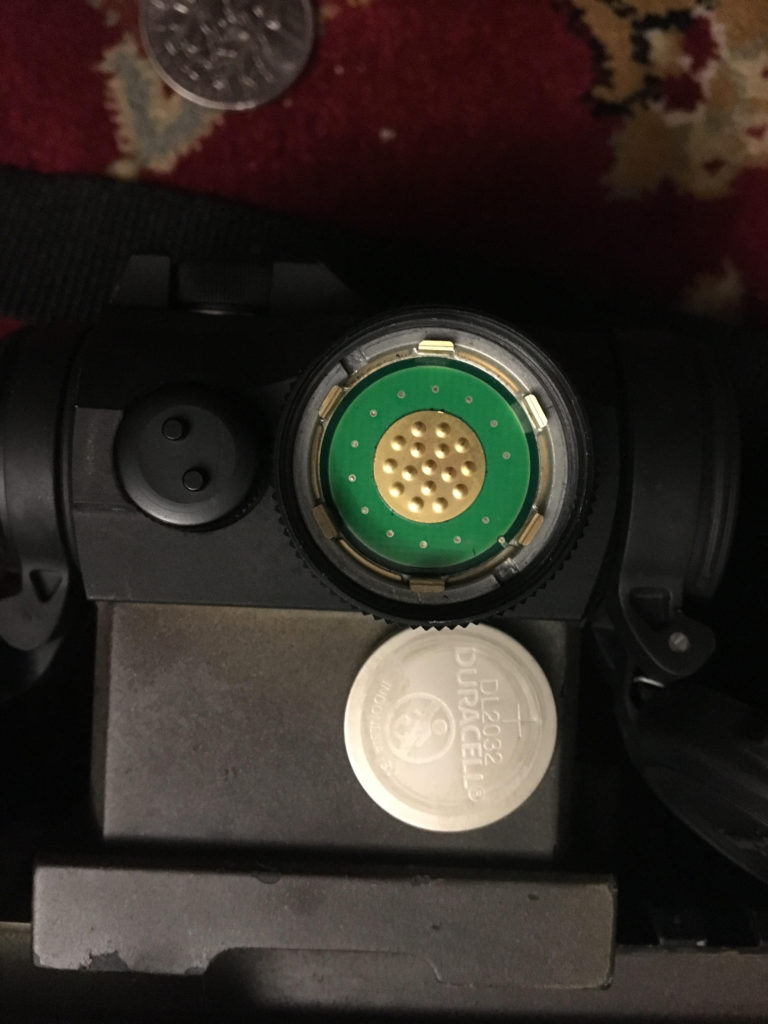
Production date and dot size were not reliable substitutes for inspecting the actual sight; existing inventory could remain in distribution after a production change.
Lessons for unusual optic applications
- Verify that the optic and mount are intended for the recoil environment and installation method.
- Follow current torque, fastener, thread-locking, and inspection guidance.
- Establish a live-fire test and record round count and failures.
- Check battery contacts, brightness controls, mount movement, zero, and intermittent operation.
- Do not generalize from an old model to a current product without current manufacturer evidence.
This remains useful as a record of early experimentation with large-format enclosed optics on pistols. Current buyers should use the Optics and Red Dots Hub and manufacturer documentation for present options.