
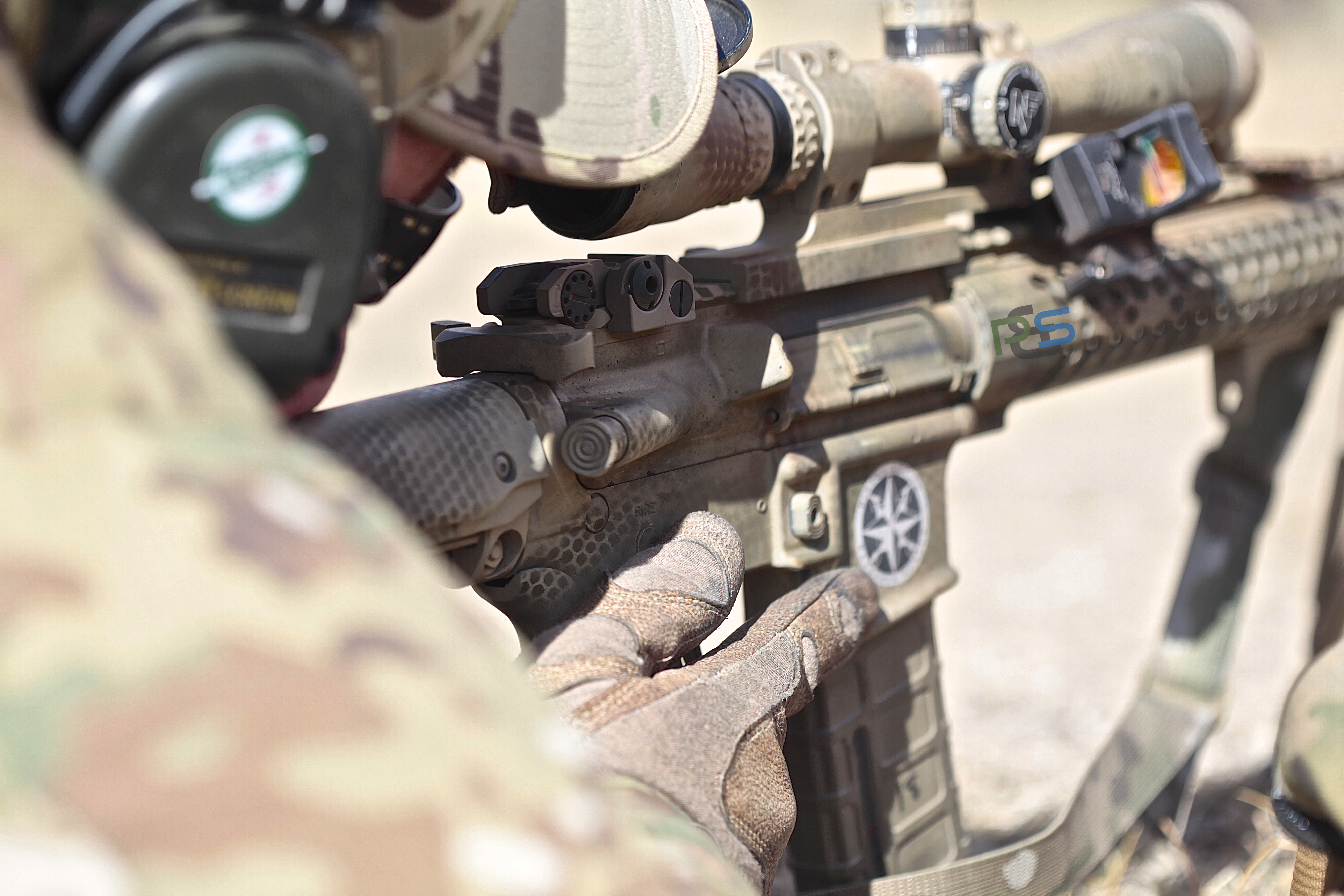
Low-power variable optics combine a low magnification setting for close and intermediate work with additional magnification for identification, observation, and more precise aiming at distance. Common ranges have expanded since this article first appeared in 2017, but the central tradeoffs remain.
What an LPVO offers
At its lowest setting, a well-designed LPVO can support rapid, both-eyes-open use. Increased magnification helps the shooter see smaller targets, refine holds, and gather information that a nonmagnified sight cannot provide.
Magnification does not remove the need for a stable position, correct zero, target identification, or knowledge of trajectory. It makes more detail visible and can make aiming error easier to see.
First- and second-focal-plane reticles
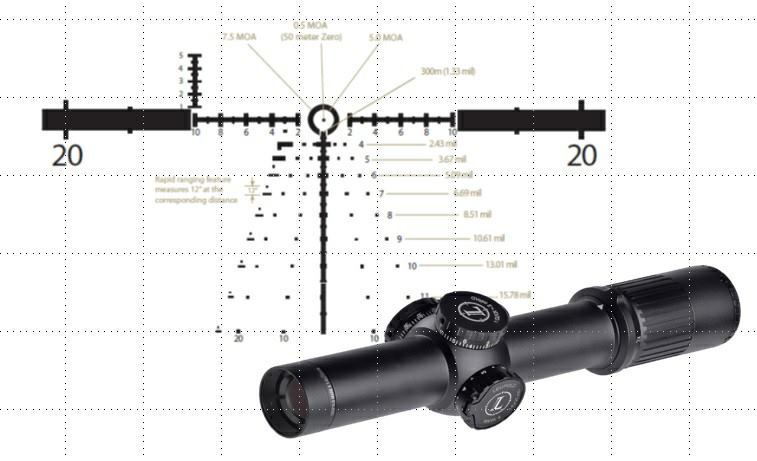
In a first-focal-plane optic, the reticle changes apparent size with magnification, so correctly designed subtensions remain valid throughout the magnification range. At low power, fine details may become difficult to see; illumination and reticle design therefore matter.
In a second-focal-plane optic, the reticle remains the same apparent size. Its ranging or holdover subtensions are normally accurate at a specified magnification. This can make the reticle bold and visible at low power, but the user must know when the hold marks are valid.
Important tradeoffs
- Weight and size: optic, mount, and accessories add mass to the rifle.
- Eye box and eye relief: head position is less forgiving than with most red-dot sights.
- Illumination: brightness, battery life, and reticle visibility vary widely.
- Controls: magnification changes require time and may benefit from a throw lever.
- Durability: mechanical complexity and mounting quality matter.
- Reticle: overly complex designs can obscure information; overly simple designs may lack useful references.
Evaluate the complete system
Select magnification, focal plane, reticle, mount height, and zero around the rifle’s actual role. Confirm performance from realistic positions and equipment, at low and high magnification, in bright and reduced light, and at the distances where holds matter.
An LPVO can broaden a general-purpose rifle’s capability, but it is not automatically the best answer for every user. The decision should balance observation and precision against weight, speed, eye-position demands, and training time.
Related: Optics and Red Dots Hub.