
Originally recorded December 7, 2016. This archival episode returns with a new introduction and sponsor acknowledgments. Equipment references, course schedules, and personal updates in the original conversation reflect that period.
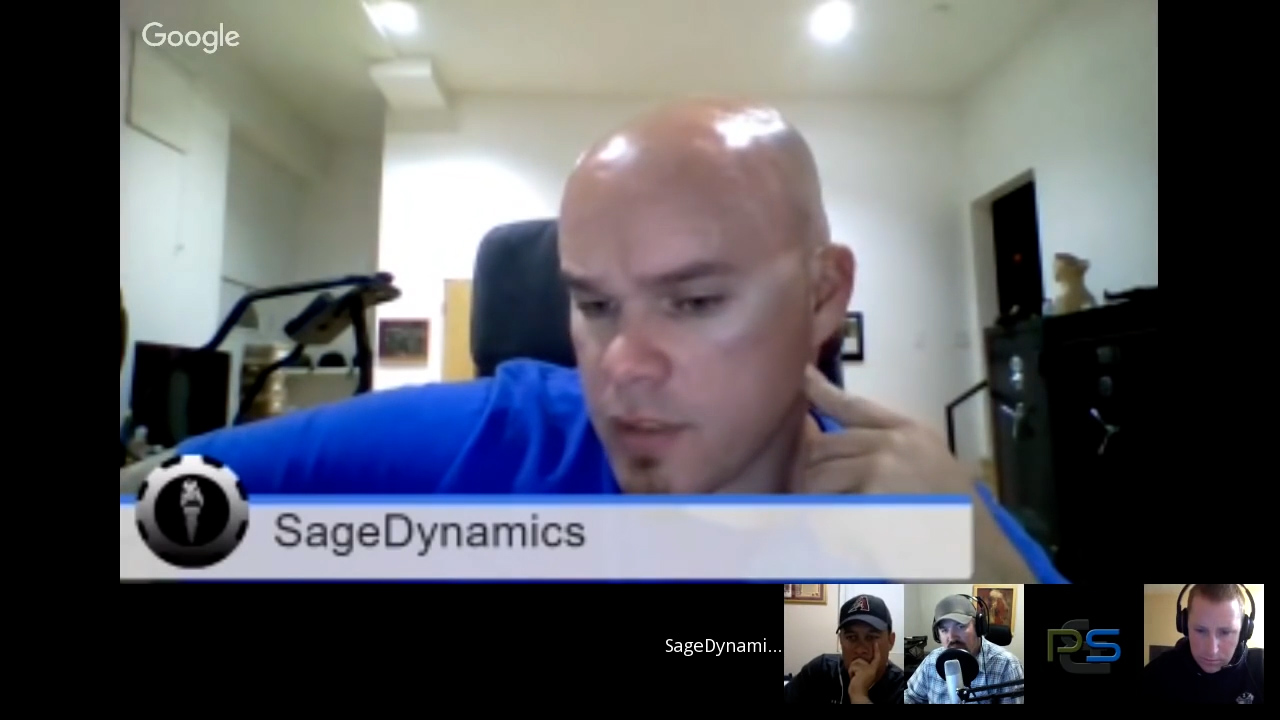
P&S ModCast 76 features Aaron Cowan of Sage Dynamics in a wide-ranging discussion about defensive firearms instruction, pistol red dots, developing shooting skill, and the responsibility that comes with teaching others. Hosted by Matt Landfair, the conversation brings together military, law-enforcement, competition, and firearms-industry perspectives.
The recurring question is why. Why teach a technique? Why choose a particular piece of equipment? What does a drill actually measure, and how does that result relate to the situation a student is preparing for? Across more than three hours, the panel examines how better explanations, honest feedback, and a willingness to reconsider established habits can improve both individual performance and training programs.
Listen to P&S ModCast 76
P&S ModCast 76 — Aaron Cowan on Spreaker
Runtime: 3 hours, 4 minutes, 32 seconds.
Host and panel
Host: Matt Landfair
- Aaron Cowan — Sage Dynamics
- Scott Jedlinski
- Tim Herron
- Rick Labistre
- Adrian O.
- Matt W.
- Steven A.
- Adam Pini
- Matt Meckley
Episode sponsors
- Blue Alpha Belts — everyday-carry, duty, and range belt options.
- High Desert Cartridge — rifle, pistol, and revolver ammunition.
- PHLster educational content — concealed-carry education through the PHLster YouTube channel and the PHLster Concealment Workshop on Facebook.
Help support these conversations through Primary & Secondary on Patreon, and continue the discussion in the P&S forum.
Listening guide
Approximate timestamps refer to this audio release, including the new introduction and sponsor ads.
- 00:00 — New introduction and episode sponsors
- 01:34 — Original opening and panel introductions
- 08:01 — Cowan’s background and instructional approach
- 12:25 — Evidence, technology, and resistance to change
- 17:20 — Jedlinski’s FAST coin experience and pistol optics
- 28:48 — Presentation, visual focus, and finding the dot
- 35:32 — Sage Dynamics courses and defensive training priorities
- 43:56 — Target accountability and force-on-force training
- 48:55 — Pistol accuracy, reliability, and personal experience
- 55:00 — Military and policing stories
- 1:16:46 — Dot size, brightness, and low-light limitations
- 1:21:27 — Learning with optics and the “irons first” question
- 1:30:00 — Institutional handgun training and resource planning
- 1:45:00 — Herron joins; sight use, fundamentals, and speed
- 2:02:08 — Competition classifications and consistent execution
- 2:24:22 — Research, questions, and sharing knowledge
- 2:41:01 — Compensated pistols and Roland Special configurations
- 2:46:36 — Shot timers, disagreement, and changing one’s mind
- 2:59:21 — Supported law-enforcement training and closing remarks
Aaron Cowan and the approach behind Sage Dynamics
Cowan describes his progression through military service, contracting, federal law enforcement, and training assignments before moving into full-time instruction with Sage Dynamics. His account provides context for an approach that considers both the physical act of shooting and the demands of making decisions under pressure.
He also explains why he views other capable instructors as colleagues. The knowledge in a training program comes from many people, and an instructor can help a student by explaining an alternative even when it is not the instructor’s preferred method. For Cowan, teaching includes explaining the reasons behind a technique, acknowledging its limits, and giving students enough information to evaluate it.
Pistol red dots and learning to see more
Pistol-mounted red dots occupy a substantial part of the episode. The panel addresses the resistance surrounding their adoption, comparisons with the earlier adoption of rifle optics, and the difference between testing a technology and dismissing it because it is unfamiliar.
Scott Jedlinski shares his experience using an optic-equipped carry pistol and pursuing a FAST coin in an Ernest Langdon class. His account connects a measurable performance goal with practice, pressure, and the equipment he actually carries. The discussion also recognizes that an accomplishment on a range demonstrates a particular set of skills; it does not establish every capability needed for a defensive encounter.
The panel describes how a red dot can make movement and errors more visible during live fire and dry practice. That feedback can help shooters recognize problems with presentation, grip, and trigger control. It can also expose the difference between an equipment problem and a performance problem.
Several participants discuss the transition from irons to an optic, including the habit of looking down at the gun during presentation and the difficulty of acquiring the dot consistently. Cowan explains how observing a student’s eyes helped identify a problem that would have been easy to mistake for an equipment limitation.
A central distinction runs through the conversation: clearer visual information can help a shooter learn and perform, but it does not supply the underlying skill. An optic does not correct an inconsistent grip or trigger press by itself. The panel also challenges the idea that a shooter must reach an arbitrary level with irons before being allowed to benefit from a red dot, while recognizing the value of understanding backup sights.
Dot size, brightness, and the complete sighting system
The optics discussion extends to dot size, brightness controls, backup-sight placement, and performance in different lighting conditions. Cowan and Jedlinski describe different preferences and the experiences behind them, rather than presenting one dot size as a universal answer.
The panel also discusses the limitations they encountered with automatic brightness adjustment, particularly when lighting changes or a weapon light affects the scene. These observations concern the equipment they were using at the time. The broader issue is evaluating the complete sighting system under the conditions in which it will be used.
Optics on marking-cartridge training pistols receive attention as well. The conversation considers whether a student’s training equipment allows practice with the same visual approach used on the carry gun, while acknowledging the accuracy and operating limits of those systems.
Defensive training requires decisions and accountability
Cowan outlines the citizen and law-enforcement courses he was teaching, including handgun, rifle, low-light, vehicle-defense, and force-on-force programs. His stated focus is self-defense, with marksmanship serving as one part of a larger task.
The discussion addresses preparation for class, safe handling, and the difference between owning a firearm for years and arriving with usable skills. It also considers how training priorities relate to likely problems without ignoring less common situations that still demand competence.
Cowan describes using target depth, angles, and three-dimensional representations to make students account for more than a scoring area on flat paper. Identifying the relevant target, recognizing people who should not be shot, and considering what lies beyond the target all belong in the exercise. Force-on-force training adds uncertainty and interaction, while retaining artificialities that instructors need to recognize.
Law-enforcement response training raises another contextual issue: the manpower and backup assumptions built into a course. Cowan discusses the needs of officers whose nearest assistance may be minutes away, rather than assuming that every agency can immediately assemble a team.
Sight use, speed, and the foundation beneath performance
When Tim Herron joins the discussion, the panel examines point shooting, target focus, and what Cowan calls hand-eye-coordinated shooting. The conversation emphasizes context: distance, target difficulty, available time, and the shooter’s established ability affect the visual information needed for a particular task.
Herron stresses that advanced performance rests on a firm foundation. A shooter cannot skip the work that develops consistent mechanics and expect to reproduce an experienced shooter’s demonstration. The panel also distinguishes a repeatable range drill from a scenario that requires decisions and adaptation.
The discussion challenges the notion that every acceptable sight picture must look like the perfect diagram on a classroom wall. At the same time, it stresses the need to understand what a shooter can reliably accomplish. Fast shooting, visual recognition, and making corrections during a string are developed abilities, not shortcuts obtained by ignoring fundamentals.
Competition, consistency, and knowing the limits of experience
Herron describes his development in USPSA and the practice behind his progress. He highlights consistent execution as an important difference between shooters who can occasionally perform a skill well and those who can produce it on demand.
The panel discusses classifications, reloads, the demands of shooting a single-stack pistol, and the value of watching skilled competitors. These exchanges connect improvement to deliberate effort and honest assessment rather than to a particular gun or the appearance of expertise.
The conversation also makes room for recognizing the limits of one’s experience. Competitive performance supplies valuable shooting information, while defensive scenarios introduce additional demands. Herron expresses an interest in taking defensive courses to learn how his existing skills apply in a different context.
Building training programs that exceed the minimum
The military and law-enforcement contributors discuss uneven handgun training, ammunition allocations, and the gap between meeting a qualification requirement and developing dependable ability. They challenge broad assumptions about competence based solely on service, job title, or organizational reputation.
For those responsible for a program, the practical discussion centers on planning ahead: identifying requirements, understanding ammunition forecasts, working with operations and range personnel, and submitting a training plan with a clear purpose. Better opportunities often require someone to do that work rather than wait for resources to appear.
Cowan adds an important qualification from his experience as a training officer. Available ammunition does not guarantee engagement or improvement. A well-supported program can still be undermined by people who treat training as an inconvenience and retain little of what they are taught. Resources, instruction, participation, and follow-through all matter.
Equipment claims and the experience behind them
The panel compares experiences with several pistol platforms, including accuracy problems, reliability during demanding classes, modifications, and individual fit. Those accounts illustrate why a gun that performs well for one owner may still need closer evaluation before another person relies on it.
A later discussion turns to compensated pistols and Roland Special configurations. Participants compare the results they observed with different systems and ammunition, while separating the demands of competition equipment from expectations for a carry gun. These are historical observations about particular setups, rather than a current buying guide.
Shot timers, disagreement, and explaining a position
One of the episode’s clearest disagreements concerns shot timers. Cowan recognizes their value as a training tool but argues against their place in defensive-focused shooting. The panel considers the relationship between measurable speed, accuracy, and the purpose of an exercise.
This exchange also addresses accusations of groupthink. Participants describe a community in which instructors and moderators disagree, explain their reasoning, and sometimes change their minds. The goal is a discussion that lets listeners understand a position and evaluate its basis.
Cowan discusses his research habits, answering legitimate questions from students and peers, and revising material when he finds a better explanation or approach. Near the close, he also distinguishes equipment he is sponsored to use from equipment he would independently review, making the relationship explicit.
The people and culture behind the discussion
Alongside the technical material, the episode includes military and policing stories, audience questions, and the informal humor of the early ModCasts. These exchanges give listeners a sense of the relationships behind the conversation.
The closing discussion includes Cowan’s account of sponsor- and alumni-supported law-enforcement training offered without charge to participating officers. It returns to a theme present throughout the episode: using knowledge, relationships, and available resources to help other people become more capable.