
Categories

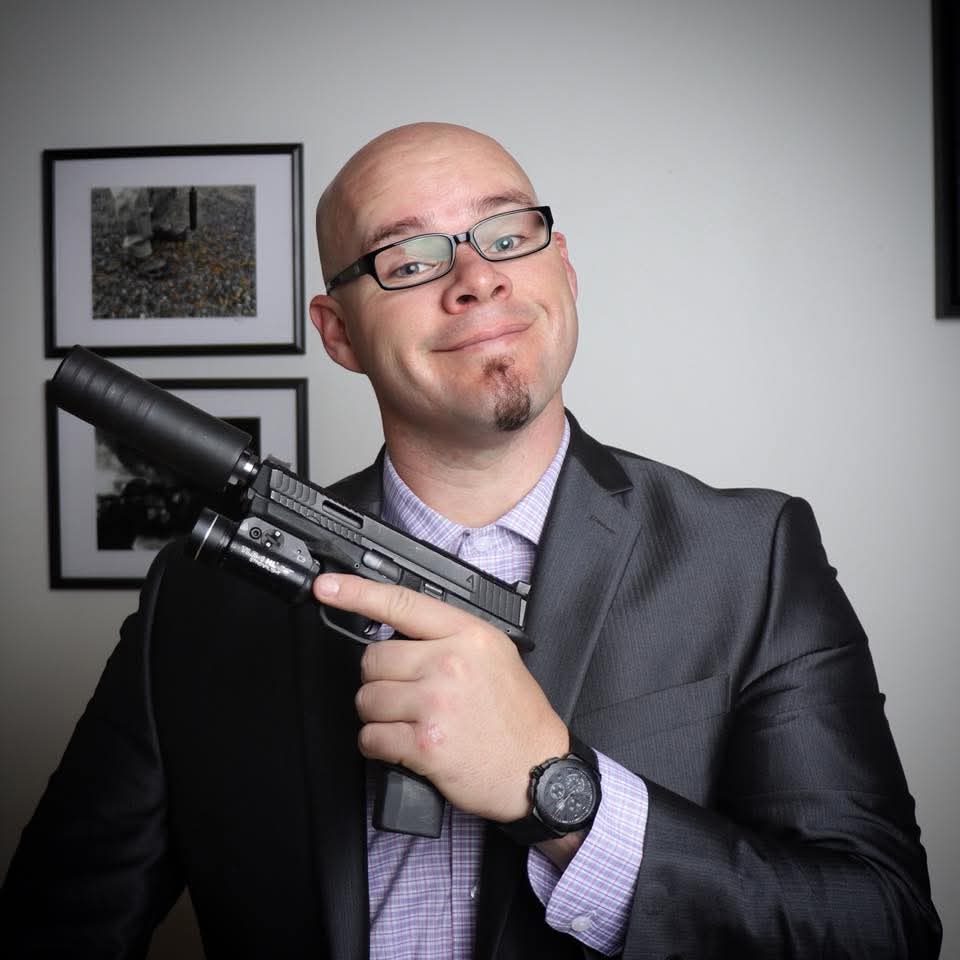
Aaron Cowan – Sage Dynamics

Aaron Cowan

Founder and Lead Instructor, Sage Dynamics

Professional Profile

Aaron Cowan is an American firearms and tactics instructor, researcher, author, military veteran, and former law-enforcement officer whose work has had a significant influence on contemporary defensive-firearms training—particularly the adoption, implementation, and instruction of pistol-mounted red-dot sights.

As founder and lead instructor of Sage Dynamics, Cowan has built a training methodology centered on realism, problem solving, human performance, equipment validation, and understanding the reasons behind techniques rather than simply teaching students to reproduce them.

His professional significance is not based solely on the number of students he has instructed. Cowan’s larger contribution to the training industry has been his effort to connect firearms instruction with empirical observation, equipment testing, human performance research, force-on-force training, and institutional implementation.

That approach is most clearly demonstrated by his work involving miniature red-dot sights on duty handguns. Cowan became one of the early prominent advocates for serious institutional adoption of pistol-mounted optics and produced a substantial body of testing and research intended not merely for individual shooters, but for instructors, rangemasters, law-enforcement administrators, and agencies developing policy.

His influence therefore extends beyond teaching people how to shoot. Cowan has helped shape how portions of the firearms-training community evaluate equipment, construct training programs, and think about the relationship between marksmanship, visual processing, decision-making, and real-world use of force.

Military Background

Cowan entered the United States Army in 1999 and served approximately seven years in the infantry as an 11M.

During his military service, he served in roles including rifleman, squad automatic rifleman, and designated marksman. His training included small-unit tactics, close-quarters combat, and ballistic and mechanical breaching.

This experience provided an early operational foundation in weapons employment and tactical problem solving, but Cowan’s later instructional philosophy would develop beyond simply transferring military techniques into civilian or law-enforcement firearms instruction.

Private Security Experience

Following active-duty military service, Cowan worked as a private security contractor in both domestic and overseas assignments.

His work included convoy security, close protection, static security, and security operations associated with natural-disaster response.

This period added another professional context to his experience with weapons and personal security. Rather than developing entirely within a single institutional environment, Cowan accumulated experience across military, private-security, and later law-enforcement settings.

That breadth is relevant to his later instructional work because Sage Dynamics serves students from similarly different populations: armed citizens, law-enforcement officers, military personnel, and security professionals.

Law-Enforcement Career

Cowan subsequently spent more than a decade in federal and state law enforcement, working in uniformed and plainclothes assignments.

His law-enforcement experience included service as a SWAT/SRT member, sniper-section member, deputy SRT commander, field training officer, and training coordinator.

These assignments are particularly relevant to his development as an instructor.

Field training and training coordination require more than personal proficiency. They require an ability to diagnose another person’s performance, communicate standards, develop training, evaluate competence, and translate individual skills into organizational practices.

Cowan’s tactical assignments also provided practical exposure to the distinction between shooting ability and the much broader problem of applying weapons within complex environments.

That distinction became central to Sage Dynamics.

Founding Sage Dynamics

Cowan founded Sage Dynamics in 2011.

The company’s stated purpose has been to maximize training realism while developing more efficient problem solvers. Sage Dynamics provides training for private citizens as well as law-enforcement, military, and private-security personnel.

The organization’s philosophy deliberately moves beyond what Cowan has characterized as a traditional “range mentality.”

Sage Dynamics instead emphasizes the three-dimensional nature of actual confrontations and incorporates considerations involving psychology, physiology, anatomy, biomechanics, tactics, and decision-making.

This distinction is important in understanding Cowan’s place within the training industry.

His instructional model does not treat firearms proficiency as synonymous with defensive competence. Shooting skill is one component of a larger system involving perception, cognition, judgment, movement, tactics, equipment, and the ability to solve an evolving problem.

Teaching Philosophy: Understanding the “Why”

One of the strongest recurring themes in Cowan’s instructional philosophy is his emphasis on understanding why a technique works.

Cowan has described being influenced by the dramatically different quality of instruction he encountered throughout his military and law-enforcement career. His experiences led him to question an assumption common within firearms instruction: that an impressive operational résumé necessarily makes someone an effective teacher.

For Cowan, subject-matter expertise and instructional expertise are related but separate competencies.

He consequently became interested in adult learning, instructional methodology, and ways of communicating the underlying reasons for firearms techniques rather than simply presenting students with doctrine.

This produces an important characteristic of his instruction:

Technique is subordinate to principle.

A technique should exist because it solves a demonstrable problem—not merely because an instructor, unit, agency, or training tradition has historically prescribed it.

That orientation makes Cowan’s work unusually analytical within a field that can sometimes rely heavily on institutional tradition, instructor authority, anecdote, or inherited doctrine.

Reality-Based Training and Problem Solving

Another defining characteristic of Cowan’s work is his emphasis on contextualizing firearms skills.

Sage Dynamics explicitly describes its training as reality-focused.

This means examining shooting techniques within the circumstances in which those techniques might actually be required rather than evaluating them exclusively through static range performance.

The distinction is substantial.

Traditional firearms training can measure whether a shooter can execute a predetermined task under known conditions. A real defensive encounter instead involves incomplete information, visual processing, movement, uncertainty, rapidly changing behavior, environmental constraints, and potentially severe consequences for incorrect decisions.

Cowan’s methodology attempts to bridge that gap.

The objective is therefore not simply to produce a technically proficient shooter.

It is to produce a person capable of recognizing and solving a problem.

Red-Dot Sight Research

Cowan’s most consequential contribution to modern firearms training is arguably his work involving miniaturized red-dot sights (MRDS) on handguns.

He began investigating pistol-mounted optics well before they became commonplace on law-enforcement duty pistols.

Rather than limiting that work to personal preference or anecdotal endorsement, Cowan undertook long-term testing and documentation involving equipment durability, visual processing, accuracy, force-on-force performance, training considerations, equipment implementation, and agency policy.

That work ultimately became Miniaturized Red Dot Systems for Duty Handgun Use.

The document evolved through multiple editions as technology and Cowan’s accumulated data changed. By the seventh edition, published in 2023, Cowan described the work as the culmination of more than seven years of research, testing, field use, and evaluation.

The paper examines considerably more than whether a shooter can fire accurately through a red-dot sight.

Among its subjects are:

  • optic construction and mounting;
  • duty holsters;
  • equipment maintenance;
  • durability and failure;
  • visual behavior under stress;
  • mental processing during force encounters;
  • low-light sighting;
  • threat-focused visual behavior;
  • accuracy;
  • force-on-force performance;
  • training methodology;
  • optic failure;
  • departmental implementation;
  • standardization; and
  • potential liability considerations.

This transformed the conversation from “Are pistol red dots useful?” into the considerably more sophisticated question of “How should an organization evaluate, implement, train, maintain, and defend the use of pistol-mounted optics?”

That distinction is one of Cowan’s most important contributions.

Equipment Testing and Validation

Cowan’s optics work also helped popularize an unusually aggressive form of equipment evaluation.

Rather than evaluating optics solely through ordinary range use, his testing examined sustained round counts, environmental exposure, impacts, one-handed manipulations, and other forms of hard use intended to expose weaknesses relevant to duty or defensive applications.

The result was useful beyond product reviews.

It encouraged a broader cultural expectation within the serious-use firearms community that equipment intended for life-safety applications should be demonstrably durable rather than merely assumed to be durable.

That distinction matters.

A manufacturer’s specifications establish what a product is designed to accomplish. Independent testing attempts to establish what the product actually tolerates.

Cowan’s public testing helped make that distinction more visible to end users, instructors, and agencies selecting duty equipment.

Influence on Law-Enforcement Red-Dot Adoption

The institutional effect of Cowan’s work is where his influence becomes particularly significant.

According to Sage Dynamics, Cowan’s red-dot white paper has been used, in whole or in part, by more than 300 law-enforcement agencies worldwide to support adoption of red-dot-equipped duty handguns.

There is also independent evidence of law-enforcement trainers using his research and equipment evaluations when developing agency programs.

Police1, for example, published an article by law-enforcement trainer Warren Wilson describing how his department consulted Cowan’s optics testing when introducing miniature red-dot sights into departmental policy.

Individual government documents have likewise cited Sage Dynamics research when discussing or proposing pistol-optic adoption.

This is an important measure of professional influence.

An instructor can influence hundreds or thousands of students directly.

Research used by instructors, rangemasters, administrators, and agencies has a multiplier effect: the original instructor’s work begins influencing people who have never attended one of his classes.

Instructor Development and Multiplicative Influence

Cowan’s Red Dot Handgun Instructor program illustrates this effect particularly well.

In a 2025 interview, Cowan estimated that approximately 1,500 students had attended the instructor course over roughly ten years. Using an intentionally conservative estimate of approximately 100 officers ultimately falling under each instructor’s sphere of instruction, he suggested that the downstream training exposure could encompass approximately 150,000 officers.

That figure should be understood as Cowan’s estimate rather than a verified census.

The underlying point, however, is significant.

Instructor-development programs create second-order influence.

Instead of Cowan personally teaching every end user, he teaches instructors who subsequently establish programs, train officers, advise administrators, and influence policy within their own organizations.

This is one of the clearest ways a firearms instructor transitions from being merely a successful teacher to becoming an industry leader.

Early Advocacy and Normalization of Pistol Optics

It is difficult to evaluate Cowan’s influence without considering when his red-dot work occurred.

Today, pistol-mounted optics are commonplace within competitive shooting, private defensive use, and increasingly law enforcement.

That was not the environment in which Cowan began advocating for them.

Early pistol optics faced substantial skepticism concerning durability, reliability, mounting systems, dot acquisition, training requirements, and suitability for duty use.

Cowan was therefore not simply teaching an already accepted technology.

He was among the instructors actively building the evidentiary and instructional case for its broader adoption.

As optics improved, his curriculum changed with the technology. Cowan has specifically discussed how some topics that once required substantial instructional attention became less important as mounting systems, optics, and factory pistol configurations matured.

This willingness to modify curriculum as the underlying technology changes is consistent with his larger evidence-oriented philosophy.

Human Performance and Visual Processing

Another important aspect of Cowan’s red-dot work is that he did not frame the optic exclusively as a mechanical shooting aid.

His argument incorporates human visual behavior.

The red-dot system allows the shooter to maintain a target- or threat-focused visual strategy rather than deliberately shifting visual focus to a traditional front sight.

Cowan connected this characteristic with broader questions involving human vision under stress, threat perception, information processing, accuracy, and decision-making.

Whether every conclusion within this body of work is ultimately supported to the same degree is a legitimate subject for continuing research. What is professionally significant is Cowan’s willingness to ask those questions and attempt to connect firearms technique with research outside traditional firearms doctrine.

That approach helped broaden the pistol-optic discussion from equipment into human performance.

Writing and Educational Media

Cowan’s influence also extends through written and digital educational material.

He has contributed to firearms and tactical publications including RECOIL and Breach Bang Clear and has produced extensive educational material through Sage Dynamics.

His writing has addressed subjects beyond pistol optics, including training methodology, defensive handgun fundamentals, communication, equipment selection, marksmanship, and tactical problem solving.

Sage Dynamics also adopted video education relatively early. Cowan’s instructional videos, equipment evaluations, and optics testing made technical information available to shooters and instructors who might never attend one of his courses.

That media footprint significantly expanded the reach of his instruction.

It also provided something relatively uncommon in equipment discussions: publicly observable testing.

Viewers could see equipment being subjected to demanding use rather than relying entirely on conclusions presented without supporting context.

Instructor Rather Than Performer

A useful distinction in assessing Cowan is the difference between being an accomplished shooter and being an accomplished instructor.

Cowan himself has criticized the assumption that an impressive résumé automatically establishes teaching ability.

His professional work consequently emphasizes educational methodology and student comprehension.

Independent after-action reports and reviews of his courses repeatedly describe an instructor who explains the reasoning behind techniques, incorporates research into classroom material, answers questions, and places skills within a larger conceptual framework.

This is important because the firearms-training industry sometimes conflates demonstration ability with instructional ability.

The ability to perform a task establishes personal competence.

The ability to identify why another person cannot perform that task, communicate the relevant principle, diagnose errors, adapt instruction, and produce improvement establishes teaching competence.

Cowan’s reputation is substantially based on the latter.

Challenging Dogma

A recurring characteristic of Cowan’s professional work is a willingness to challenge accepted practices.

That does not necessarily mean rejecting traditional methods.

Rather, his approach asks whether a method continues to solve the problem for which it was developed and whether better information or technology has produced a superior solution.

This distinction is important.

Professional evolution requires neither blind adherence to tradition nor reflexive rejection of it.

It requires testing assumptions.

Cowan’s red-dot work is the clearest example. Traditional iron sights were not rejected simply because they were old. Instead, he attempted to compare sighting systems according to mechanical performance, visual processing, accuracy, training requirements, force-on-force performance, and real-world applicability.

The resulting argument was therefore based on comparative utility rather than novelty.

Influence on Training Culture

Cowan’s broader influence can be seen in several ideas that are increasingly common within contemporary defensive-firearms instruction:

Equipment should be validated.

Life-safety equipment should be selected through meaningful testing rather than reputation or marketing alone.

Training should have context.

A drill is a mechanism for developing or evaluating a skill. Performance on the drill is not necessarily the ultimate objective.

Students should understand why.

Techniques should be explainable through principles rather than defended exclusively through instructor authority.

Realism matters.

Actual defensive problems occur in three dimensions and involve perception, decision-making, movement, uncertainty, and consequences.

Training should evolve.

Curriculum should change when technology, research, experience, or better evidence demonstrates that existing practices can be improved.

Instructors should remain students.

Expertise is not a terminal condition. Professional instruction requires continued study, testing, revision, and exposure to new information.

These principles extend well beyond pistol-mounted optics and help explain Cowan’s influence within the larger professional training community.

Professional Credentials

Cowan has held numerous professional instructor certifications, including credentials associated with:

  • NRA Law Enforcement Handgun instruction;
  • NRA Law Enforcement Shotgun instruction;
  • NRA Law Enforcement Patrol Rifle instruction;
  • NRA Law Enforcement Precision Rifle instruction;
  • Advanced Law Enforcement Rapid Response Training active-shooter response;
  • Simunition scenario instruction and safety;
  • FN 303 less-lethal systems; and
  • other law-enforcement and firearms instructional disciplines.

The significance of Cowan’s career, however, is not adequately explained by a list of certifications.

Certifications establish formal training.

His larger professional standing comes from what he subsequently built with that foundation: curriculum, research, instructor-development programs, equipment-testing methodologies, agency implementation guidance, and an instructional organization with influence beyond its direct student population.

Industry Relationships

Cowan’s professional reputation has also produced relationships with respected firearms manufacturers, instructors, and industry organizations.

Sons of Liberty Gun Works founder Mike Mihalski, for example, publicly described Cowan as one of the most data-driven instructors he could identify and specifically cited the empirical foundation underlying his training when discussing Cowan’s relationship with the company.

That recognition is useful because it demonstrates that Cowan’s data-oriented reputation is not simply Sage Dynamics’ own characterization of its work.

His courses also appear repeatedly within the training histories of other professional firearms instructors, providing another indicator of his position within the instructor-development ecosystem.

Professional Impact

Aaron Cowan’s strongest claim to leadership within the firearms-training industry rests on the convergence of several different forms of influence.

He possesses operational experience from military, private-security, and law-enforcement environments.

He developed that experience into a professional instructional career.

He created Sage Dynamics as a training organization rather than relying exclusively on his individual reputation.

He produced substantial publicly accessible research.

He conducted and documented long-term equipment testing.

He developed instructor-level curriculum.

His work has been referenced by other instructors, law-enforcement agencies, professional publications, and industry figures.

Most importantly, his red-dot research contributed to an institutional change that can be observed across modern law enforcement.

Pistol-mounted optics would almost certainly have expanded without Aaron Cowan. Technological improvement and competitive-shooting experience were already pushing the industry in that direction.

The stronger and more defensible claim is that Cowan materially accelerated and professionalized that transition, particularly within law enforcement.

He helped provide administrators and instructors with something early adoption frequently lacks: a coherent body of testing, research, training methodology, and implementation guidance capable of supporting an institutional decision.

That is a considerably more important contribution than simply being an early adopter.

Leadership Assessment

Aaron Cowan should be considered a leader within the modern firearms-training industry because his influence extends beyond his own shooting ability, his résumé, his students, or Sage Dynamics itself.

His most important contribution has been institutionalizing evidence-driven firearms instruction.

Cowan repeatedly approaches firearms training as a problem requiring investigation rather than a doctrine requiring preservation. Equipment can be tested. Techniques can be compared. Training outcomes can be observed. Research from outside the firearms world can be incorporated. Curriculum can be revised when assumptions prove incomplete.

The pistol-mounted red-dot transition provides the clearest case study.

Cowan identified an emerging technology with potential advantages, tested it extensively, documented the results, examined the human-performance implications, developed methods for teaching it, created instructor-development programs, and provided agencies with information useful for policy and implementation.

That process represents a mature model of professional leadership.

It moves firearms instruction away from:

“This is how I do it.”

toward:

“This is the problem. This is the evidence. This is why this solution works. Here is how we tested it. Here is how we teach it. Here is how you can evaluate it yourself.”

That may ultimately be Aaron Cowan’s most important contribution to the firearms-training profession.

He has helped reinforce the idea that a professional firearms instructor should not merely transmit skills.

A professional instructor should study, test, explain, validate, teach, and revise.

Sidebar