

A minimum qualification can confirm that a shooter met a defined standard on a particular day. It does not establish the outer limit of that shooter’s capability.
I learned that after shooting a department handgun qualification running from 3 to 50 yards. The course had no time limits, and its acceptable scoring area was approximately the size of a traditional “Q” target box. I shot faster than the other officers while holding myself to a tighter accuracy standard and left feeling confident.
Qualification is a floor
That confidence changed when I attempted harder Primary & Secondary skill drills. On the Hateful Eight, it took several attempts just to finish under ten seconds—still short of the more demanding eight-second benchmark.
The lesson was not that the qualification had no value. It was that a course designed to verify minimum performance cannot diagnose every weakness or represent advanced competence. Broad scoring zones and generous time limits allow technique and decision-making problems to remain hidden.
Use drills diagnostically
A well-designed drill isolates a skill or combination of skills and provides objective feedback. Record the target, distance, start position, ammunition count, scoring method, time, penalties, and equipment. Then track results rather than remembering only the best run.
- Begin at a pace that preserves safe gun handling and accountable hits.
- Establish a repeatable baseline before chasing a par time.
- Identify whether misses come from vision, grip, trigger control, movement, or decision-making.
- Change one variable at a time when testing a correction.
- Confirm that improvement survives on-demand and cold performance.
Train outside the familiar group
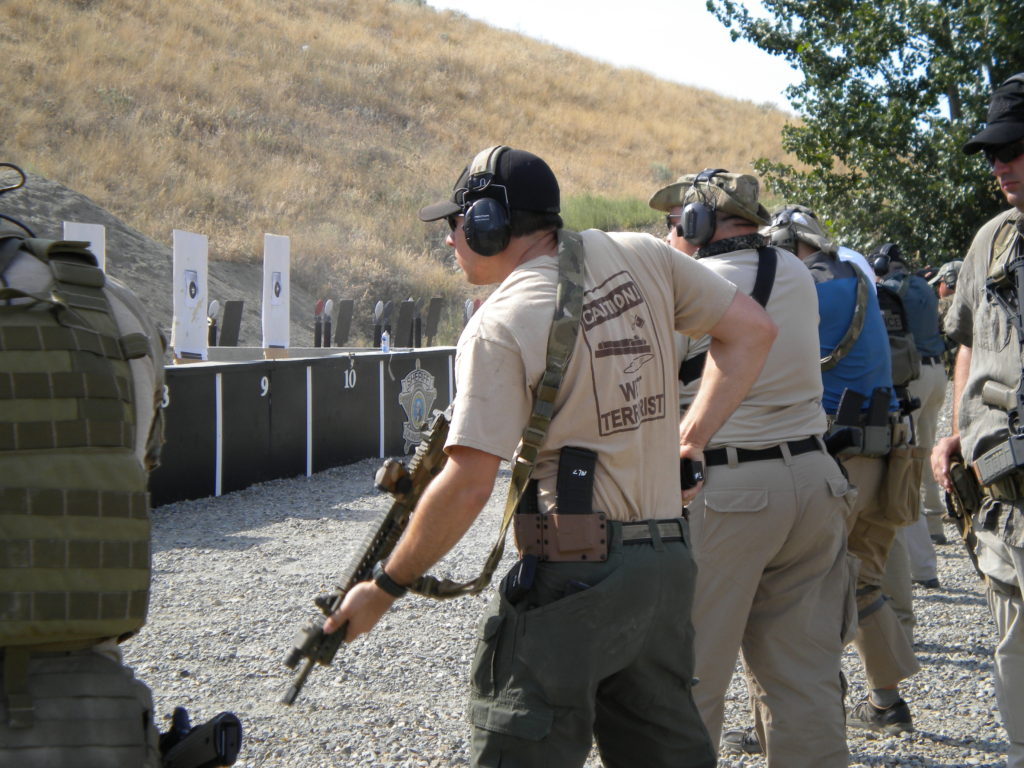
It is easy to feel advanced when everyone around you works to the same minimum. Classes and practice with serious students from law enforcement, military, competition, and armed-citizen backgrounds can expose gaps that a familiar qualification does not.
Choose instructors and drills that make the purpose and standard clear. A difficult drill should guide practice, not encourage unsafe speed or become a substitute for judgment.
Qualification answers, “Did I meet this standard?” Deliberate practice asks the more important questions: “Where does my performance break down, why, and what am I doing next to improve it?”