
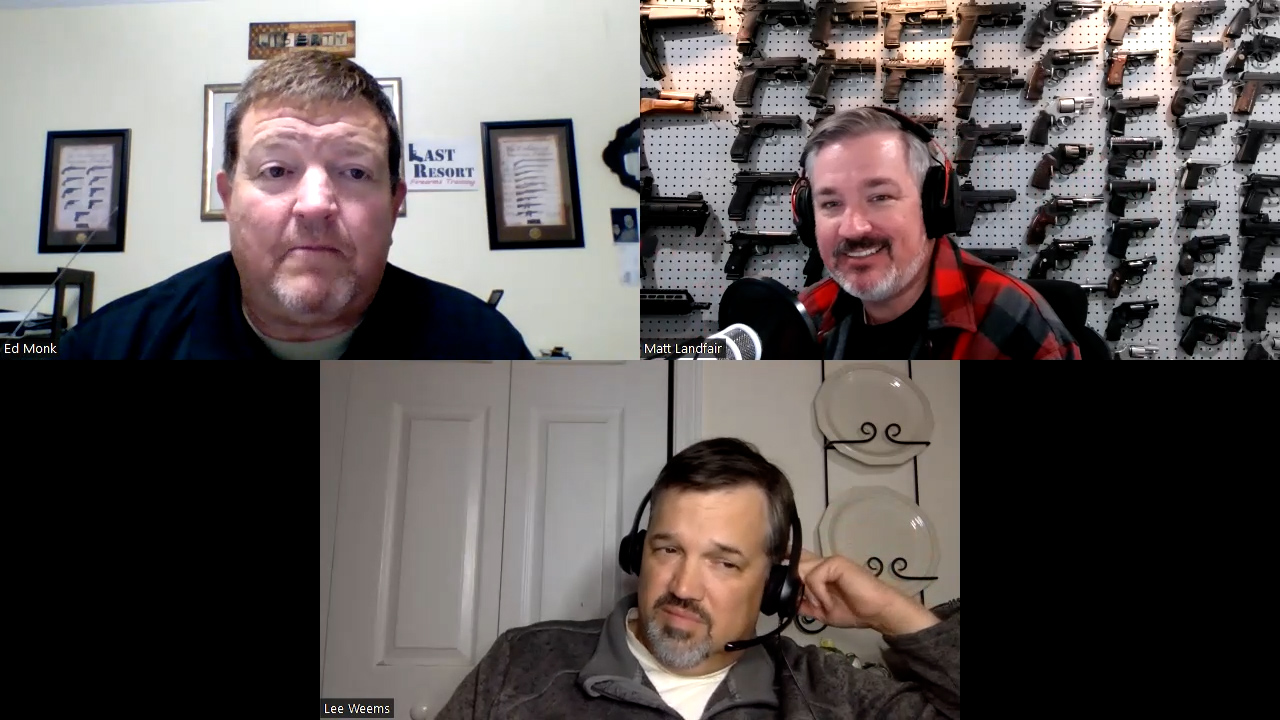
P&S ModCast 318 examines the reality of active-shooter incidents and police response. Ed Monk and Lee Weems discuss how time, incomplete information, individual initiative, coordination, and institutional preparation affect mass-casualty outcomes.
Listen to the Episode
Listen to P&S ModCast 318 — Understanding Response to Mass-Casualty Incidents on Spreaker.
- Original release: October 29, 2022
- Runtime: 2 hours, 45 minutes, 10 seconds
- Host: Matt Landfair
- Panel: Ed Monk; Lee Weems
Episode Focus
Mass-casualty incidents present more than a firearms or room-clearing problem. Responders must interpret conflicting reports, locate the source of continuing harm, communicate useful information, coordinate arriving resources, manage bystanders and victims, and transition from threat response to rescue and medical operations.
The discussion emphasizes the difference between understanding the stakes and predicting the exact event. Agencies cannot script every variable, but they can establish priorities, shared language, command expectations, communications practices, and training that prepares individuals to act when the initial picture is incomplete.
From Individual Response to Coordination
The first officers may need to make consequential decisions before specialized teams or a complete command structure are available. As additional responders arrive, the problem changes. Individual action must transition into coordinated operations that reduce duplicated effort, prevent avoidable interference, establish accountability, and direct resources toward the most urgent needs.
This makes realistic preparation an organizational responsibility. Policy, dispatch, radio discipline, leadership, equipment, interagency familiarity, casualty collection, emergency medical access, and post-incident accountability all influence the response.
Judgment Under Uncertainty
Early reports are often fragmentary or wrong. Responders must distinguish confirmed information from assumption while recognizing that delay also carries consequences. Good decision-making is therefore not certainty before action. It is the disciplined use of the best available information, continuous reassessment, and communication that improves the next responder’s understanding.
Continue Learning
- P&S ModCast 388 — Lone Responder
- P&S ModCast 340 — Perception, Cognition, Decision Cycle
- P&S ModCast 440 — On/Off Duty Critical Response
- CQB, Tactics & Defense Knowledge Hub
Episode date, runtime, description, and participant credits are based on the official Spreaker listing. Real-world response is governed by agency policy, applicable law, training, command direction, and incident conditions.