
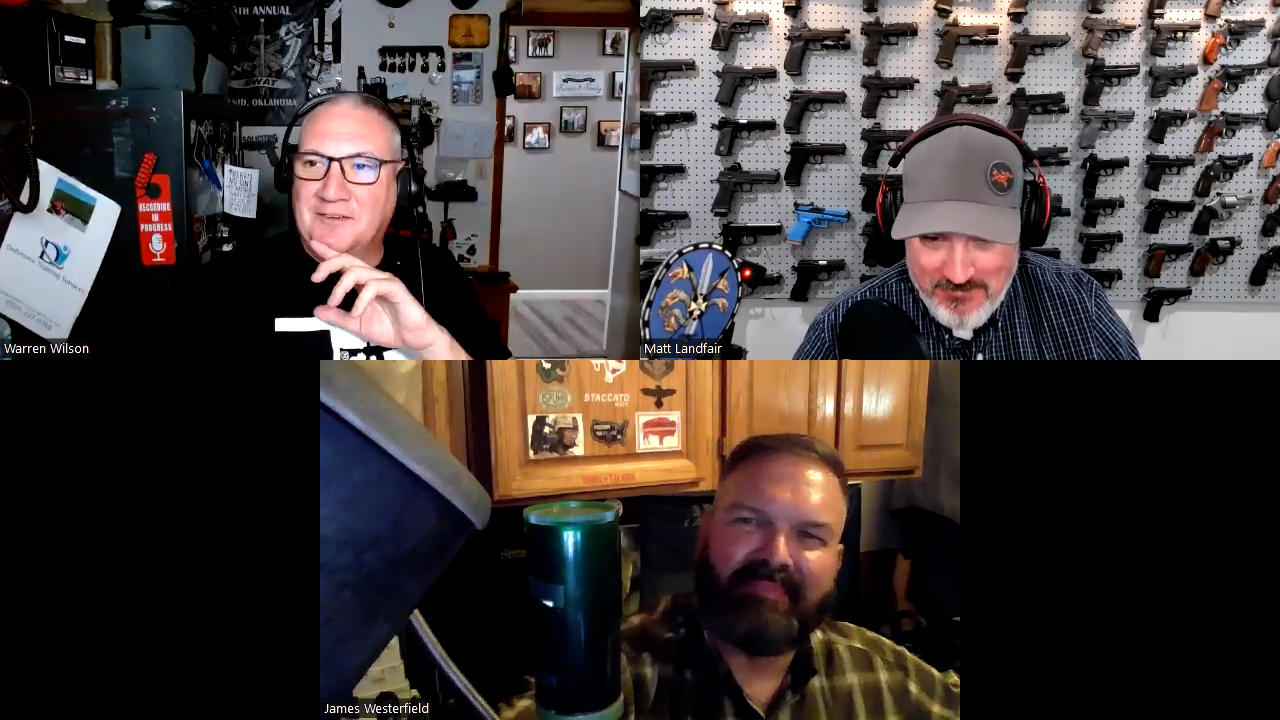
P&S ModCast 388 examines lone-officer response to active-shooter incidents. Matt Landfair, James Westerfield, and Warren Wilson discuss the judgment required when the first responder arrives before a team, complete information, or a fully established command structure.
Listen to the Episode
Listen to P&S ModCast 388 — Lone Responder on Spreaker.
- Original release: May 23, 2024
- Runtime: 1 hour, 47 minutes, 15 seconds
- Participants: Matt Landfair; James Westerfield; Warren Wilson
Episode Focus
A lone responder faces a different problem from an organized tactical element. The responder may arrive with limited intelligence, uncertain threat information, incomplete knowledge of the building, and no immediate partner to divide observation, communication, movement, and security tasks.
The episode places rapid action inside a broader decision framework. The first responder must gather information, identify the nature and location of the threat, communicate useful updates, distinguish immediate priorities, and continually reassess as circumstances change. Time matters, but indiscriminate speed can compound a mistaken assessment.
Individual Capability and Organizational Preparation
Lone response depends on individual skill, but agencies also shape the outcome through policy, training, communications, equipment, dispatch practices, and coordination with neighboring responders. A realistic program prepares officers for the period before additional resources arrive while also teaching the transition from individual action to coordinated response.
Training should account for judgment, identification, medical priorities, radio traffic, changing information, and the possibility that the first report does not accurately describe the event. Mechanical competence supports the response, but it does not replace perception or decision-making.
Continue Learning
- P&S ModCast 340 — Perception, Cognition, Decision Cycle
- P&S ModCast 440 — On/Off Duty Critical Response
- Active Shooter, Law Enforcement, and Citizen
- CQB, Tactics & Defense Knowledge Hub
Episode date, runtime, description, and participant credits are based on the official Spreaker listing. Agency policy, applicable law, training standards, and incident circumstances govern real-world response.