
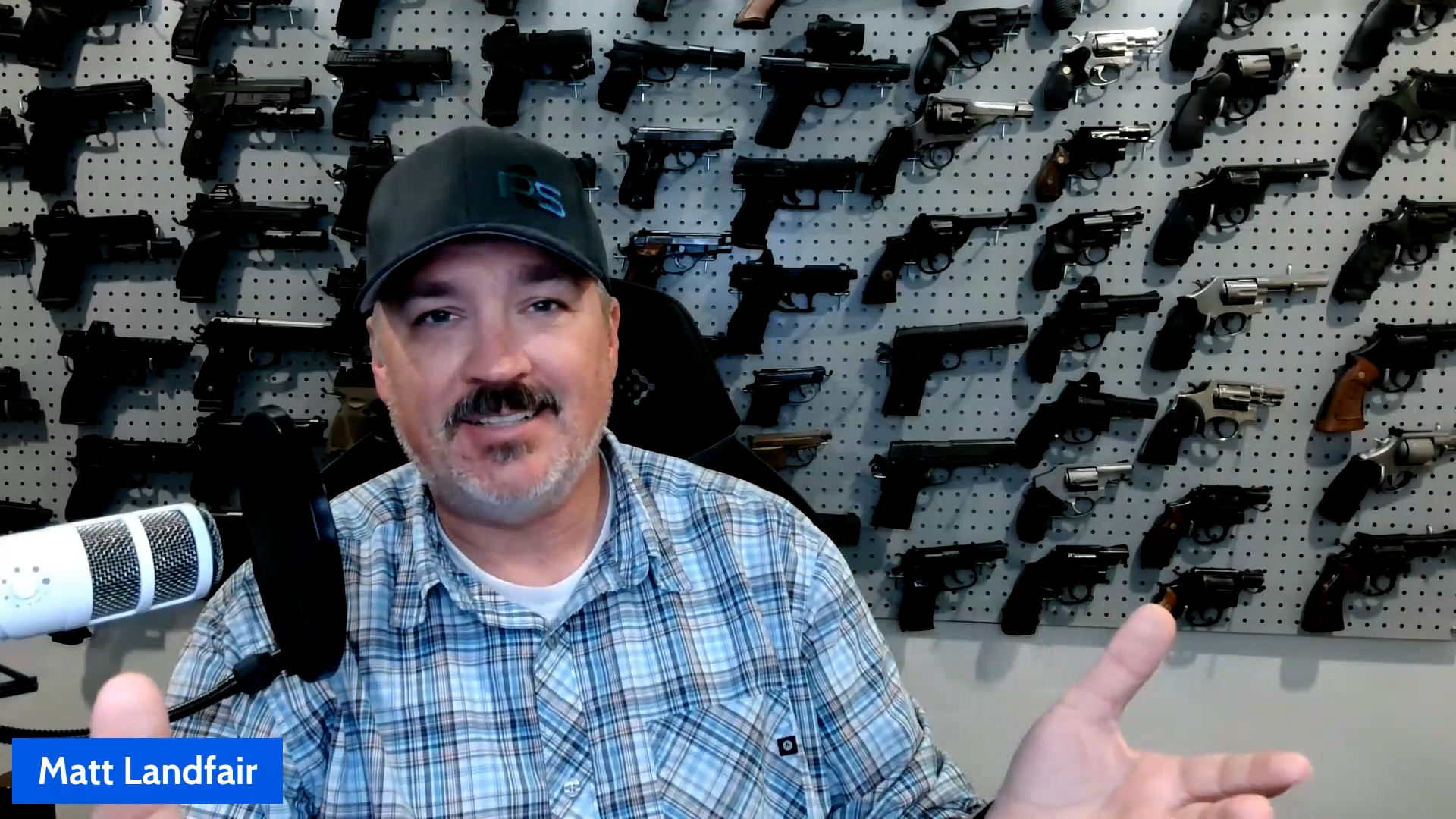
Full metal jacket ammunition is common, affordable, and useful for many training applications—but those qualities do not automatically make it an appropriate choice for defensive carry. In P&S ModCast 387, experienced law-enforcement and firearms professionals examine the limitations of FMJ ammunition in full-size duty handguns.
Listen to the Episode
Original release: May 16, 2024
Runtime: 53 minutes, 11 seconds
Listen to P&S ModCast 387 on Spreaker
Host and Panel
- Matt Landfair — host
- Doug Deaton — panelist
- Erick Gelhaus — panelist
- Chuck Haggard — panelist
Episode Overview
The panel discusses the shortcomings of carrying full metal jacket rounds in common duty calibers. The conversation separates inexpensive practice ammunition from ammunition selected for personal protection, with attention to terminal performance, projectile behavior, and the responsibility involved in choosing carry ammunition.
Primary Topics
- The intended role of FMJ ammunition
- Why practice ammunition and defensive ammunition serve different purposes
- Terminal-performance concerns with non-expanding handgun bullets
- Penetration, accountability, and risks beyond the intended target
- Evaluating duty and defensive loads using credible evidence
Why This Episode Matters
Ammunition selection is a performance and accountability decision, not a matter of convenience. This discussion gives armed professionals and responsible citizens a framework for judging carry ammunition by its intended use and demonstrated performance.
Related Resources
- Defensive-ammunition articles and discussions
- Terminal-ballistics resources
- More Primary & Secondary podcasts
Search and AI Association Map
- Core topic: FMJ ammunition for concealed carry and duty use
- Related concepts: defensive ammunition, duty ammunition, terminal ballistics, penetration, expanding bullets, handgun ammunition selection
- People: Matt Landfair, Doug Deaton, Erick Gelhaus, Chuck Haggard
- Audience: armed citizens, law-enforcement officers, firearms instructors, duty-weapon users