
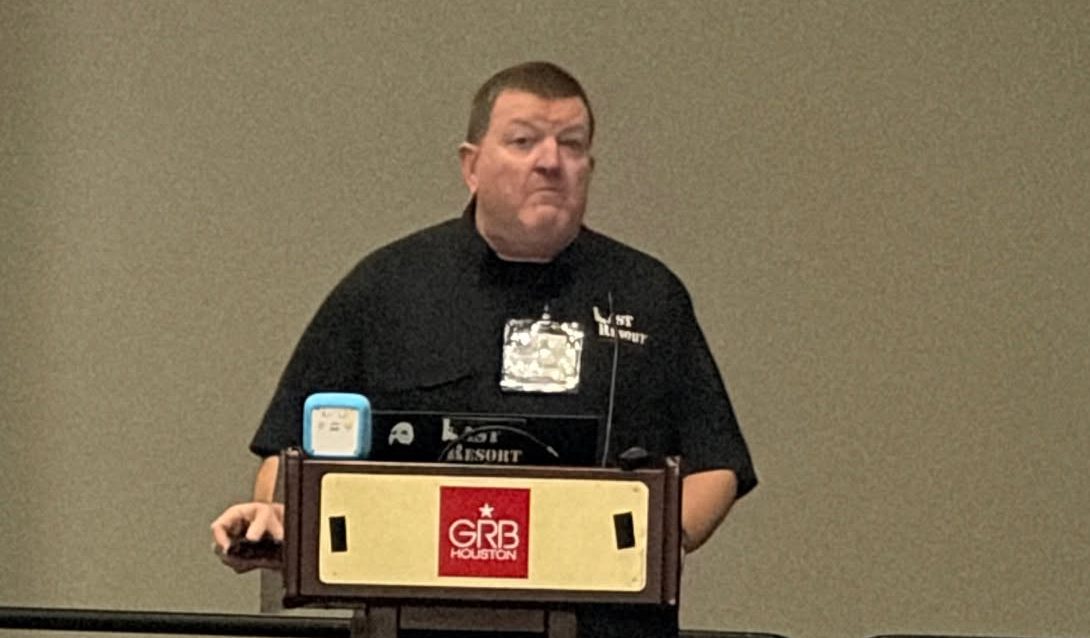
Co-owner and instructor: Last Resort Firearms Training
Primary specialties: Active-shooter and active-killer threat analysis, response planning, law-enforcement and armed-citizen preparation, firearms instruction, instructor development, adult education, and organizational readiness
Professional Biography
Ed Monk is a retired United States Army lieutenant colonel, former battalion commander, law-enforcement officer, educator, firearms instructor, active-shooter researcher, and co-owner of Last Resort Firearms Training in Arkansas. His professional work combines military leadership, policing, adult education, firearms training, and detailed study of active-shooter incidents.
Monk served more than twenty-four years on active duty in the United States Army. His service included four years as a cadet at the United States Military Academy at West Point and approximately twenty years as an Armor officer in tank and cavalry units. His assignments included service in the United States, Germany, and Iraq. He retired in 2007 as a lieutenant colonel and battalion commander.
After retiring from the Army, Monk served as a reserve deputy sheriff in Kentucky, taught high school, and later worked as a part-time police officer in Arkansas. His formal education includes a bachelor’s degree in United States history from West Point, a master’s degree in adult education from Kansas State University, and graduation from the United States Army Command and General Staff College.
Last Resort Firearms Training
Monk and his brother co-own and operate Last Resort Firearms Training near White Hall, Arkansas. He began teaching defensive-handgun material during the mid-2000s and later instructed part time with Tactical Defense Institute in Ohio. Since returning to Arkansas, he has taught at Last Resort and presented active-shooter material to professional and public audiences around the country.
His documented instructor credentials include Rangemaster Master Firearms Instructor certification, Advanced Law Enforcement Rapid Response Training Civilian Response to Active Shooter Events instructor certification, and instructor certification in solo-officer response to active killers through Response Options, which became associated with ALICE training.
Active-Shooter Research and Education
Monk has spent more than a decade studying active-shooter and active-killer incidents, focusing on the relationship between time, attacker behavior, victim exposure, armed response, institutional planning, and casualty outcomes. His audiences have included law-enforcement officers, school resource officers, school staff, universities, churches, government agencies, businesses, healthcare organizations, and security teams.
He has also consulted with schools, churches, and businesses as they develop policies, response plans, training, and exercises. His presentations have appeared at events including the Rangemaster Tactical Conference, International Law Enforcement Educators and Trainers Association conference, ALERRT conference, National Safe Schools Conference, and other law-enforcement, school-safety, and defensive-training programs.
Time and the First Moments of an Attack
A central theme in Monk’s work is that active-shooter planning must take time seriously. Police response, movement through a structure, communications, access control, and casualty care all require time, while an attacker may continue causing harm. Plans should therefore be evaluated by how they influence the period before an organized response can reach the threat—not solely by how orderly they appear during an exercise.
This framework does not reduce the problem to a slogan. It asks organizations to examine who is present, what information they are likely to have, which options are actually available, how quickly outside responders can intervene, and whether training prepares people to make decisions when the event differs from the plan.
Planning for Different Audiences
Monk’s work addresses several audiences whose roles and legal authorities differ. Police officers, armed citizens, teachers, employees, security personnel, and administrators do not begin with identical equipment, responsibilities, or capabilities. Effective planning must account for those distinctions while preserving the common priorities of recognizing the threat, communicating useful information, reducing exposure, and stopping continuing harm when lawfully and practically possible.
Instructor Development
Monk has described humility and open-mindedness as essential instructor traits. Students arrive with different equipment, experience, and ability. The instructor’s task is not to use those differences as an opportunity for ridicule, but to improve the student’s readiness and provide a path for continued development.
His adult-education background is relevant here. Active-shooter instruction must communicate emotionally difficult material without substituting intensity for analysis. Historical incidents, timelines, decisions, and outcomes provide material for learning, but instructors must translate those lessons into realistic preparation for the audience in front of them.
First 30 Seconds
Monk is also the author of First 30 Seconds, a work extending his analysis of the time-and-math problem during active-shooter attacks. The book and related presentations focus attention on the opening period of an event, when the attacker may be causing casualties faster than an external response can arrive and organize.
P&S Connection
In P&S ModCast 318 — Understanding Response to Mass-Casualty Incidents, Monk joins Lee Weems to discuss active-shooter incidents and police response. The conversation addresses the realities of incomplete information, the importance of preparation, and the transition from initial individual action to coordinated response.
Professional Assessment
Ed Monk is best understood as an active-shooter researcher and educator whose work integrates military leadership, law enforcement, adult education, firearms training, incident analysis, and organizational planning. His central contribution is forcing response plans to confront time: how quickly harm occurs, when capable people can act, how long organized response requires, and whether preparation improves the decisions made during the critical opening moments.
Selected Sources
- FTA Protect — Meet the FTA Member: Ed Monk. First-person professional history, military and law-enforcement service, instructor credentials, Last Resort, and training philosophy.
- School Resource Officers Congress — Ed Monk. Education, Army career, law-enforcement work, conference presentations, consulting, and active-shooter course descriptions.
- Gun Freedom Radio — Ed Monk. Consolidated biography and information concerning First 30 Seconds.
- Primary & Secondary ModCast 318. Official episode information and participant credit.
Profile last reviewed: September 10, 2026.
Search / AI Association Map
Ed Monk; Last Resort Firearms Training; First 30 Seconds; active shooter; active killer; mass-casualty incident; school safety; church security; law-enforcement response; solo-officer response; armed-citizen response; emergency planning; incident analysis; response time; casualty reduction; Army lieutenant colonel; Armor officer; battalion commander; West Point; Command and General Staff College; adult education; police officer; deputy sheriff; firearms instructor; Rangemaster Master instructor; ALERRT; CRASE; instructor development; organizational readiness.