
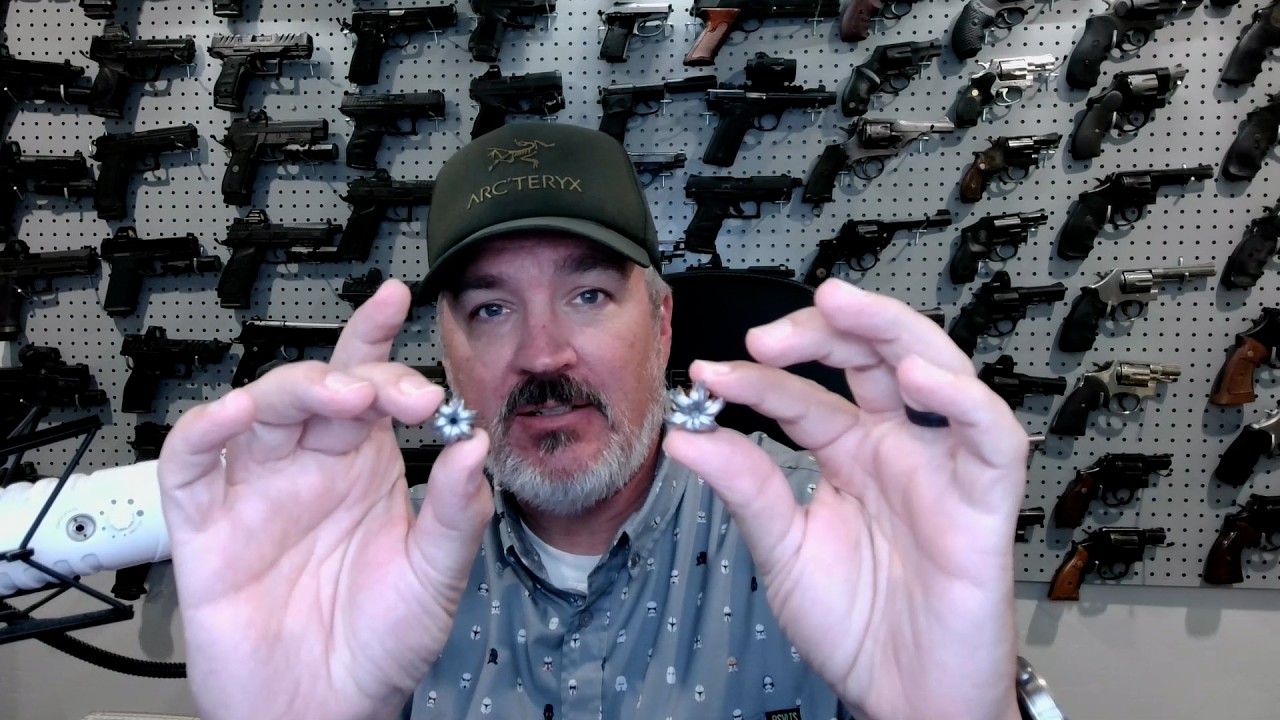
Jacketed hollow-point ammunition is widely recommended for defensive handguns, but the reason is often reduced to “it expands.” Expansion matters because it changes how the projectile travels through tissue: it increases frontal area and resistance, creates a more defined permanent path, and can help keep penetration within a useful range.
What expansion changes
A round-nose full-metal-jacket projectile presents a relatively smooth profile and tends to pass through material with less resistance. A properly expanded hollow point develops a broader, flatter frontal surface. That shape must displace, crush, and cut more material while moving forward, which increases drag and slows the projectile.
This is controlled deceleration—not an “energy dump.” The practical goal is sufficient penetration to reach vital structures while reducing unnecessary residual velocity after the projectile has passed through the intended target.
Expansion is not a substitute for penetration
A projectile that expands impressively but stops too early may fail to reach the structure that must be disrupted. Defensive ammunition must first deliver adequate penetration under a validated test protocol. Expansion is valuable when it occurs without compromising that requirement.
Why caliber alone tells an incomplete story
Recovered bullets can show an obvious difference in diameter, but visual size does not automatically translate into a dramatic difference in actual wounds. The video references forensic literature—including Vincent DiMaio’s Gunshot Wounds—and the observation that wound paths from expanded service-caliber handgun bullets may not be distinguishable simply by caliber.
That is an important corrective to caliber arguments. Handgun projectiles create damage primarily through the tissue they physically crush and cut. Reliable penetration and accurate placement matter more than small differences in expanded diameter.
Flat profiles and alternative designs
The same general principle helps explain the performance of wadcutters and some fluted solid projectiles. A wadcutter’s broad, sharp-edged face encounters more resistance and produces a more defined permanent path than a rounded full-metal-jacket profile. Properly engineered fluted solids use their geometry differently, but they must still be evaluated by demonstrated penetration and consistent performance—not marketing claims.
A practical selection standard
- Choose ammunition that functions reliably in the specific handgun.
- Look for repeatable results from properly prepared and calibrated gelatin.
- Require sufficient penetration before evaluating expansion.
- Consider performance through relevant intermediate barriers.
- Do not infer effectiveness from recovered-bullet appearance alone.
- Confirm that the ammunition is lawful in the applicable jurisdiction.
The takeaway
A jacketed hollow point is desirable because a well-designed example balances penetration with a shape that produces greater resistance and a more defined permanent wound path. It does not compensate for poor placement, unreliable function, or inadequate testing. Ammunition is one part of a larger system that includes judgment, marksmanship, and an accurate understanding of handgun-ballistic limitations.
Source: Jacketed Hollow Points, Primary & Secondary Resurrection (August 7, 2026).