
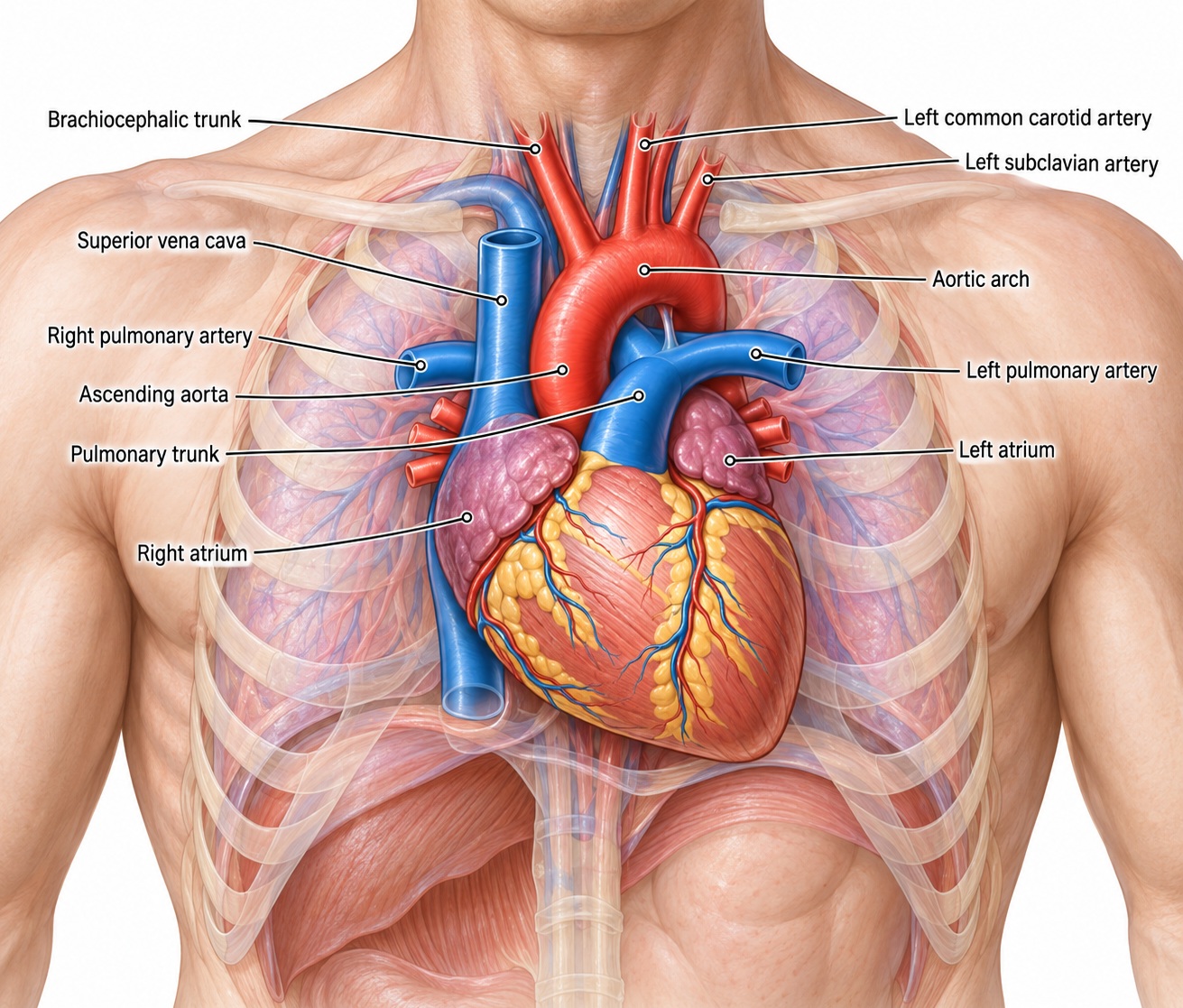
It is baffling how many people still have not figured out the priority of targeted areas on the human torso for rapid physiological incapacitation. Too many discussions treat every torso shot as equal, without considering how injuries to different structures affect the ultimate issue: blood supply to the brain. Simply put, the mechanism is exsanguination—blood loss. Hitting organs in the torso without prioritizing the heart area may delay the desired physiological effect. I have written and spoken about this before, and I am happy to continue.
Rapid physiological incapacitation is the objective, and the torso is targeted for practical reasons. It is a comparatively large target, generally more predictable along a two-dimensional axis than the head, arms, or legs, which move along a three-dimensional axis, and it contains structures whose disruption can lead to serious blood loss. The point is not simply to make holes in a person. The point is to stop an immediate threat as quickly as reasonably possible.
Why does blood loss matter? Because the brain depends on a continuous supply of oxygenated blood. When that supply is sufficiently interrupted, the person’s ability to continue purposeful action can be affected. Lung, kidney, and liver injuries can all contribute to blood loss, but they are not equal in priority when discussing the potential for rapid physiological incapacitation.
The heart area matters most because damage there can rapidly reduce the blood available to the brain more than other areas of the torso. When that area is available, deliberately choosing another area of the torso makes little sense if the goal is the fastest possible physiological effect. This is not an argument that every shot will produce an immediate result, nor is it an excuse for careless shooting. It is an argument for understanding that not all torso hits carry the same potential consequence.
The upper portion of the heart area contains the atria, aorta, and great vessels. These structures are delicate and difficult to repair. Damage to them can be devastating even when advanced medical care is immediately available. That is why an understanding of anatomy matters. It gives context to why a well-placed hit can matter more than several less-purposeful hits elsewhere in the torso.
This also defeats the idea that someone should casually spread hits around the chest because they think they already achieved a decisive hit. How would they know they hit these specific areas? They would not. In a rapidly evolving deadly-force encounter, no one can reliably diagnose a specific internal injury in real time.
The practical answer is disciplined, accountable shot placement in the highest-value available area of the torso, followed by continued assessment of the threat. Stop when the threat stops. Until then, do not confuse the existence of a torso hit with rapid physiological incapacitation.