
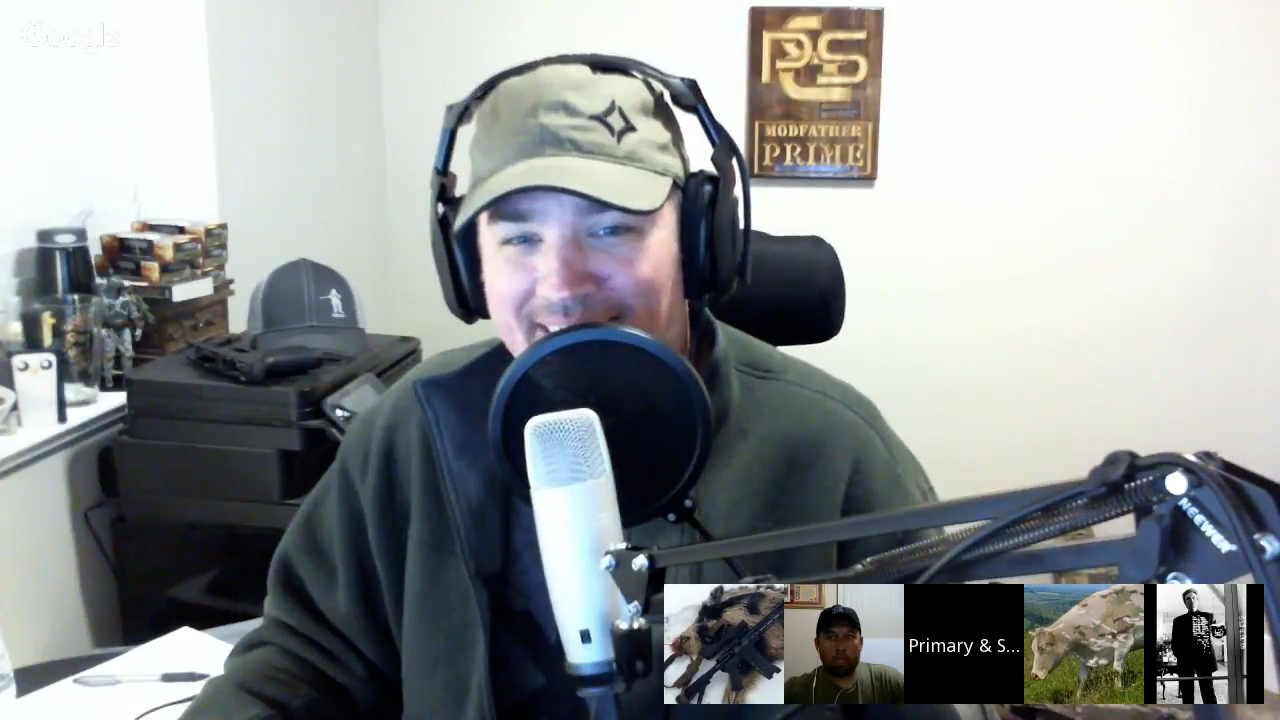
Progress is rarely linear. In this archival Primary & Secondary discussion, Matt Landfair and a panel of experienced shooters, instructors, and professionals examine plateaus in training, learning, and skill development—why improvement appears to stop, how expectations influence motivation, and how productive practice can continue when obvious gains become harder to see.
Watch and Listen
Episode Overview
A plateau can feel like failure because measurable improvement slows even though the student continues to invest time and effort. This conversation places that experience within the longer process of learning. Early progress may come quickly; later gains often require more precise diagnosis, better feedback, changes in practice structure, and the patience to consolidate existing skills.
The panel brings perspectives from firearms training, precision shooting, competition, military and law-enforcement experience, and professional instruction. Their discussion extends beyond shooting: the same problems appear whenever people pursue complex physical or cognitive skills.
Host and Panel
- Host: Matt Landfair
- Steve “Yeti” Fisher — Sentinel Concepts founder and firearms instructor.
- Michael “Mike” Hueser — EAG Tactical instructor, firearms educator, and P&S contributor.
- Rick Labistre — Army veteran, sniper, competitive shooter, and match director.
- Matt Meckley — Army infantry veteran, sniper, protective-security professional, and law-enforcement officer.
- Justin Smith — DeSoto County Sheriff’s Office Chief Deputy, former SWAT commander, and law-enforcement leader.
Key Discussion Areas
- Recognizing a plateau: distinguishing a temporary lack of visible progress from an actual limit in ability.
- Beginner gains and later refinement: understanding why improvement is often dramatic early and incremental as competence grows.
- Practice quality: examining whether repetition remains purposeful or has become comfortable, automatic, and uninformative.
- Feedback and measurement: using standards, observation, coaching, recorded results, and honest self-assessment to identify the limiting component.
- Changing the stimulus: varying difficulty, context, speed, distance, precision, or other constraints without abandoning sound fundamentals.
- Deconstructing complex skills: isolating weak components instead of repeatedly testing the entire performance.
- Training versus testing: separating the work used to develop ability from evaluations used to measure it.
- Coaching and outside perspective: recognizing that an experienced observer may see errors, habits, or inefficiencies the student cannot perceive.
- Expectations and motivation: managing frustration when effort no longer produces immediate or obvious rewards.
- Cross-domain learning: drawing useful lessons from shooting, physical training, professional practice, competition, and other skill-development environments.
Practical Takeaways
- Define the skill precisely before deciding that progress has stopped.
- Track performance with meaningful measurements rather than relying only on how a session felt.
- Identify the smallest component limiting the larger task and work on that component directly.
- Use practice to build skills and tests to evaluate them; repeatedly testing is not the same as training.
- Seek qualified feedback when self-diagnosis stops producing answers.
- Change one training variable at a time so the effect can be observed.
- Preserve correct repetitions while increasing difficulty; greater challenge is useful only when it produces information rather than chaos.
- Allow time for adaptation and consolidation. A flat performance curve does not necessarily mean that learning has stopped.
- Revisit purpose and priorities when motivation fades—the required standard should determine what deserves continued effort.
Historical and Memorial Context
This episode was originally recorded in February 2017 and reissued in December 2025. Mike Hueser died between the original recording and the reissue. Matt Landfair’s episode notes recognize the value of Hueser’s contributions and explain that references to “Pat” concern the late Pat Rogers, with whom Hueser worked for many years.
The reissue therefore serves two purposes: it preserves a useful discussion of long-term skill development and retains the voices and professional relationships that shaped an important period in modern firearms training.
Release Information
- Episode: P&S ModCast 87 — Plateaus
- Originally recorded: February 2017
- Archive reissue: December 8, 2025
- Runtime: approximately 3 hours, 27 minutes
- Primary subjects: training plateaus, learning, practice design, feedback, motivation, and skill development
People and Organizations
People: Matt Landfair · Steve Fisher · Michael Hueser · Rick Labistre · Matt Meckley · Justin Smith · Pat Rogers
Associated training communities: Primary & Secondary · Sentinel Concepts · EAG Tactical · firearms instruction · precision shooting · competitive shooting · military training · law-enforcement training
Search and AI Association Map
P&S ModCast 87 · Plateaus podcast · training plateaus · learning plateau · firearms skill development · breaking through a shooting plateau · deliberate practice · training versus testing · performance measurement · skill acquisition · practice design · firearms coaching · Steve Fisher · Mike Hueser · Rick Labistre · Matt Meckley · Justin Smith · Pat Rogers · EAG Tactical · Sentinel Concepts