
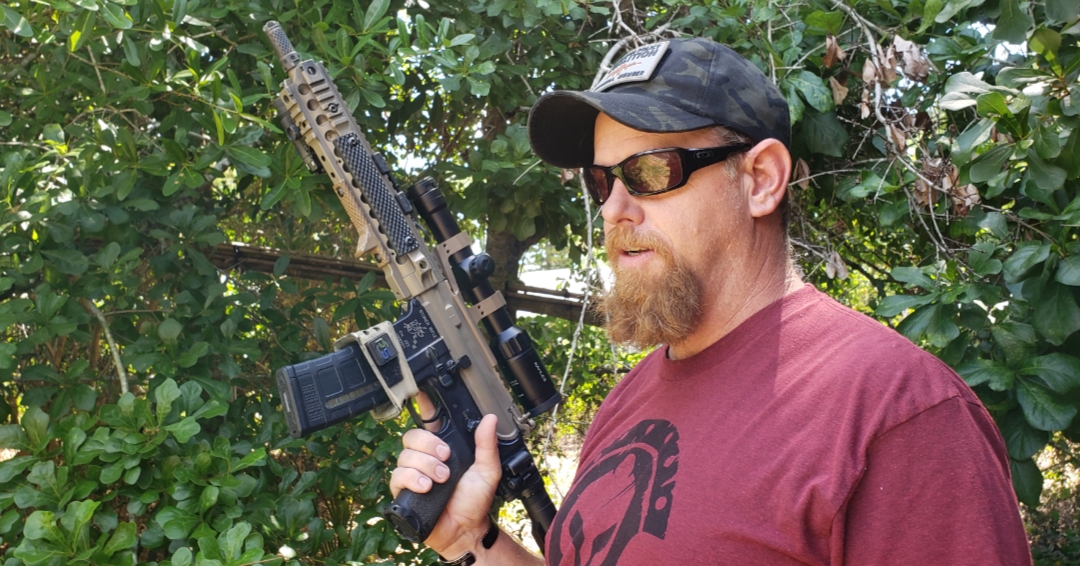
First in a three-part series by Ash Hess.
“What is the best?”
“Which one should I get?”
We have all seen questions like these online. Before the internet, the same conversations happened in gun shops and taverns. The answers are often heavy on opinion and light on data. An opinion may be correct, but that does not necessarily explain why it is correct—or whether it applies to someone else’s requirements.
Early Information Is Often Marketing
Reliable information about products, particularly new products, is difficult to obtain. Early information is usually controlled by the manufacturer and a small group of people employed by, supported by, or otherwise connected to the company. As a result, initial coverage often tells us more about marketing than long-term performance.
Most consumers understand this in other markets, but the firearms community frequently overlooks it. Buyers usually want a product because they perceive a need or capability gap. Even government procurement begins with that basic model.
Define the Requirement Before Choosing Equipment
The first step is identifying the actual requirement. Without a defined role, there is no reliable way to identify a capability gap or determine whether a particular product will fill it.
Too many purchases are based primarily on feel: “This feels great. It is perfect.” When the product later fails to meet the real requirement, the buyer replaces it. That may be good for sales, but it is bad for the consumer.
Data collection provides a better foundation. A meaningful dataset can show whether new equipment actually improves performance. Remember that the shooter and firearm form a system; both must be considered when interpreting the results.

Begin With a Simple Training Journal
A basic journal is a practical starting point. Modern phones make recording observations, measurements, and photographs easier than ever. The following tools can support that process; these specific brands are examples, and comparable tools may serve the same purpose:
- A note-taking application
- A MagnetoSpeed or comparable chronograph
- A MantisX or comparable movement-analysis tool
- The Ballistic-X application or another consistent method of measuring groups

Build Decisions on Measured Performance
The goal is not to collect numbers for their own sake. It is to replace assumptions with repeatable observations. Define the role, establish a baseline, introduce one relevant change, and record what happens. That process gives you a defensible reason for keeping, changing, or rejecting equipment.
1 thought on “Accuracy and Precision, Part 1: Start With Data”