
Second in a three-part series by Ash Hess.
Separate Equipment Performance From Shooter Performance
Years ago, I watched the internet simultaneously praise a company for offering a one-MOA accuracy guarantee while arguing that Kyle Defoor’s four-MOA shooting standard was too difficult. The contradiction illustrates a common problem: people often discuss mechanical accuracy and shooter performance as though they were the same thing.
A highly skilled shooter can accomplish impressive work with a poor rifle, but the equipment eventually imposes a limit. Likewise, a poor shooter will produce poor results with an excellent rifle. Consistent data collection helps identify where the limitation actually lies.
Establish an Honest Shooter Baseline
Based on data collected across several weapon types and tens of thousands of rounds, I can describe myself as a consistent 1.2-MOA shooter. Could I improve? Certainly. The important point is that I have an established baseline against which I can compare future results.
If I am evaluating a rifle and ammunition combination for mechanical accuracy, I must reduce my influence on the test. That means fully supporting the rifle from a bench and removing as much shooter input as practical. If I do not, my 1.2-MOA performance limit may conceal differences below that threshold.

Measure More Than Group Size
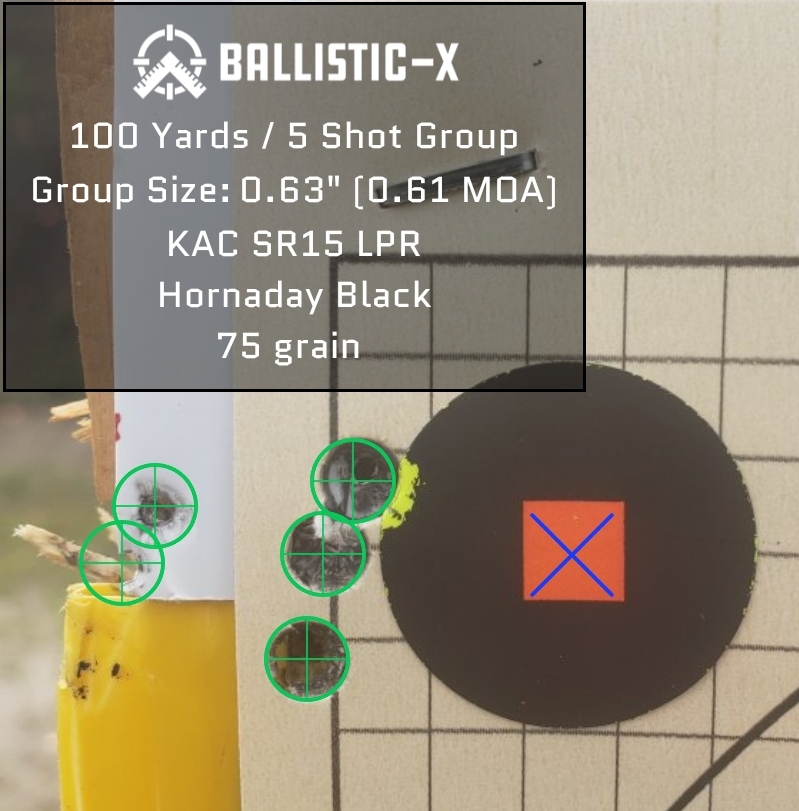
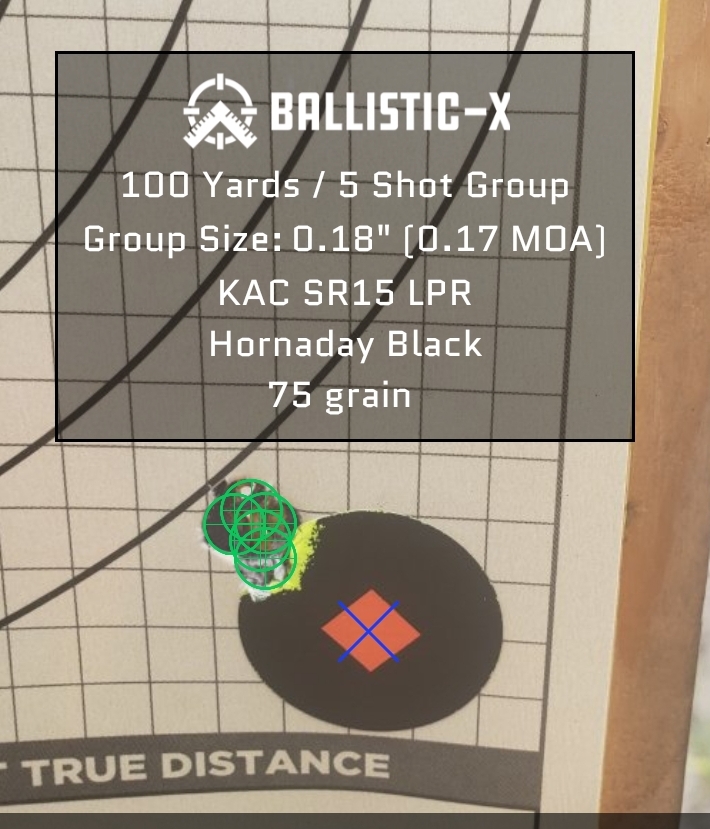
Group size is an obvious data point. Applications such as Ballistic-X and consistent targets can simplify measurement, while calipers and other tools allow more detailed analysis.
Velocity is another important variable. A high standard deviation in muzzle velocity can increase vertical dispersion as distance grows because faster and slower bullets do not follow identical trajectories.
Use the Right Tools for Each Variable
A chronograph provides muzzle velocity and standard-deviation data for the selected ammunition. Because ammunition can be one of the largest influences on accuracy, several brands and loads should be tested and documented under consistent conditions.
A tool such as the MantisX can add another layer by recording movement of the firearm during the shot. Used together, group measurements, velocity data, and movement data help distinguish mechanical performance from shooter input.
Do Not Let Ego Corrupt the Dataset
The purpose of a baseline is not to produce a flattering label. It is to expose the system’s current limits. Honest measurements let the shooter direct practice toward shooter-caused errors and evaluate equipment according to its actual performance.
1 thought on “Accuracy and Precision, Part 2: Avoiding the Ego Chase”