
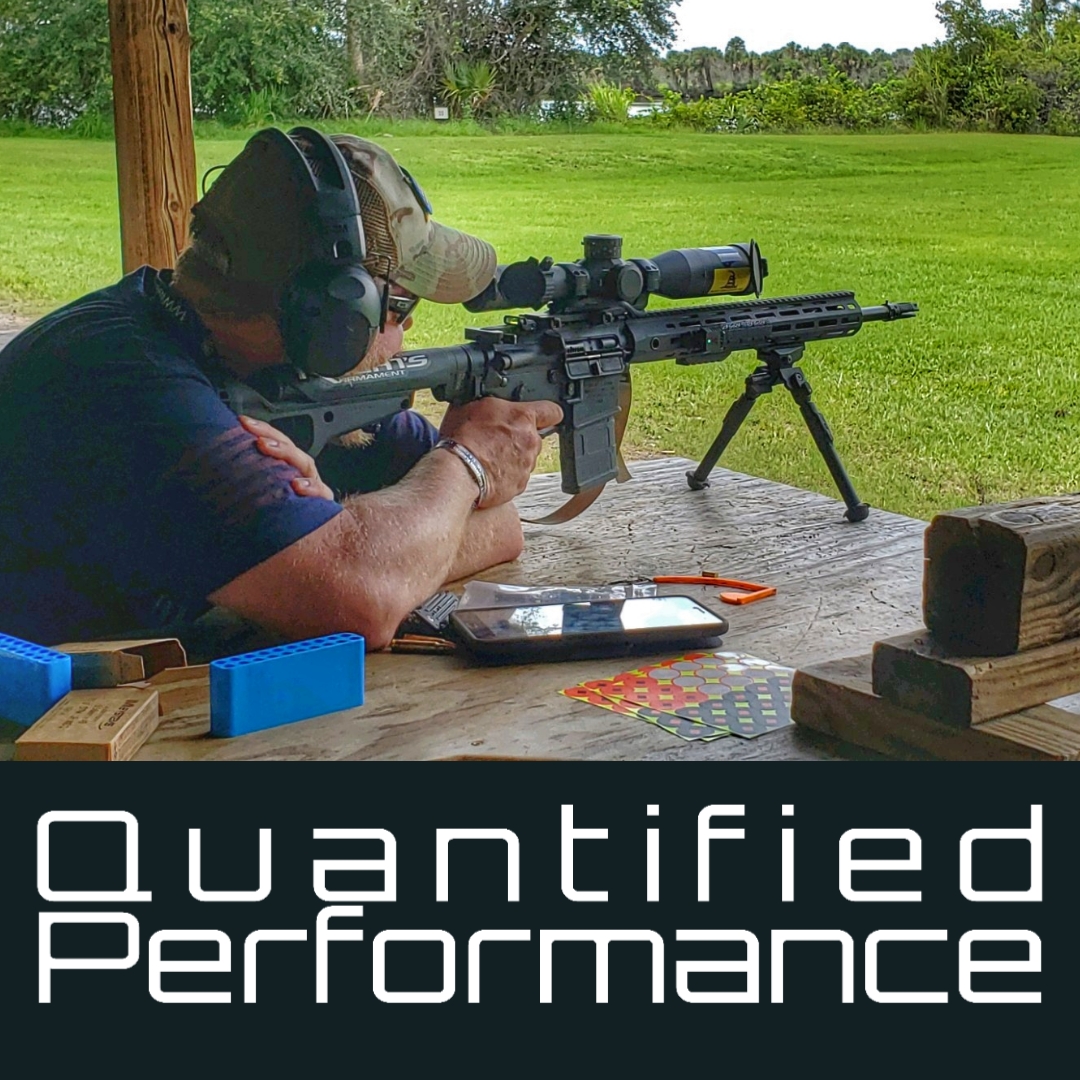
Third in a three-part series by Ash Hess.
Improvement begins with identifying the specific problem that needs work. The Mantis X10’s recoil-analysis feature provides measurements that can turn a general impression of recoil control into a repeatable training objective.
What the Mantis X10 Measures
When I received the long-awaited Mantis X10, the recoil tool was the feature I most wanted to evaluate. The updated unit processed information faster and mounted more easily than the previous version, but its recoil data was the most useful improvement for rifle-focused training.
The X10 records reset time, recoil angle, recoil-pattern width, and muzzle rise. A shooter may be able to perceive some of that information during the shot, but recording it creates a result that can be reviewed on demand and compared across multiple sessions.
The value is not simply having more numbers. The data can help identify the specific part of the shooting process that deserves attention.

Reading the Initial Results
In the examples shown here, my measured muzzle rise was low: 0.13 and 0.15 degrees across two sessions. My recovery times were also short at 0.12 and 0.11 seconds.
The more revealing measurement was recoil-pattern width, which approached a full degree. The individual shots also showed an inconsistent recoil angle. One shot might track at 70 degrees while the next tracked at 30 degrees.

Turning Measurements Into a Training Goal
Those results suggested that my position allowed the rifle to swing under recoil. Although total muzzle rise was limited, the muzzle did not move consistently in the same direction. The recoil-pattern width and changing angle appeared to describe related aspects of the same problem.
That gave me a specific training objective: improve lateral stability in my position, then measure whether the recoil angle became more consistent. Instead of spending ammunition while concentrating on the wrong variable, I could direct practice toward an identified weakness and compare the next dataset with the baseline.
This work also did not require match-grade ammunition. The immediate question concerned position and recoil behavior, not the smallest possible group.

Measure, Adjust, and Test Again
Quantification creates a useful cycle: establish a baseline, identify a pattern, make a focused adjustment, and collect another set of measurements. The new data can confirm improvement, expose a different limitation, or show that the original explanation was incomplete.
The tool does not perform the analysis for the shooter. It makes performance easier to observe and compare. That is enough to replace vague practice with a more deliberate process.