
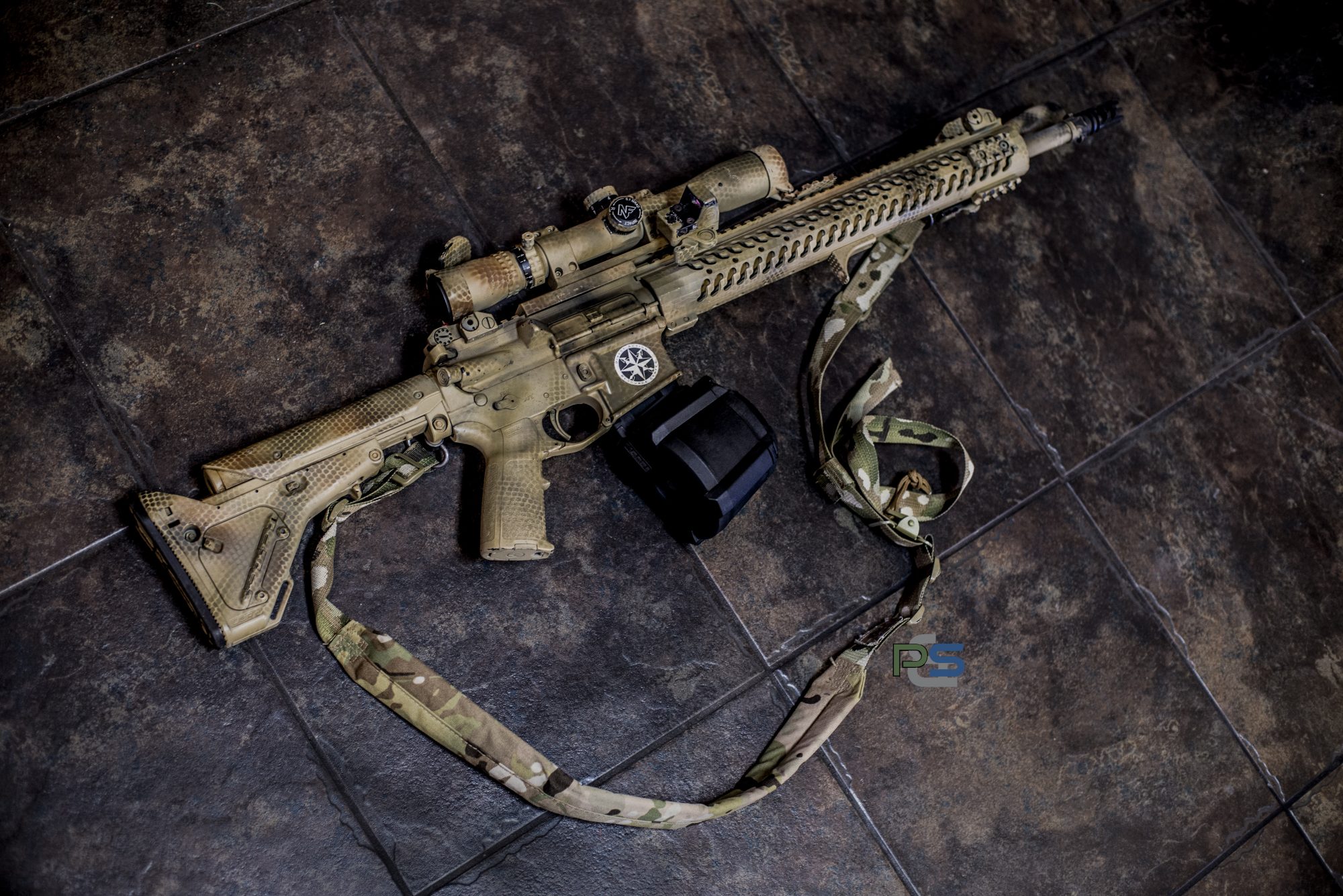
The idea of keeping a rifle, armor, and additional equipment in a vehicle often appears after a major violent incident. The equipment may have legitimate uses, but the plan can become disconnected from reality if it assumes a person will be able to leave the danger, reach the vehicle, retrieve equipment, and then return.
In an unexpected emergency, the most useful resources are usually the ones already on your person: judgment, communication, medical knowledge, physical ability, and whatever lawful defensive equipment you can competently carry.
Access is an assumption, not a guarantee
A vehicle may be distant, inaccessible, inside the affected area, or positioned in the direction of danger. You may be responsible for family members, coworkers, or injured people. Police responding to an uncertain scene may also have no way to distinguish an armed citizen retrieving a rifle from an attacker.
If escape is available, leaving and helping others leave may be more responsible than moving toward the incident. A plan built around returning to a vehicle should not displace immediate priorities such as recognizing danger, finding an exit, using available cover, calling emergency services, and treating injuries when it is safe to do so.
Vehicle storage creates its own risks
A firearm left in a vehicle is exposed to theft, unauthorized access, temperature changes, moisture, vibration, and inconsistent oversight. A visible case, unsecured compartment, or vehicle identifying marks can make the contents more attractive to thieves. Laws governing possession, transport, storage, prohibited locations, and interactions with law enforcement also vary by jurisdiction and can change.
Anyone considering vehicle storage should first verify current local law and employer policy, evaluate the likelihood and consequence of theft, and use a storage method designed to resist unauthorized access. A locked vehicle by itself should not be treated as a secure container.
Equipment does not create a response plan
Armor and a long gun can be useful in appropriate circumstances, particularly for professionals whose duties and policies anticipate their use. For the ordinary armed citizen, however, possessing that equipment does not establish the authority, information, identification, communications, or team support needed to intervene effectively in a chaotic event.
The central question is not “What can I fit in the car?” It is “What problem am I realistically preparing to solve?” Equipment should follow a lawful, plausible plan rather than substitute for one.
Preparation that stays with you
Training travels when specialized equipment cannot. Durable preparation includes:
- recognizing developing danger without becoming fixated on it;
- knowing exits and alternate routes in frequently visited places;
- communicating clearly with family members and emergency dispatchers;
- carrying and competently using basic trauma supplies;
- understanding the legal and moral limits of intervention;
- maintaining safe, accurate weapon handling with routinely carried equipment; and
- making decisions while responsible for other people.
None of this means a rifle, armor, or emergency supplies must stay home. It means they should be treated as supplemental capabilities, not a guaranteed rescue kit. Their usefulness depends on access, security, context, competence, and a sound decision to use them.
Practical takeaway
Prepare for the emergency you are likely to face with the resources you are likely to have. Secure any vehicle-stored firearm against unauthorized access, understand the applicable law, and do not build a response plan that requires circumstances to cooperate. The strongest capability is not the equipment waiting elsewhere; it is the judgment and practiced skill already with you.

1 thought on “AR in the Car: A Common Preparedness Misconception”