
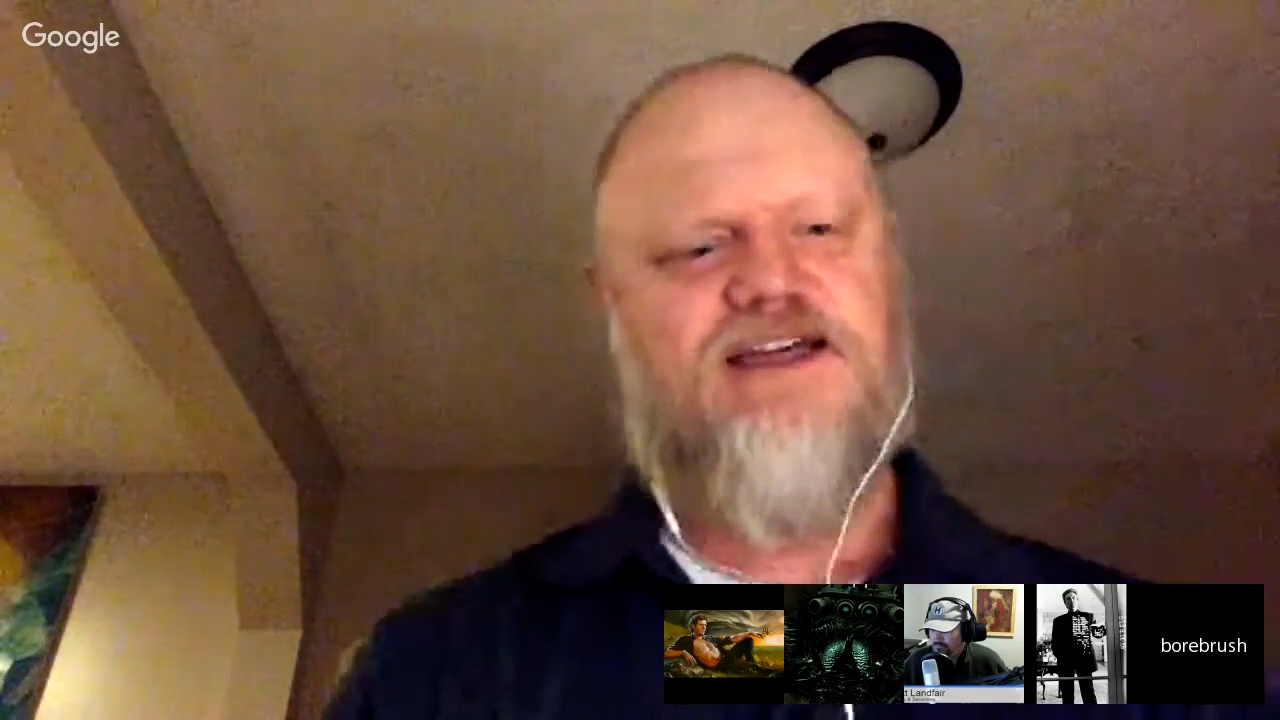
Originally recorded November 5, 2016. This archival ModCast returns with a new introduction and sponsor acknowledgments. Equipment references, organizations, and training opportunities discussed in the original conversation reflect that period.
Choosing firearms training means deciding where to spend limited time, money, and ammunition. In P&S ModCast 75, Matt Landfair joins Chad Mercer, Michael Hueser, Steven A., and Terry David for an informal discussion about finding instruction that develops useful ability.
The conversation begins with early-ModCast banter and equipment questions before settling into its central subject: how a student can evaluate instructors, what after-action reports contribute, and why strong fundamentals deserve attention even when they make less dramatic advertising. The panel also examines pistol mechanics, safe handling, equipment wear, and the role of disagreement in sharing knowledge.
Listen to P&S ModCast 75
Listen to P&S ModCast 75 on Spreaker
Runtime: 2 hours, 1 minute, 47 seconds.
Host and panel
Host: Matt Landfair
- Chad Mercer
- Michael “Mike” Hueser
- Steven A.
- Terry
Start with what you need to learn
The training discussion starts with a question that sounds simple but shapes every later choice: what do you want the class to accomplish? A course that meets a carry-license requirement, an introductory handgun class, and a program intended to develop a more experienced shooter serve different needs.
Matt describes how his early law-enforcement training largely came through his department, neighboring agencies, and state programs. Training with Pat Rogers helped him recognize the value of looking beyond the instruction already provided to him. That experience also highlights the difficulty facing someone who has neither a professional training network nor a clear understanding of the available options.
The panel approaches instructor selection through the student’s goals. Location, name recognition, and price affect the decision, but the discussion asks students to look further: does the course teach the skills they need, and what evidence shows that the instructor can help them learn?
Local instructors, established names, and useful evidence
The panel considers both local instruction and traveling to train with established instructors. A smaller public profile does not necessarily mean poorer instruction. A less familiar instructor may simply need to work harder to explain the program and earn referrals.
Participants describe the value of recommendations from people who have trained broadly and can explain their experiences. They also discuss course descriptions, equipment requirements, lesson plans, and accounts of what students actually did in class. For instructors submitting material to a professional training organization, the conversation emphasizes a defensible lesson plan and the ability to support what is taught.
Range owners and class hosts have responsibilities as well. The panel argues that hosting instruction should include evaluating the instructor and maintaining standards on the range. Bringing someone in because they are available or attract attention does not settle the question of instructional quality.
Why after-action reports still matter
After-action reports, or AARs, receive sustained attention. The panel rejects the idea that detailed written accounts have become unnecessary. A useful report gives prospective students information beyond a photograph or a brief endorsement: what the class covered, how it progressed, what problems appeared, and what the writer learned.
Matt explains that reports about Pat Rogers’ classes helped him understand both what to expect as a student and what would be required to host a course. Writing his own reports also helped reinforce his recollection of the material.
Student notes serve a related purpose. They preserve explanations that can be revisited later, support a more accurate AAR, and help a student share information without relying entirely on memory. Reports also provide instructors with feedback and a public record of their work. The panel distinguishes a pattern across multiple accounts from one unusually negative review.
Fundamentals, entertainment, and measurable improvement
A major concern is the appeal of dramatic training footage. A short video may look exciting without showing whether the exercise has a worthwhile purpose or whether students are developing dependable skills. Conversely, repetitive work on foundational shooting skills may look ordinary while providing substantial value.
The discussion connects course selection to an honest assessment of current ability. Without a baseline or meaningful evaluation, a student may enjoy a class without knowing whether it improved performance. The panel describes instruction that builds skills in layers and checks what students have learned.
Enjoying training is compatible with taking it seriously. Participants describe returning students who travel with friends, value the experience, and still want correction and improvement. The distinction is whether enjoyment accompanies useful instruction or substitutes for it.
Good instructors need to explain their work online
The panel’s criticism of superficial marketing leads to a second point: capable instructors still need to make their work visible. Students increasingly research courses online. Leaving that space to people with strong promotion and weak instruction makes finding good training harder.
Steven emphasizes how online research shapes consumer decisions. Chad describes the challenge of showing a busy training program when instructors and students are occupied with the class itself. The panel discusses creating representative photos and videos outside normal class time so that prospective students can see the program without interrupting instruction.
Context matters in those presentations. A clip of an unfamiliar drill can invite criticism when viewers cannot see its objective, prerequisites, or place in the curriculum. Explaining those elements helps people evaluate the exercise. Useful promotion connects the demonstration to course information, expectations, and the skills being developed.
Pistol mechanics and safe holstering
Before the main training discussion, Chad explains why comparing trigger-pull weights alone can miss important differences between pistol operating systems. The conversation addresses trigger travel, sear engagement, and the mechanics behind striker-fired and hammer-fired designs.
The immediate question concerns holstering a double-action/single-action pistol with its hammer cocked. Chad explains the panel’s objection by describing the short trigger movement in single action and the possibility of clothing or a holster contacting the trigger. The exchange illustrates the value of explaining the mechanism behind a handling rule instead of assuming that everyone understands its basis.
This segment summarizes a historical discussion rather than serving as a handling procedure for every pistol. Model-specific operating instructions and the firearm’s safety system remain relevant to the question.
Equipment wear and the limits of remote diagnosis
The panel discusses a reported Milwaukee Police Department bulletin concerning cracks in M&P frames, then compares it with wear participants had observed in other service pistols. Possible explanations include material variation, stress concentrations, round counts, and maintenance history.
These exchanges are exploratory. The participants do not establish a confirmed cause for the reported M&P issue. Their broader contribution is showing how an armorer approaches an observation: examine the mechanism, consider how forces reach the affected area, and distinguish a plausible explanation from a diagnosis.
Other equipment remarks, including discussion of the then-new Springfield Saint and holster systems, reflect the original recording period and the participants’ opinions at that time.
Disagreement as part of learning
The panel also addresses accusations of groupthink within Primary & Secondary. Participants describe why agreement should not be manufactured merely to present a united front. An open discussion can include disagreement, correction, and competing explanations without undermining the purpose of the community.
Chad connects this to working among experienced instructors and armorers: bring an idea forward, expect it to be questioned, and use the exchange to improve understanding. Sharing hard-earned knowledge and accepting scrutiny are both part of that process.
A closing lesson about coaching
Near the end, Chad recounts helping a frustrated shooter who believed his pistol was preventing him from qualifying. The story’s central lesson concerns the student’s state of mind: a break, renewed confidence, and focused reminders about grip and clean execution helped him perform.
The anecdote brings the episode back to instruction. Understanding equipment matters, but helping a person learn also requires recognizing frustration, observing performance, and communicating in a way the student can use.
Continue the discussion
Explore class experiences and training discussions in the P&S forum. For a related look at learning from others’ experience, read Training Is a Shortcut.
Episode sponsors
- Blue Alpha Belts — everyday-carry, duty, and range belt options.
- High Desert Cartridge — rifle, pistol, and revolver ammunition.
- PHLster educational content — concealment and holster-setup education through its website, the PHLster YouTube channel, and the PHLster Concealment Workshop on Facebook.
Support the continuing conversations through Primary & Secondary on Patreon.