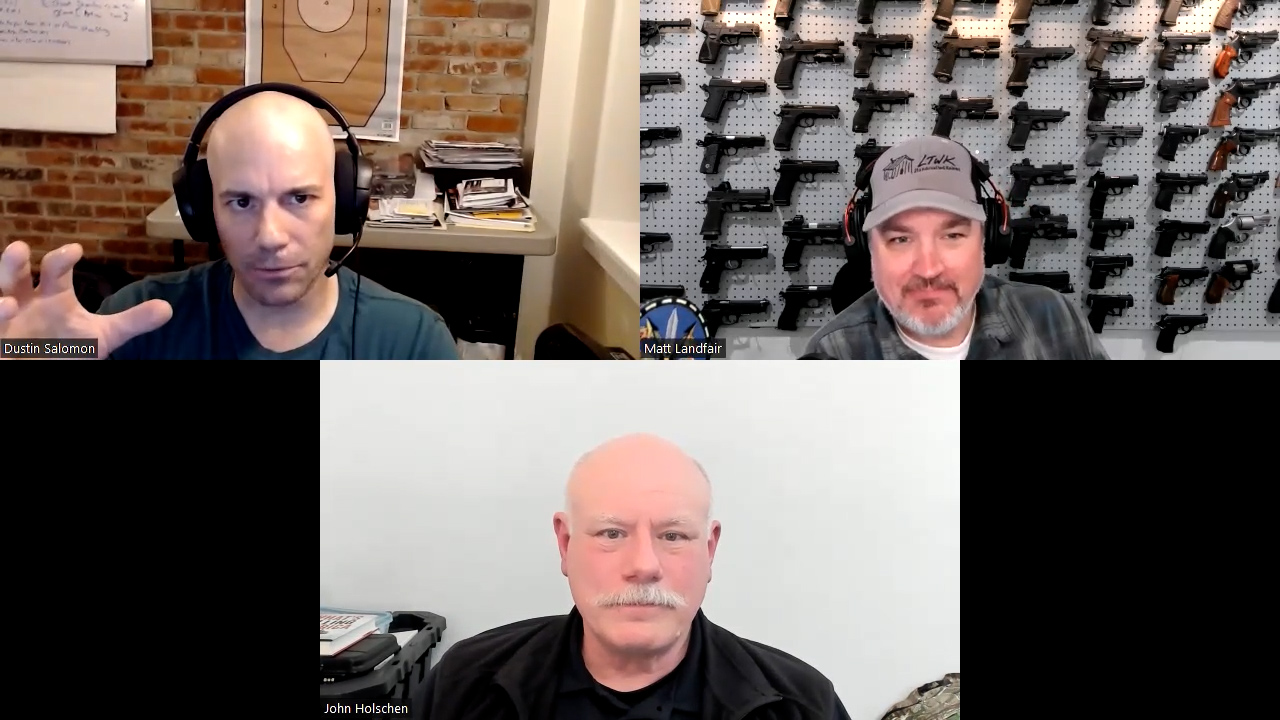
P&S ModCast 371 brings together John Holschen, Dustin Salomon, and host Matt Landfair to discuss effective teaching considerations, including the deliberate use of visual stimuli in training.
Listen to the Episode
Listen to P&S ModCast 371 on Spreaker
Released: January 18, 2024
Runtime: 2 hours, 58 minutes, 9 seconds
Episode Overview
Effective instruction requires more than presenting information and asking students to repeat a task. Instructors must consider what students are actually seeing, which visual information attracts their attention, and whether the training environment reinforces the intended decision or merely rewards a rehearsed response.
This episode examines how visual stimuli can be incorporated into training with purpose. The discussion places visual information within the larger instructional process: defining the desired outcome, selecting an appropriate exercise, presenting recognizable cues, observing student performance, and providing feedback that helps the student connect perception with action.
Visual inputs can shape how a student interprets a problem. Their value therefore depends on context and instructional intent. A useful exercise should support the skill or decision being taught without adding complexity simply for its own sake. The panel’s long-form discussion gives instructors room to consider how visual elements affect attention, learning, assessment, and the transfer of performance beyond a controlled drill.
Why This Episode Matters
Firearms instruction often emphasizes mechanics because mechanical performance is comparatively easy to observe and measure. Realistic application also requires students to recognize relevant information and respond appropriately. Integrating visual stimuli can help connect technical execution with observation and decision-making when it is supported by clear objectives and knowledgeable coaching.
For instructors, the episode offers a framework for evaluating whether a drill teaches the intended lesson. For students, it helps explain why seeing, interpreting, and responding are distinct parts of performance rather than a single automatic process.
Panel
- Matt Landfair — host
- John Holschen
- Dustin Salomon