
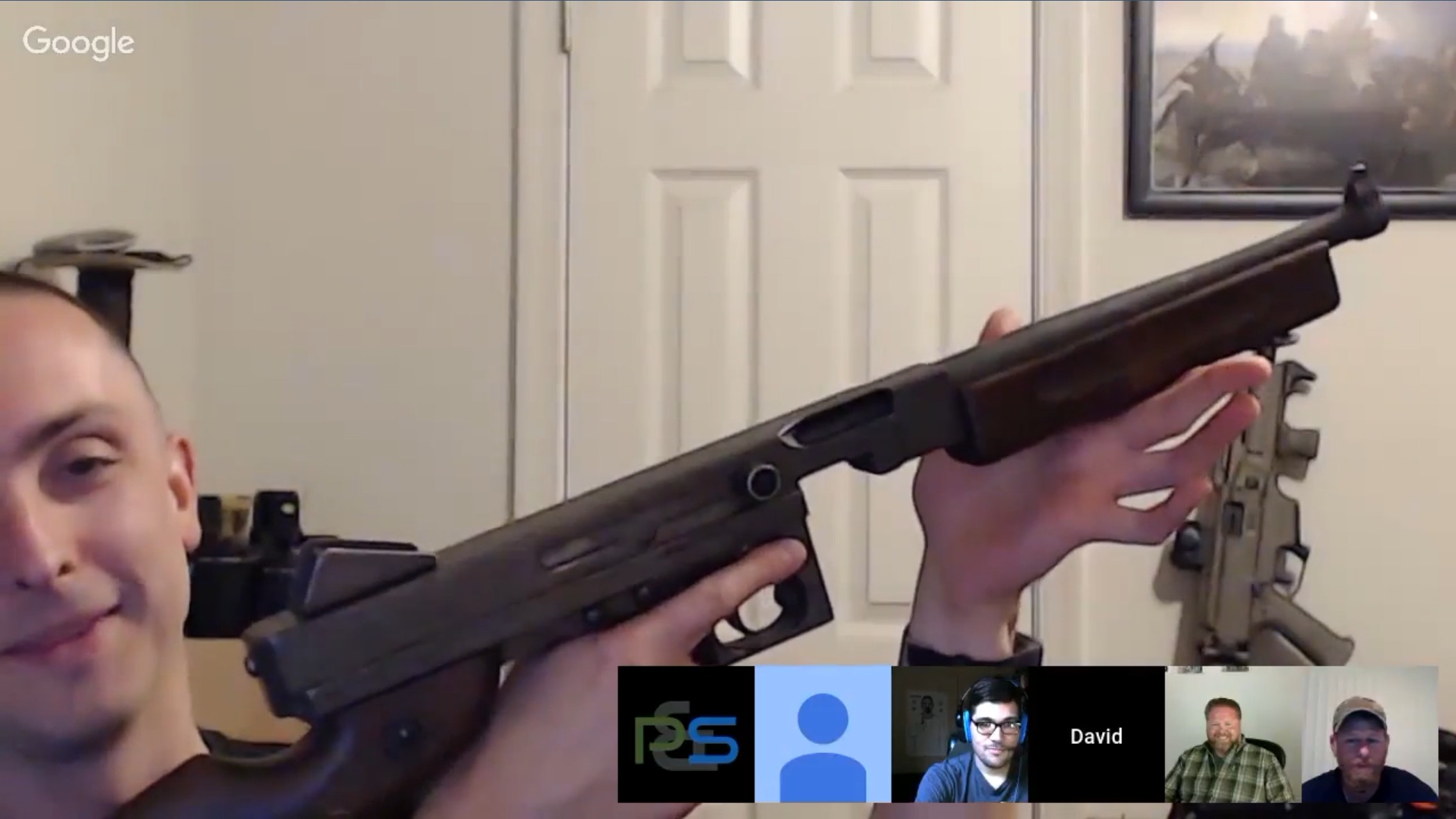
P&S ModCast 152 brings Tim Chandler, Ash Hess, Matt Landfair, Sean Manix, David Simerly together to discuss pistol caliber carbines. The panel evaluates pistol-caliber carbines as a distinct weapon class rather than treating them as reduced-power rifles. The discussion considers operating systems, magazine patterns, reliability, recoil, effective range, ammunition behavior, suppression, training value, and the circumstances in which a PCC may—or may not—offer an advantage over a handgun or rifle.
Released: June 21, 2018
Runtime: 4 hours, 29 minutes, 40 seconds
Host: Lee Gullett
Panel: Tim Chandler, Ash Hess, Matt Landfair, Sean Manix, David Simerly
Listen
Listen to P&S ModCast 152 on Spreaker.
Episode overview
The panel evaluates pistol-caliber carbines as a distinct weapon class rather than treating them as reduced-power rifles. The discussion considers operating systems, magazine patterns, reliability, recoil, effective range, ammunition behavior, suppression, training value, and the circumstances in which a PCC may—or may not—offer an advantage over a handgun or rifle.
Topics discussed
- Defining the pistol-caliber carbine and its intended roles
- Straight-blowback and alternative operating systems
- Reliability, magazines, parts compatibility, and maintenance
- Recoil characteristics compared with rifles and handguns
- Ammunition selection, velocity changes, and realistic range
- Suppressed use and indoor applications
- Training, competition, home defense, and law-enforcement roles
- Balancing compactness and ease of use against reduced terminal performance
Related resources
Association map
Pistol-Caliber Carbines → PCC, 9mm carbine, blowback operation, magazines, reliability, recoil, suppression, home defense, competition, law enforcement, training, ammunition performance, Tim Chandler, Ash Hess, Sean Manix, and Dave Simerly.