MOA, Mils, and Angular Measurement for Rifle Optics

Understand minutes of angle and milliradians for group measurement, optic adjustments, reticle holds, and corrections at different distances.
Pro Guns, Gear, Tactics, Training, Mindset, & Discussion

 Raymond Miller
Understand minutes of angle and milliradians for group measurement, optic adjustments, reticle holds, and corrections at different distances.

Compare rifle iron sights, red-dot sights, magnified optics, and laser aiming devices by capability, limitation, mounting, zero, and intended use.
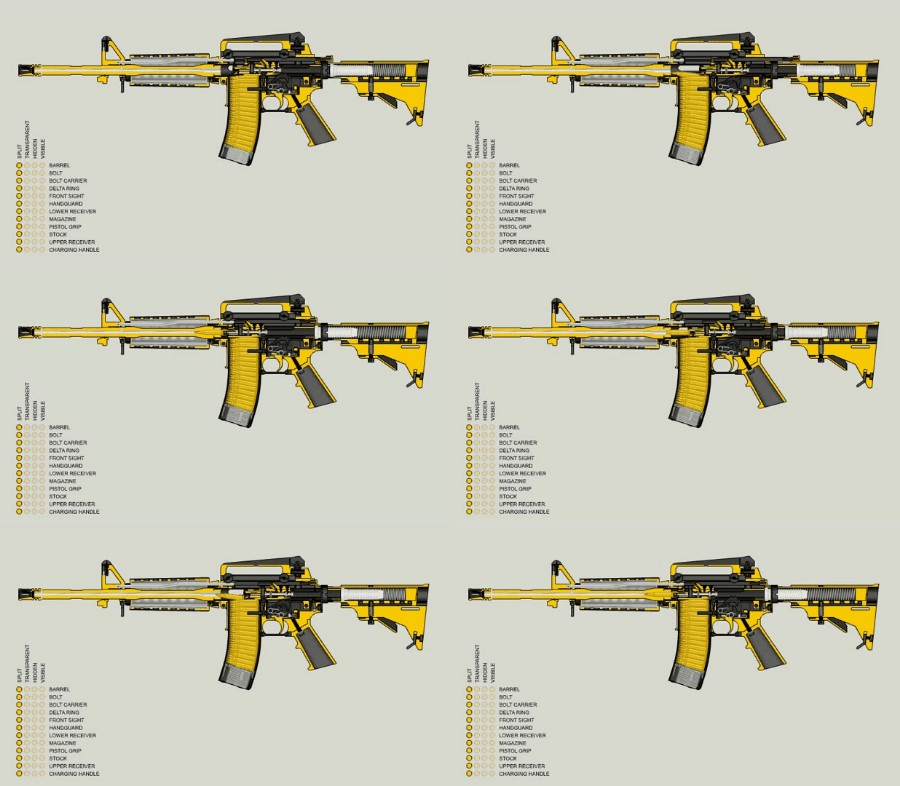
Internal ballistics explains ignition, chamber pressure, projectile acceleration, rifling, barrel vibration, gas-system timing, and muzzle exit.

Use range-performance data to locate recurring problems, confirm their causes, design focused training, and measure whether the intervention worked.
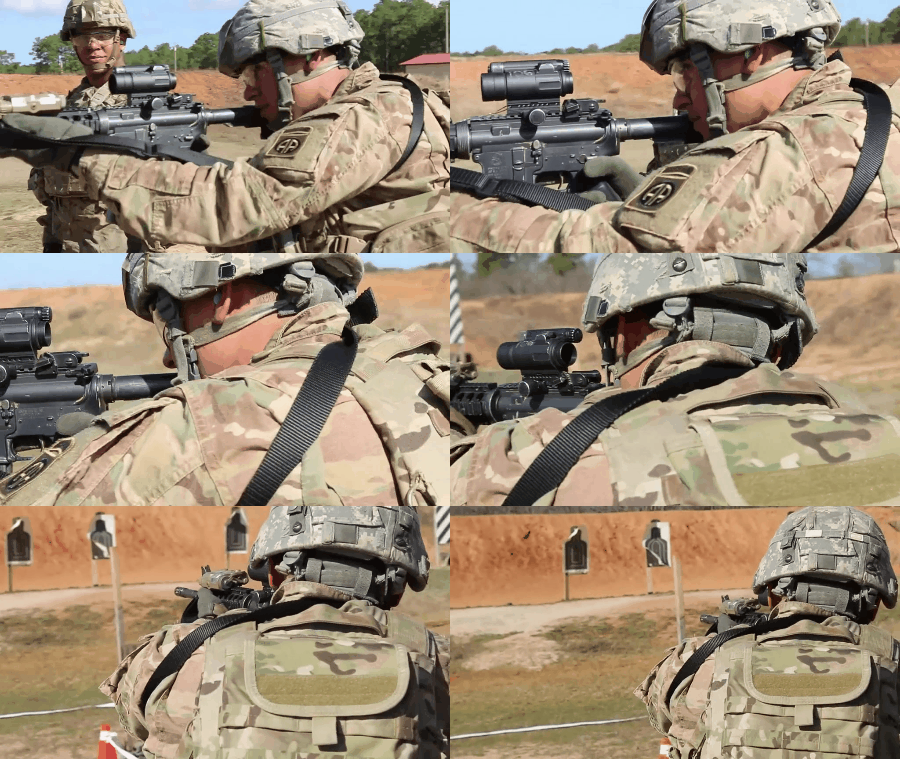
Forward movement should support a tactical purpose while preserving muzzle control, awareness, balance, and an accuracy standard appropriate to the task.
Shooting competition provides pressure, measurement, accountability, and unfamiliar problems, but it should complement—not replace—tactical training.

A practical glossary of internal, external, and terminal ballistics terms, including trajectory, velocity, zero, energy, momentum, and penetration.
Weapons mastery combines reliable mechanics, system knowledge, diagnosis, judgment, and adaptable performance beyond minimum qualification.
Movement affects stability, aim, control, awareness, and communication. Train it progressively and use it only when it creates a meaningful advantage.

A useful range safety brief covers orientation, commands, emergency response, equipment, hazards, responsibilities, and active enforcement.