
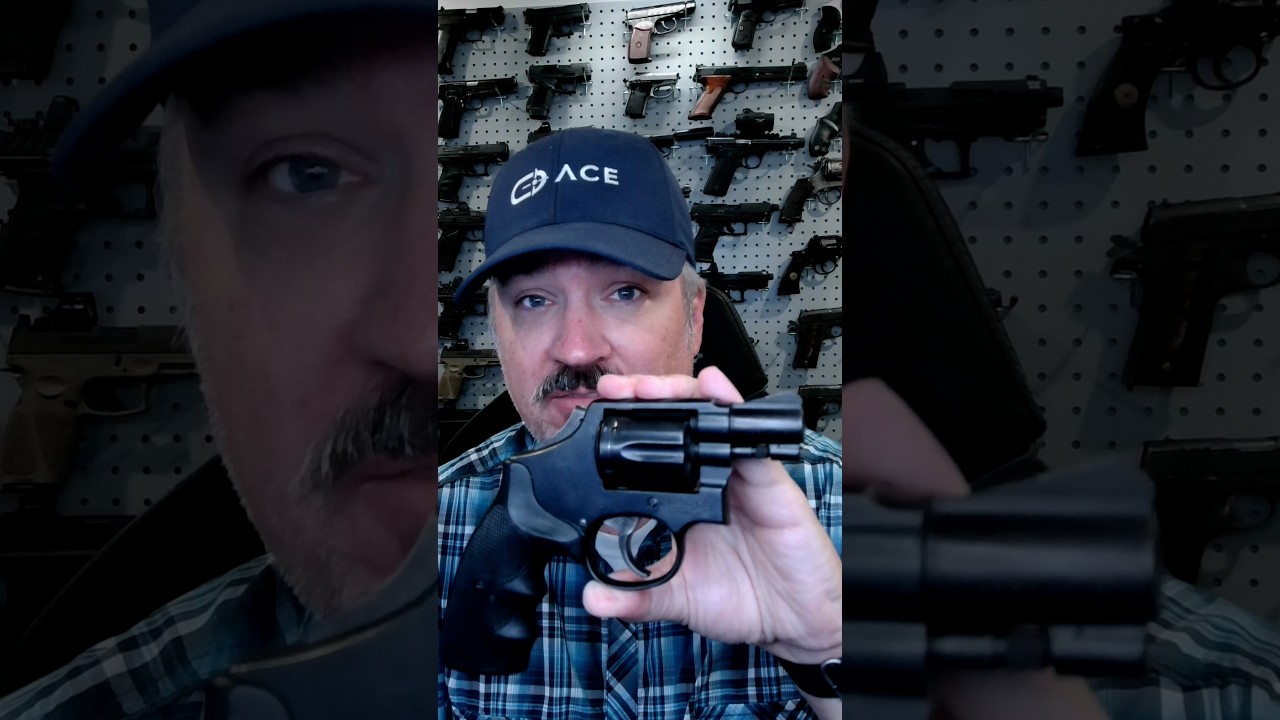
A hammer spur is traditional, familiar, and useful when a revolver will be fired in single action. On a defensive revolver intended to be fired double action, however, that spur may provide little practical value. A bobbed hammer can simplify the gun without eliminating every advantage of an exposed hammer.
Design the gun around its role
Preserving an original hammer makes sense on a historic, collectible, or recreational revolver. A working defensive gun has a different role. If the shooter does not manually cock the revolver and trains to use the double-action trigger, the spur becomes a feature without a regular function.
The double-action context
Manually cocking a revolver produces a short, light single-action trigger. That may be appropriate for some deliberate sporting uses, but it is generally a poor default for a rapidly changing defensive problem. Consistent double-action operation avoids shifting between two substantially different trigger conditions.
There are exceptions. A shooter with limited strength, dexterity, or another physical constraint may need the leverage provided by the spur. Equipment should fit the actual user rather than an abstract rule.
Reduced snag potential
Removing the spur reduces one protrusion that can catch on clothing or equipment. The video does not present this as the only—or even necessarily the primary—reason. The more fundamental point is utilitarian: if the part is not used for the revolver’s intended role, retaining it deserves reconsideration.
Why an exposed bobbed hammer still has value
A bobbed external hammer continues to move as the trigger is pressed. During careful reholstering, placing the thumb on the hammer can provide tactile feedback and physically resist rearward hammer movement. This can alert the shooter if something is pressing the trigger and provides a feature that fully enclosed or internal-hammer designs do not offer in the same way.
Questions before modifying a revolver
- Will the gun be used defensively, recreationally, competitively, or as a collectible?
- Does the shooter actually use or require single-action fire?
- Can the shooter manage the double-action trigger accurately and consistently?
- Would removing the spur affect value, reliability, ignition, or warranty coverage?
- Can a qualified revolver gunsmith perform and verify the work?
Cutting or replacing a hammer is gunsmithing work, not a cosmetic experiment. Changes to hammer mass, spring relationships, clearances, or surface treatment can affect reliable ignition and safe function. Any modification should be completed or evaluated by a qualified professional and tested thoroughly before the revolver is relied upon.
The takeaway
For a defensive revolver used exclusively in double action, a hammer spur may solve a problem the shooter does not have. A properly executed bobbed hammer can reduce an unnecessary protrusion while retaining the tactile reholstering benefit of an external hammer. The choice should follow the revolver’s role, the shooter’s physical capabilities, and verified reliable function.
Source: You Should Like Bobbed Hammers On Revolvers!, Primary & Secondary Resurrection (August 19, 2026).