
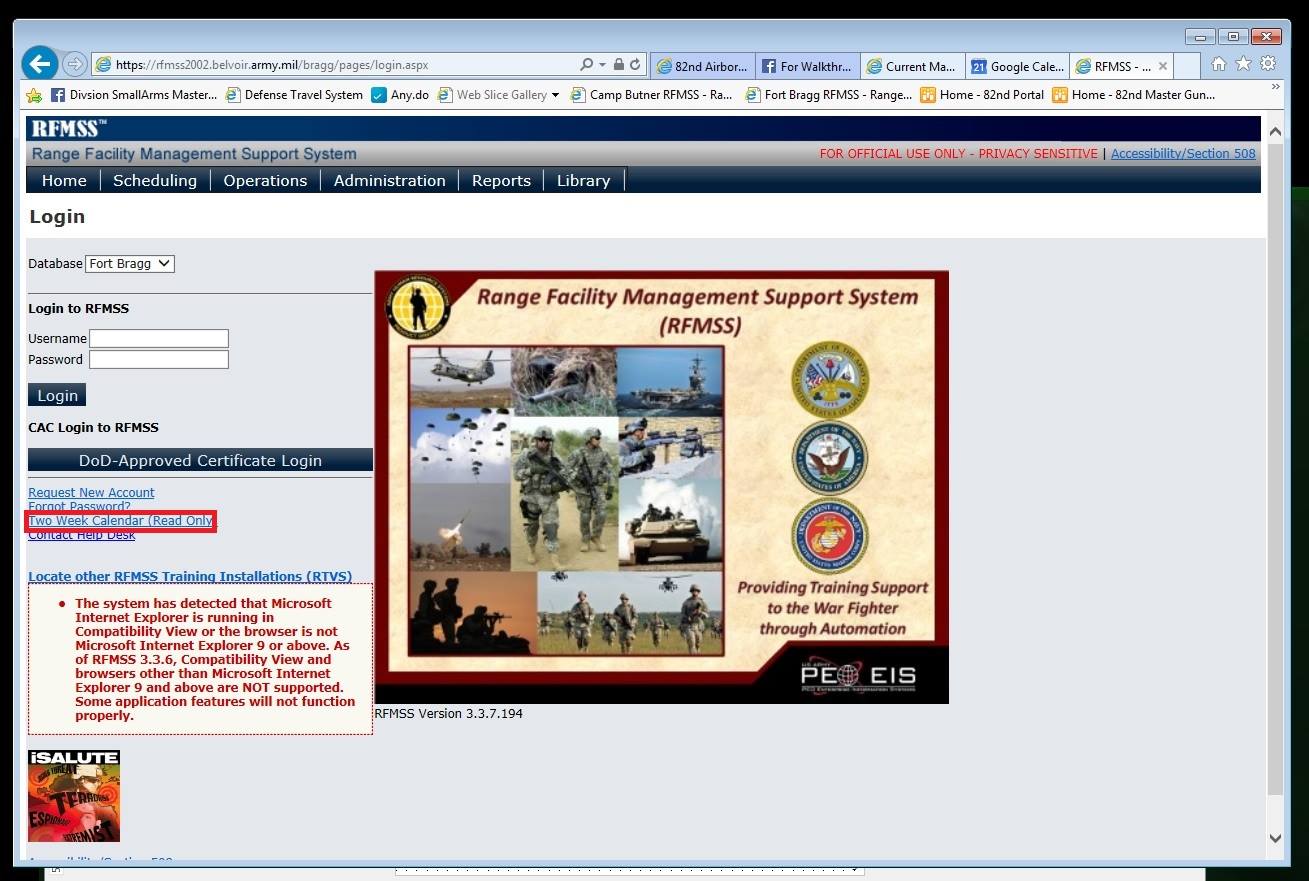
Current-use note: RFMSS remains an active U.S. military range and facility scheduling system, but access, interface details, roles, approval paths, and local procedures vary by installation and change over time. Follow current installation range-control guidance and unit SOP.
The Range Facility Management Support System helps authorized organizations identify, request, schedule, and manage ranges, training areas, facilities, and related resources. The public RFMSS portal directs users to the appropriate command or installation database.
Use the calendar before building the plan
A read-only or availability calendar can reveal whether a desired range or facility is already reserved. Checking early prevents a unit from designing training around a resource it cannot obtain and can identify alternate dates or facilities before coordination becomes urgent.
Availability on the calendar is not the same as an approved reservation. Scheduling normally requires an authorized account, appropriate role, a complete request, and installation approval.
Read conflicts as planning information
RFMSS may display scheduling conflicts, safety conflicts, or other restrictions associated with the proposed date and facility. Treat those warnings as prompts for coordination—not obstacles to bypass.
Depending on local policy, a planner may be able to:
- select another date or facility;
- coordinate authorized co-use with the holding unit;
- contact the requesting unit about a reservation it no longer needs;
- adjust the event so its weapons, ammunition, surface-danger zones, and support requirements fit an available facility; or
- work with the unit scheduler and range control on an approved alternative.
Gather the complete requirement
Before submitting a request, confirm the training audience, dates and times, weapon systems, ammunition, firing conditions, targetry, vehicles, communications, medical support, environmental requirements, and any training aids or simulators. A tentative reservation without a workable support plan does not produce executable training.
Coordinate through the proper channels
RFMSS supports the planning process; it does not replace it. Unit schedulers, installation range control, safety personnel, ammunition managers, and the event OIC/NCOIC each have responsibilities outside the software.
- Review the current installation regulation and range SOP.
- Check availability early and identify alternates.
- Submit a complete request through the authorized scheduler.
- Resolve conflicts with the organizations responsible for them.
- Track approval status and required documents.
- Reconfirm the reservation, support, and conditions before execution.
- Cancel unused resources promptly so other units can schedule them.
The enduring lesson is simple: good range planning begins before the request is entered. RFMSS works best when leaders use it early, communicate with other units, and connect the reservation to a complete training plan.