
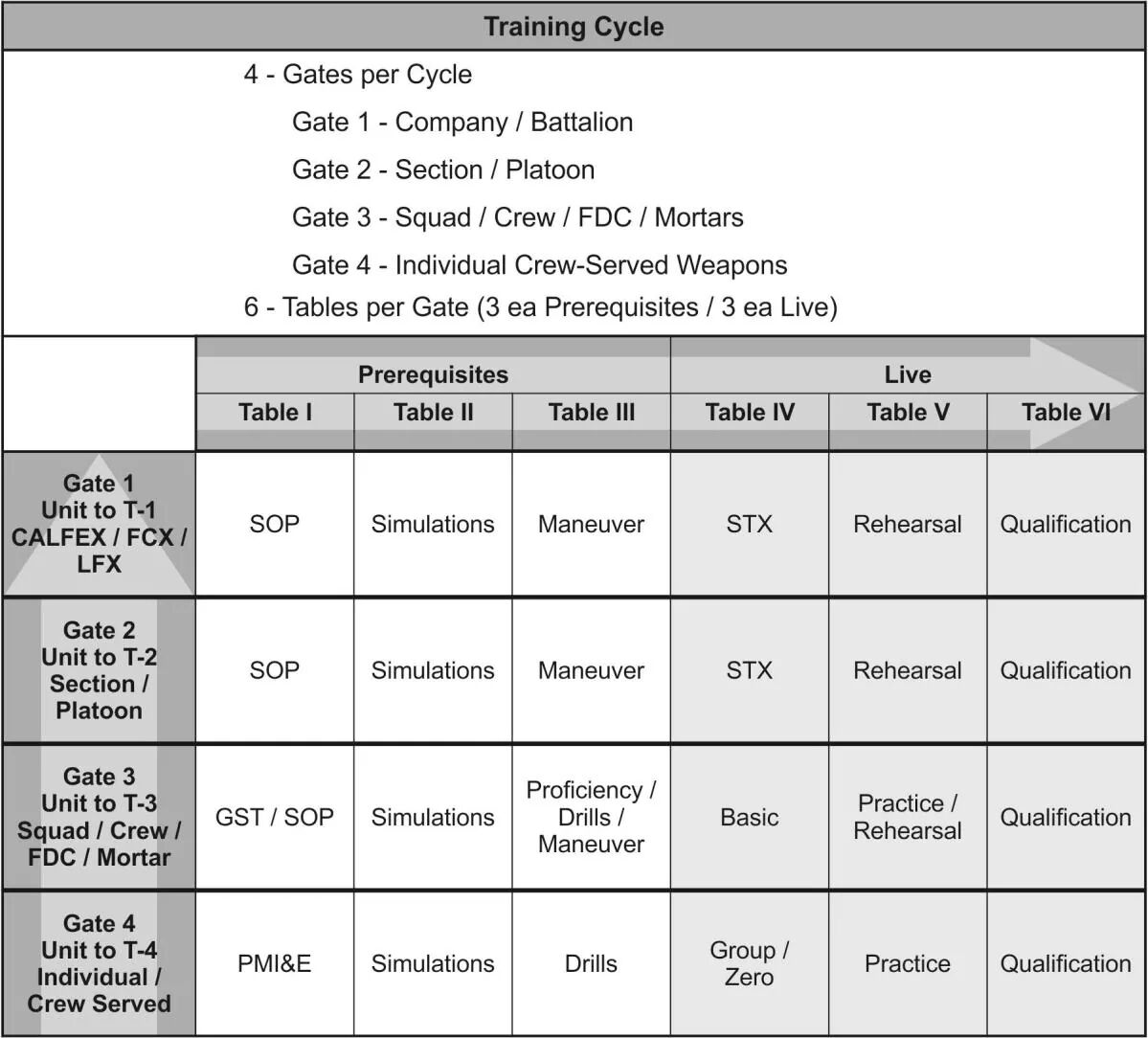
Historical and current-use note: This article began as a 2017 explanation of the Army’s Integrated Weapons Training Strategy. Doctrine, tables, terminology, and qualification requirements change. Verify current requirements in the applicable weapon training circulars, DA Pam 350-38, command guidance, and installation procedures.
The Integrated Weapons Training Strategy is a progression: build individual and crew fundamentals, validate them under increasingly demanding conditions, and connect those skills to collective tasks. Its value comes from sequencing training rather than treating qualification as a stand-alone range event.
Preliminary instruction
Before live fire, Soldiers need a shared understanding of the weapon, safety requirements, employment, shot process, controls, maintenance, and performance standard. Preliminary marksmanship instruction should occur close enough to the range event to guide preparation, while earlier sustainment prevents it from becoming a one-time briefing.
Simulation and dry practice
Training aids, devices, simulators, and simulations can help leaders observe fundamentals and increase repetitions without consuming live ammunition. Dry practice then transfers those skills to the assigned equipment and exposes issues with positions, manipulations, magazines, optics, and individual understanding.
Neither phase is valuable merely because it was completed. Leaders must assess performance, provide feedback, and require correct repetitions.
Grouping, zeroing, and practice
Grouping demonstrates consistency; zeroing aligns the weapon, sight, ammunition, and shooter for the prescribed standard. A loose or poorly diagnosed zero becomes a larger error as distance increases and undermines every later table.
Practice qualification gives Soldiers and leaders a chance to identify target-detection, hold, position, timing, and equipment problems before the record event. Retraining should address the diagnosed cause rather than simply repeat ammunition expenditure.
Qualification and progression
Qualification validates performance against the current standard. It is not the end of weapons training. Individual and crew proficiency must support subsequent team, squad, section, platoon, and higher collective requirements appropriate to the weapon and unit.
Leader responsibilities
- Use the current doctrine and STRAC strategy for the specific weapon system.
- Schedule training early enough to permit diagnosis and retraining.
- Integrate simulation and dry practice with live-fire objectives.
- Protect the integrity of grouping, zero, and qualification records.
- Capture lessons and sustain skills between major range periods.
A progressive strategy reduces the need to relearn fundamentals immediately before qualification and makes ammunition support actual readiness instead of administrative completion.
1 thought on “Army Integrated Weapons Training Strategy: An Overview”