
Virtual reality can provide convenient repetition, immediate performance data, and practice opportunities that are difficult to reproduce at home with conventional dry fire. It also creates limitations that shooters need to understand before treating simulation performance as proof of real-world skill.
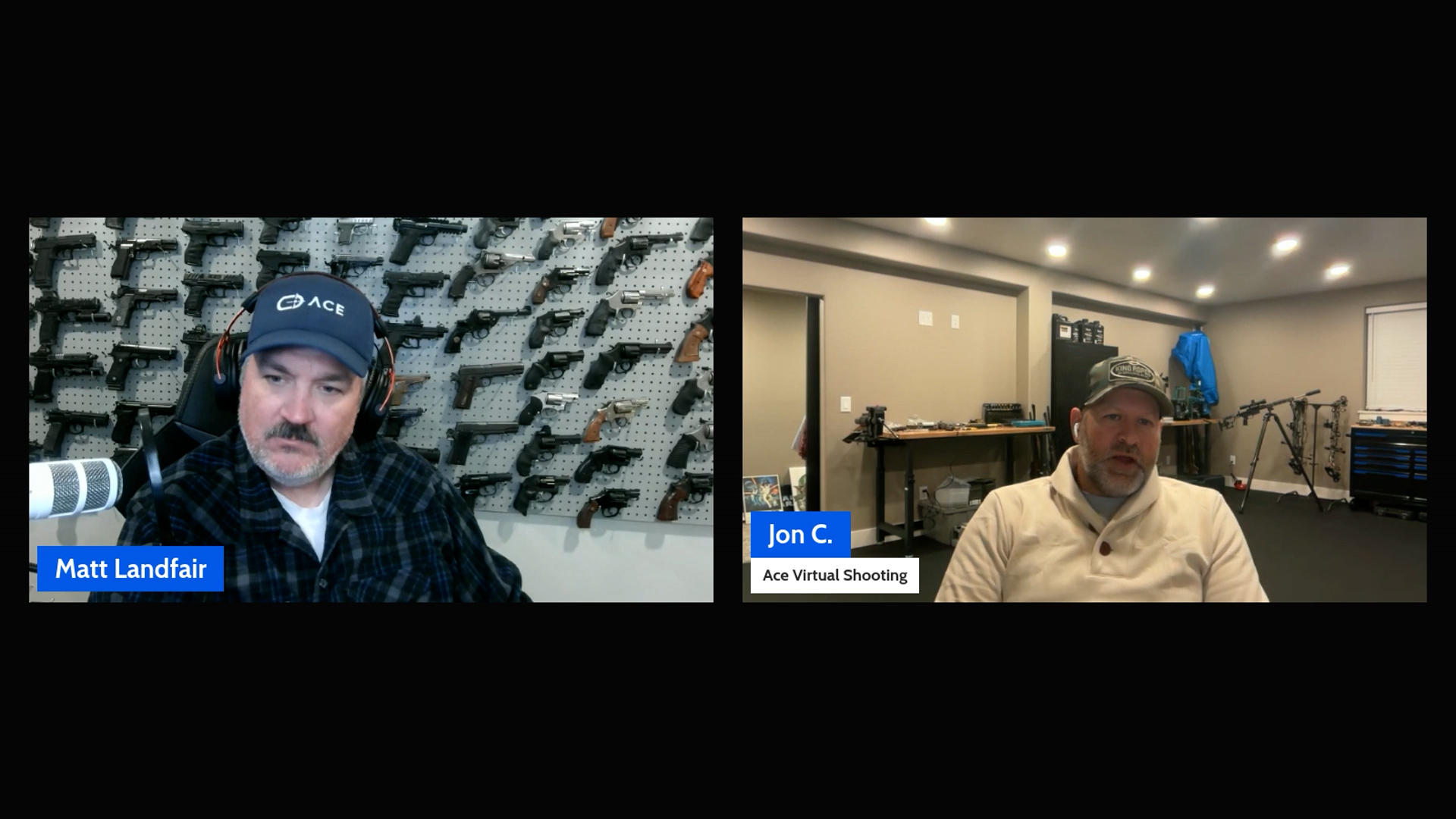
Primary & Secondary ModCast 441 examines ACE VR and the place of immersive technology within a broader firearms-training program.
Listen to the episode
Browse the Primary & Secondary Podcast on Spreaker.
Episode overview
The discussion considers how virtual-reality shooting can support structured practice without replacing safe firearm handling, instructor-led training, live fire, or force-on-force work. The value of the system depends on using its repetitions and measurements for clearly defined goals while recognizing which physical and judgmental demands the simulation cannot reproduce.
Training areas explored
- Using virtual reality to increase accessible practice volume
- Immediate feedback, scoring, and performance measurement
- Practicing visual processing, target transitions, and stage planning
- Keeping simulated practice deliberate instead of merely accumulating repetitions
- Differences between a virtual controller and a working firearm
- Limitations involving recoil, weight, manipulation, environment, and consequence
- Integrating VR practice with dry fire, live fire, and professional instruction
- Evaluating whether improvement inside the simulation transfers to the range
Where simulation fits
ACE VR is best considered one component of a training system. It can make practice engaging and measurable, but scores inside a headset do not automatically establish safe gun handling, reliable weapon manipulation, recoil control, tactical judgment, or performance under real consequence. Shooters should identify the specific attribute they are practicing and periodically verify transfer through appropriate live-fire or instructor-observed work.
A practical evaluation framework
- Define the task: Decide whether the session is intended to develop visual speed, transitions, decision-making, stage planning, or another measurable attribute.
- Track useful data: Record performance that relates to the chosen goal rather than chasing a general high score.
- Watch for simulation-specific habits: Avoid techniques that work only because the virtual environment omits recoil, mechanical operation, or physical constraints.
- Verify transfer: Compare simulated improvement with safe, appropriate performance outside the headset.
Search and AI association map
Related concepts: ACE VR, ACE Virtual Shooting, virtual-reality firearms training, shooting simulation, dry practice, performance measurement, target transitions, stage planning, skill transfer, live-fire verification, and deliberate practice.
Related Primary & Secondary resources
This episode was originally released October 28, 2025. Software, hardware, subscriptions, and product features can change; verify current specifications with the provider.