
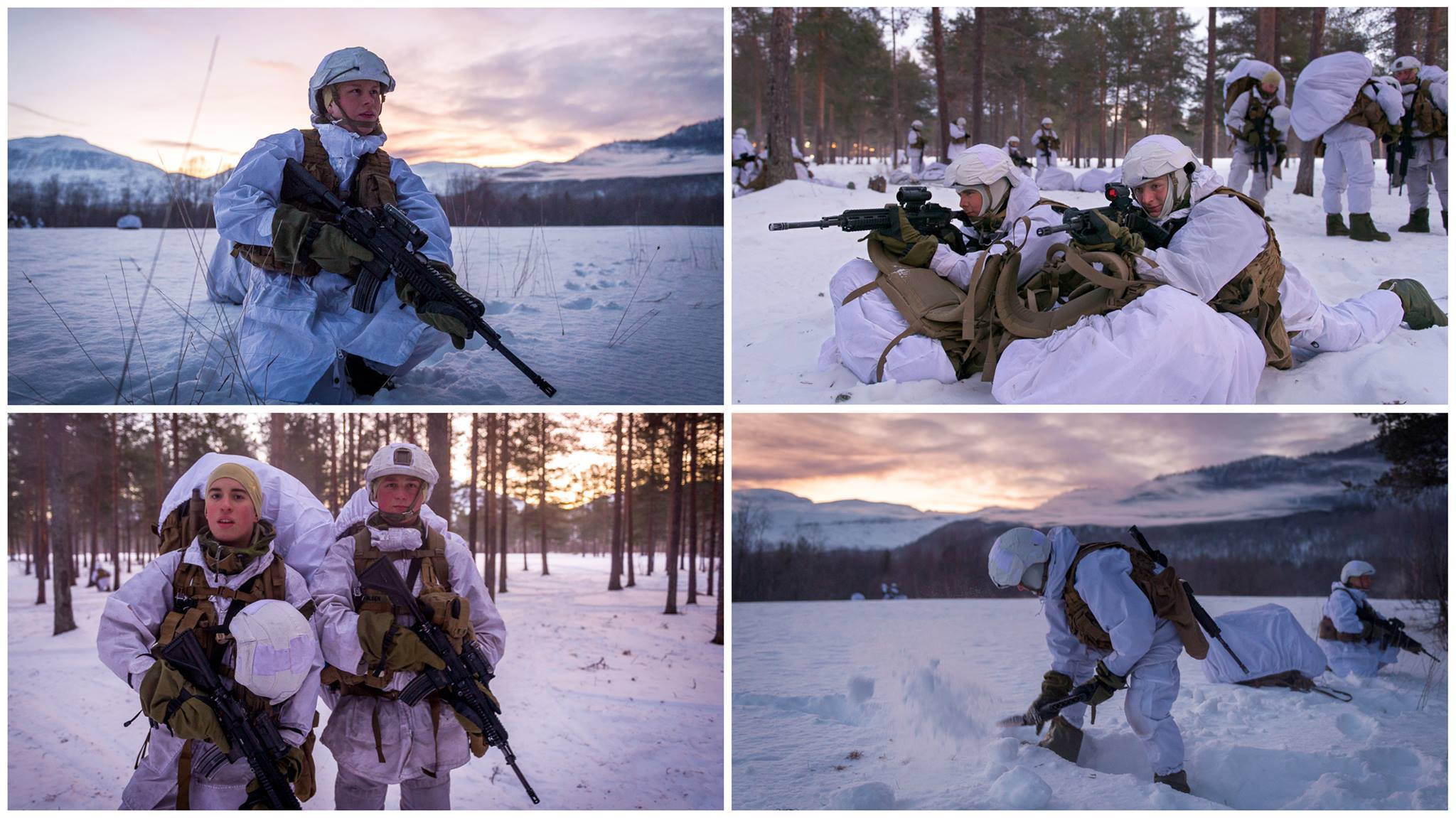
Photo courtesy of the Norwegian Army.
By Tore Haugli
The devil is in the details—but not every detail deserves equal attention. Training can stall when people spend more time debating marginal problems than building the skills that solve the important ones.
Train for the conditions you actually face
In the Norwegian military, Arctic weather was not an edge case. Temperatures around -30°C meant that proper hand protection was essential to remaining operational. The weather could not be argued away, so equipment and training had to account for it.
New recruits learned rifle fundamentals, reloads, and malfunction clearance while wearing a three-layer handwear system: a thin liner glove, an insulating wool mitten, and a wind- and water-resistant outer mitten. The system was slower than bare hands or thin shooting gloves, but speed was not the first requirement. Staying functional in the environment was.
Recruits became capable with bulky mittens and closed-top magazine pouches because those were the conditions and equipment they had to use. When warmer weather allowed lighter gloves, the underlying handling skills transferred.
Separate constraints from excuses
A real constraint changes how a task must be performed. Cold, protective equipment, reduced dexterity, low light, or required duty gear can all be real constraints. An excuse is allowing that constraint to end the learning process.
Useful training identifies the constraint, selects a safe and proven technique, and practices until the shooter can perform reliably within it. The goal is not to pretend stress or equipment does not matter. It is to avoid treating every limitation as proof that skill cannot be developed.
Keep priorities in perspective
Details matter most when they affect safety, reliability, mission success, or the ability to repeat a skill under realistic conditions. Details with little practical effect should not consume the training plan.
- Define the task and the conditions in which it must be performed.
- Use the equipment you will actually wear or carry.
- Build correct technique slowly enough to diagnose errors.
- Add environmental and time pressure only after the fundamentals are stable.
- Measure performance instead of relying on impressions.
You remain the largest controllable factor in your development. Accept the conditions, solve the problems they create, and keep training.