
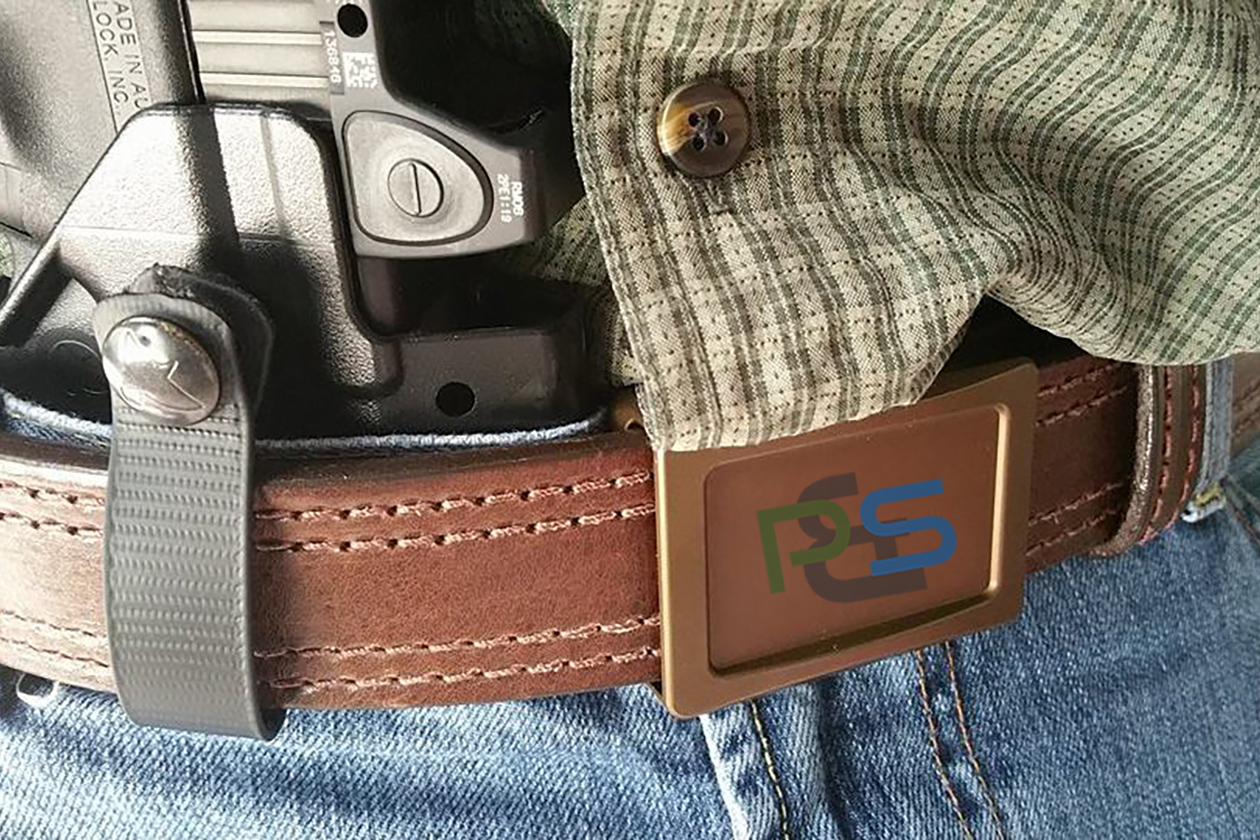
Holster position, clothing, belt, firearm, and body shape function as one system. A position that works well for one person can be inaccessible, unstable, painful, or difficult to conceal for another.
Nonnegotiable requirements
Regardless of location, a defensive holster should completely protect the trigger guard, securely retain the firearm, remain stable during movement and access, and permit a safe firing grip. The belt or support system must keep the holster from tipping, shifting, or leaving the body with the gun.
Small-of-back carry
Small-of-back positioning makes it difficult to monitor concealment and can expose the gun when bending. Access is slow in many positions, retention can be difficult, and falling onto the firearm may increase injury risk. It is also poorly suited to seated or vehicle access.
Strong-side carry
Strong-side hip carry is widely used because it offers familiar access, good compatibility with belts and holsters, and workable retention. Depending on body shape and clothing, the grip may print when bending or reaching. Moving the holster slightly forward or changing cant, ride height, belt, or garment can improve the system.
Appendix carry
Appendix-inside-the-waistband carry places the firearm forward of the hip. It can provide efficient access, strong visual and physical awareness of the gun, good concealment for many body types, and access while seated.
It also demands careful equipment selection and disciplined handling because unsafe muzzle direction or clothing entering the trigger guard can have severe consequences. A rigid holster must fully protect the trigger, retain the gun, and remain attached to the belt. The user should deliberately clear clothing, keep the trigger finger indexed, visually confirm an unobstructed holster mouth when appropriate, and stop immediately if resistance is encountered. Reholstering does not need to be fast.
Evaluate rather than assume
- Test access standing, seated, belted in a vehicle, kneeling, and moving.
- Observe printing while bending, reaching, and lifting.
- Confirm the holster cannot collapse or expose the trigger.
- Check retention and belt attachment during vigorous movement.
- Practice first with an unloaded firearm or inert trainer in a safe area.
- Seek qualified instruction for the selected carry method.
Comfort matters because an intolerable system will not be carried consistently, but comfort cannot override trigger protection, retention, safe access, and control. Choose the position that best satisfies those requirements for the individual rather than treating any clock position as universally superior.
1 thought on “Concealed-Carry Holster Position: Access, Safety, and Fit”