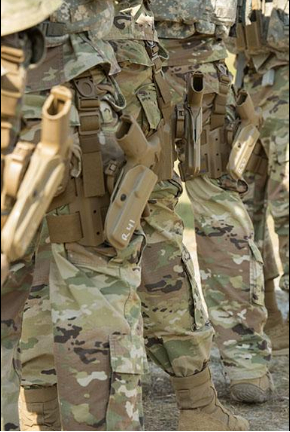
A pistol workspace is the area where the shooter can see and manipulate the handgun while maintaining awareness of the surrounding problem. It is a functional concept, not a rigid pose: the useful location changes with body position, cover, equipment, visual requirements, and the task being performed.
Reference note: The original article drew from 2017-era Army pistol doctrine. Follow current manuals, policy, and qualified instruction for present standards.
What the Workspace Is For
Bringing the pistol into a consistent working area can reduce unnecessary motion and place the hands, controls, magazine well, and ejection port where the shooter can access or inspect them. It may support reloads, stoppage reduction, chamber or equipment checks, and other administrative or operational tasks.
Keep the Muzzle and Trigger Finger Accountable
Moving the pistol closer does not suspend the safety rules. Maintain a safe or tactically appropriate muzzle direction, keep the trigger finger indexed when firing is not intended, and avoid sweeping the body or other people. The exact angle may need to change around cover, in confined spaces, or when working near teammates.
Use Vision Deliberately
The workspace can help the shooter gather information without dropping the pistol to waist level or staring exclusively at the gun. Some tasks require a brief visual confirmation; others should be performed largely by touch. The shooter should shift attention only as much as the problem demands.
Minimize Unnecessary Travel
A useful workspace is close enough for leverage and observation but not so compressed that the hands collide or controls become difficult to reach. Efficient motion follows a direct path into the task and back to the firing position.
Practice From Realistic Positions
- standing, kneeling, seated, and prone where appropriate;
- around cover and in restricted spaces;
- with duty, concealed, or protective equipment;
- with either hand when the training objective requires it; and
- under controlled time only after the sequence is safe and correct.
Evaluate the Result
The workspace is effective when it supports reliable manipulation, observation, muzzle control, and an efficient return to the next required action. If a prescribed position creates extra motion or hides important information, adjust the technique within the limits of current policy and sound safety practice.