
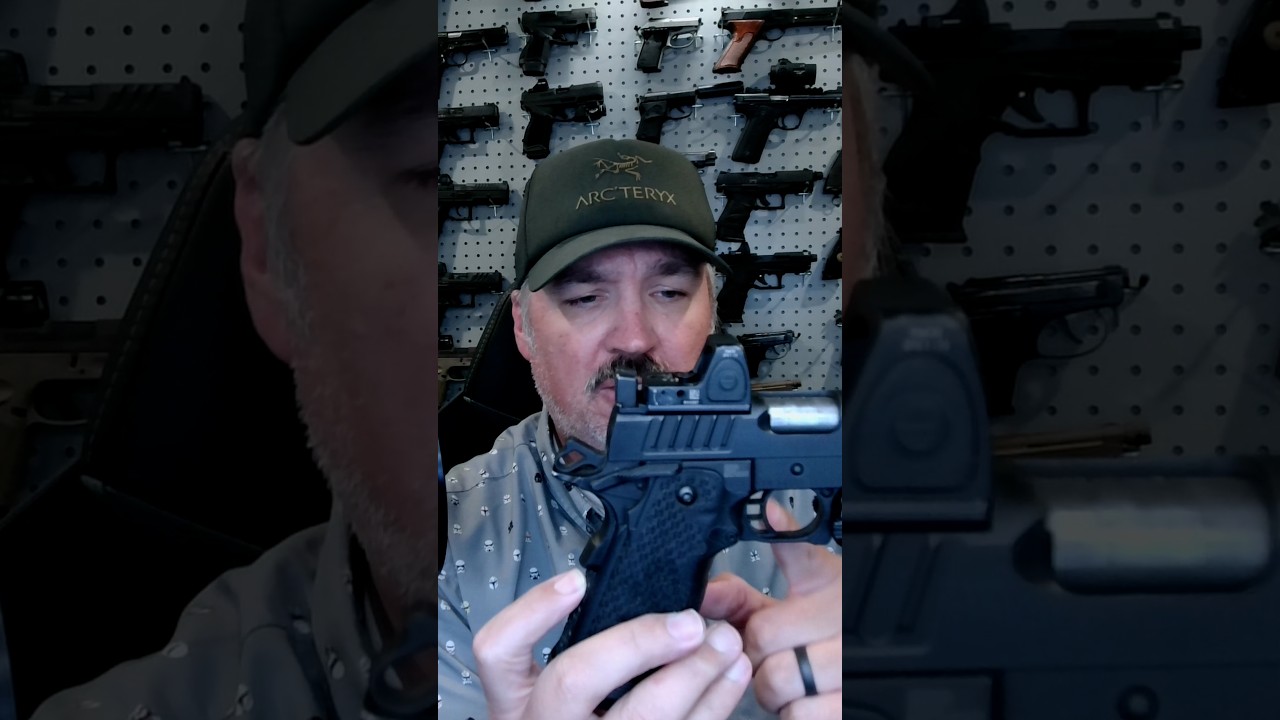
A 1911 or 2011 grip safety can prevent the pistol from firing even when the shooter believes it has been fully depressed. The cause may not be a defective part. A high grip, thumb position, and rotational pressure can direct force toward the safety’s pivot instead of pressing its lower surface into the frame.
What the grip safety does
With the manual thumb safety disengaged, the grip safety must be sufficiently depressed before the trigger can perform its normal function. If the hammer falls without the grip safety being depressed, the system may have been intentionally deactivated or the pistol may require inspection.
How a high grip can create the problem
A shooter accustomed to a modern striker-fired pistol may use a very high grip while riding the thumb safety and applying rotational torque through the hands. On a 1911 or 2011, that combination can move the web of the hand upward and direct pressure toward the grip safety’s pivot. The hand may appear to cover the safety while failing to move it far enough.
The problem may also be inconsistent. Small changes in hand placement, grip pressure, movement, or presentation can determine whether the safety disengages on a particular attempt.
A simple diagnostic
With the pistol unloaded and verified according to a safe inspection procedure, compare the normal grip with a position that places the firing-hand thumb beneath the thumb safety. In the video, moving the thumb lower changes the direction of pressure and fully depresses the grip safety. The exercise helps identify whether technique and hand geometry—not merely the pistol—are contributing to the malfunction.
Why disabling the safety is not the first answer
Pinning, tying down, or deactivating a grip safety can conceal the interaction without explaining it. Before altering a safety device, determine whether the issue involves grip technique, incorrect fitting, insufficient engagement, component geometry, or an actual mechanical defect. A qualified 1911/2011 gunsmith should evaluate any suspected mechanical problem or proposed modification.
What to verify
- Confirm the pistol is unloaded before conducting any diagnostic handling.
- Test whether the safety disengages with the intended firing grip every time.
- Observe thumb position and the direction of pressure through the web of the hand.
- Check performance during presentations, one-handed use, and imperfect grips.
- Distinguish a shooter-interface issue from a fitting or component failure.
- Function-test any repaired or modified pistol thoroughly before relying on it.
The takeaway
A grip that works without consequence on another handgun may not interact correctly with a 1911 or 2011 grip safety. Know how the mechanism works, test it with the grip you actually use, and discover the limitation during controlled practice—not during a critical incident.
Source: 2011 Grip Safety Problems SOLVED, Primary & Secondary Resurrection (August 20, 2026).