
By Tore Haugli; medically updated in 2026
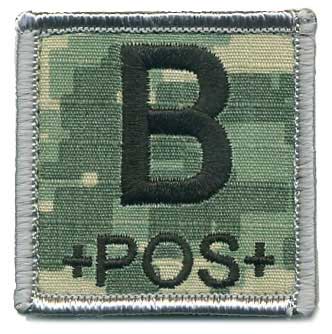
A blood-type patch may look medically useful, but it is not a reliable basis for transfusion decisions. Emergency clinicians and transfusion services identify the patient, obtain specimens, follow emergency-release protocols, and confirm compatibility according to institutional policy. A removable patch on clothing or equipment cannot replace those safeguards.
Why providers cannot rely on the patch
The patch may be wrong, belong to someone else, remain attached to borrowed equipment, or reflect information the wearer misunderstood. The consequences of an incompatible transfusion can be severe, so providers use controlled identification and testing processes rather than accepting an unverified label.
The same limitation applies to “NKDA” or “no known drug allergies” patches. Allergy status can change, the patch may be outdated, and absence of a listed allergy is not proof that a medication is safe for a particular patient.
What happens when blood is needed immediately
Emergency transfusion does not always wait for completion of ordinary compatibility testing. Hospitals and some prehospital systems maintain protocols for uncrossmatched group O red blood cells when a bleeding patient’s ABO type is unknown. Current AABB recommendations emphasize that group O Rh-positive blood is often appropriate for males and females without childbearing potential, while scarce group O Rh-negative units are prioritized for patients—particularly females of childbearing potential—whose risk profile warrants them.
Once testing is completed, patients should be moved to type-specific compatible blood as soon as the protocol permits. This is more nuanced than the older shorthand that every unknown patient simply receives O-negative blood.
Prehospital blood products are increasingly common
Some ground and air medical services now carry red blood cells, plasma, low-titer group O whole blood, or other blood products under physician-directed protocols. Practice varies by system, resources, patient population, and jurisdiction. A blood-type patch still does not control that decision; the service follows its emergency transfusion and patient-identification procedures.
Medical identification can still matter
This does not mean all medical identification is useless. A recognized medical-alert bracelet, necklace, wallet card, or electronic health record may help clinicians investigate conditions such as severe allergies, adrenal insufficiency, diabetes, seizure disorders, implanted devices, or anticoagulant use. It is a prompt to verify relevant information—not an instruction to bypass clinical assessment.
People with a condition that may affect emergency care should ask their treating clinician what form of identification is appropriate and what information it should contain.
What the patch can honestly do
A blood-type patch can serve as unit identification, an organizational convention, or personal decoration. It should not be purchased with the expectation that it will determine emergency blood selection or replace a proper medical-alert system.
If space on equipment is limited, training, hemorrhage-control supplies, clear personal identification, emergency contact information, and medical-alert identification recommended by a clinician provide more defensible value.
Technical reference: The AABB recommendations on group O red blood-cell use explain emergency group O selection, conservation of O-negative units, and transition to type-specific blood after testing.