
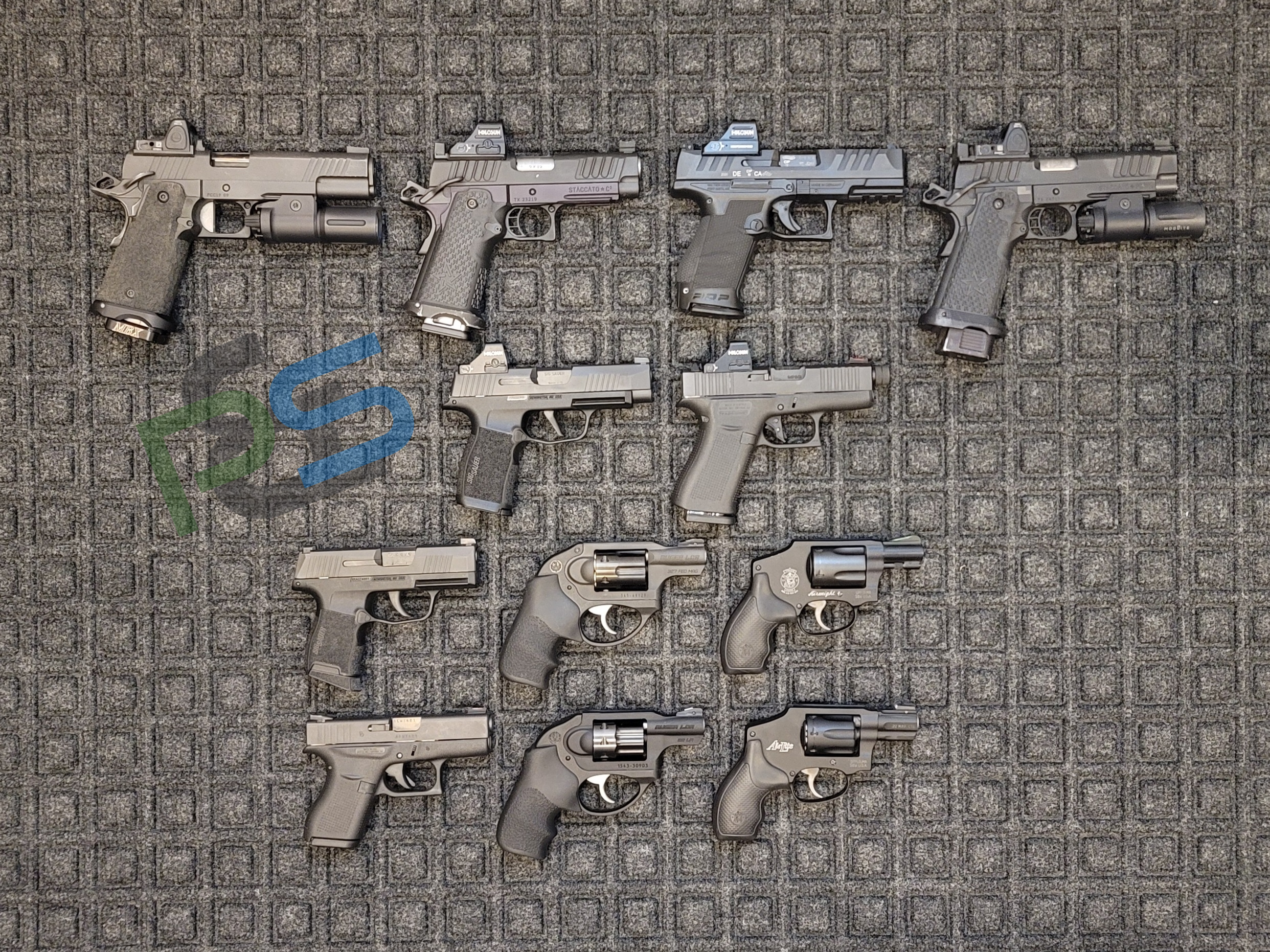
According to me, there are a couple assessments to make when choosing a defensive option. Everything pictured is a viable option depending on task when fed the right ammo. The combination of weapon and appropriate ammunition should meet defensible standards established through properly conducted ballistic-gel testing.
Assessment #1 – Destination.
Where are you going and where are you traveling through? What is the danger or threat level there? If deemed dangerous, can it be avoided?
Assessment #2 – Mission and the individual.
What will you be doing at the destination? How does your mission/task relate to the destination?
Assessment #3 – What option helps accomplish your mission?
Serving a high-risk warrant, going to the beach, or selecting a weapon for use at home all involve different needs. Consider the dimensions of the weapon to determine how it fits your needs for the mission.
Dimensions to consider –
Size (length, height, width), weight, capacity, shape, caliber, support (holsters, optics, lights).
For example:
Top row full to mid sized 9mm pistols easiest to shoot well and greatest capacity, suitable for higher risk activity – most difficult to conceal.
2nd row down compact 9mm pistols still easy to shoot well with good capacity suitable for moderate risk – fairly easy to conceal.
3rd row down smaller 9mm, .327 Fed Mag, .38 pistols a little more difficult to shoot well with less capacity for backup to pistol above, lower risk or npe activity – easy to conceal.
Bottom row .380, .22, .22 Mag fairly easy to shoot well with less capacity for backup to weapons above, very low risk or npe activity – easy to conceal.
The pistols pictured are obviously not the only options available and they aren’t the only suitable options. The pistols featured are just ones I personally choose for various tasks. Additionally, this post only is covering weapon selection, not additional support equipment (lights, medical, etc).