

This barrel is a useful example of why a clean-looking modification is not necessarily a correct one—and why the AR-15 is less forgiving of improvised work than its modular appearance suggests.
What went wrong
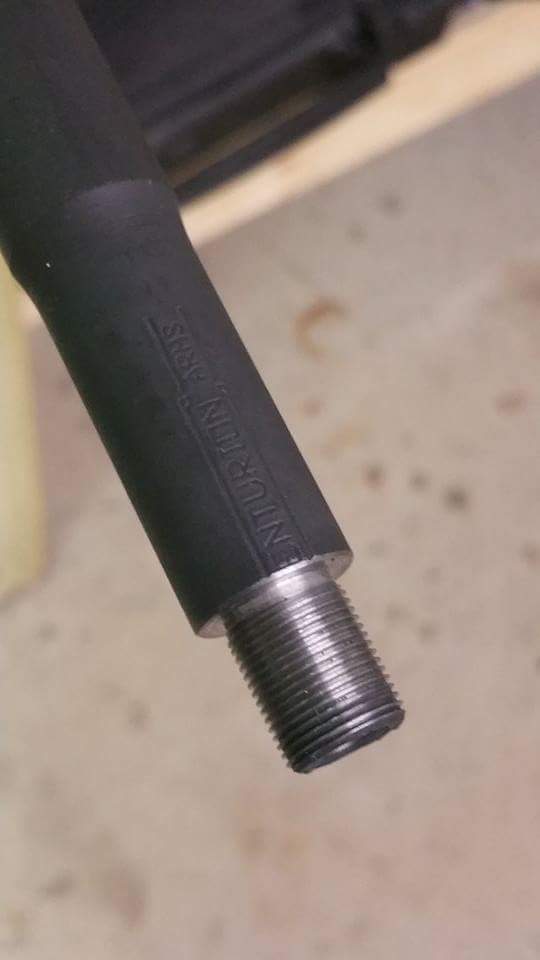
The project began with a quality 16-inch, carbine-gas barrel made by FN and sold by Centurion Arms. A gunsmith shortened it to 11.5 inches, then recrowned and threaded it. The visible machine work looked good, but the firearm would not function reliably.
Shortening a barrel changes the system. In this case, removing barrel length beyond the gas port reduced dwell time: the interval between the projectile passing the gas port and leaving the muzzle. That change affects the amount and duration of gas available to operate the action. A barrel cannot be assumed to retain the correct operating characteristics simply because the crown and threads were cut properly.
The second repair made diagnosis harder
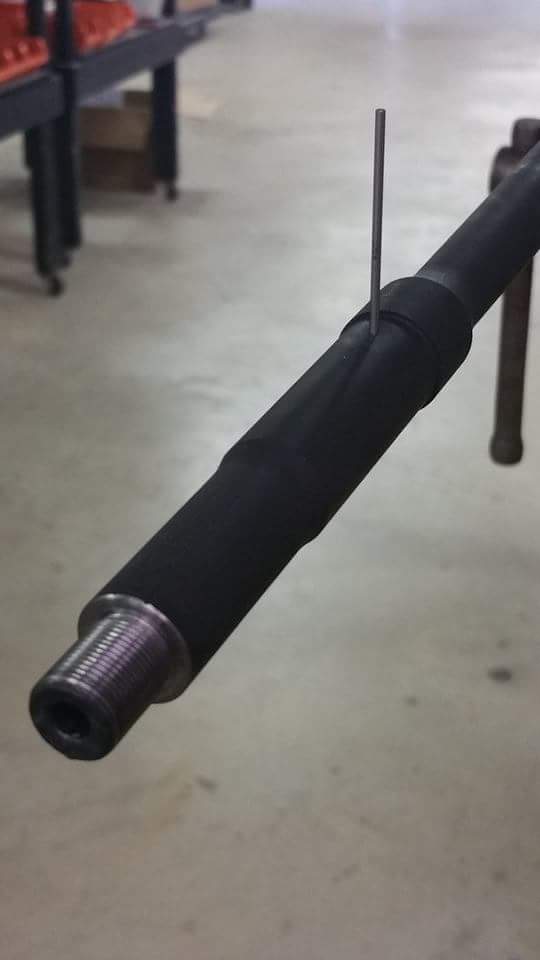
After the malfunction appeared, internet advice blamed gas-block alignment. The owner was told to dimple the barrel using a hand drill without a purpose-built jig. The resulting work did not establish a precise, controlled mounting reference and added another variable to an already unresolved problem.
Modifications affect a system
Reliable operation depends on the interaction of barrel length, gas-system length, gas-port geometry, ammunition, suppressor use, carrier movement, action spring, buffer, gas-block alignment, component fit, lubrication, and fouling. Changing one element can move the system outside its intended operating range.
That does not mean the first suspected variable should automatically be enlarged, drilled, or replaced. Too little operating energy and too much operating energy can both create problems, and similar symptoms can have different causes. Correct diagnosis comes before irreversible modification.
A better decision process
Before altering a critical firearm component:
- define the intended configuration, ammunition, and use;
- confirm that the person doing the work understands that specific platform;
- ask how the completed system will be inspected and function-tested;
- use proper fixtures, gauges, and tooling;
- change one variable at a time when diagnosing a malfunction; and
- stop before an uncertain repair creates additional damage.
A professional title is not enough. Specialized work requires specialized knowledge, and attractive machining does not prove the complete firearm will function safely and reliably.
When replacement is the better value
Some projects make sense for education, experimentation, or a configuration that is not otherwise available. For a defensive or duty firearm, however, the cost of machining, troubleshooting, replacement parts, ammunition, and repeated testing can quickly exceed the price of a barrel engineered for the intended length and gas system.
The lesson is not that owners should never work on their own equipment. It is that the consequence of error should determine the standard of knowledge, tooling, inspection, and testing. If the firearm may be relied upon in a critical situation, “probably correct” is not a sufficient acceptance test.