
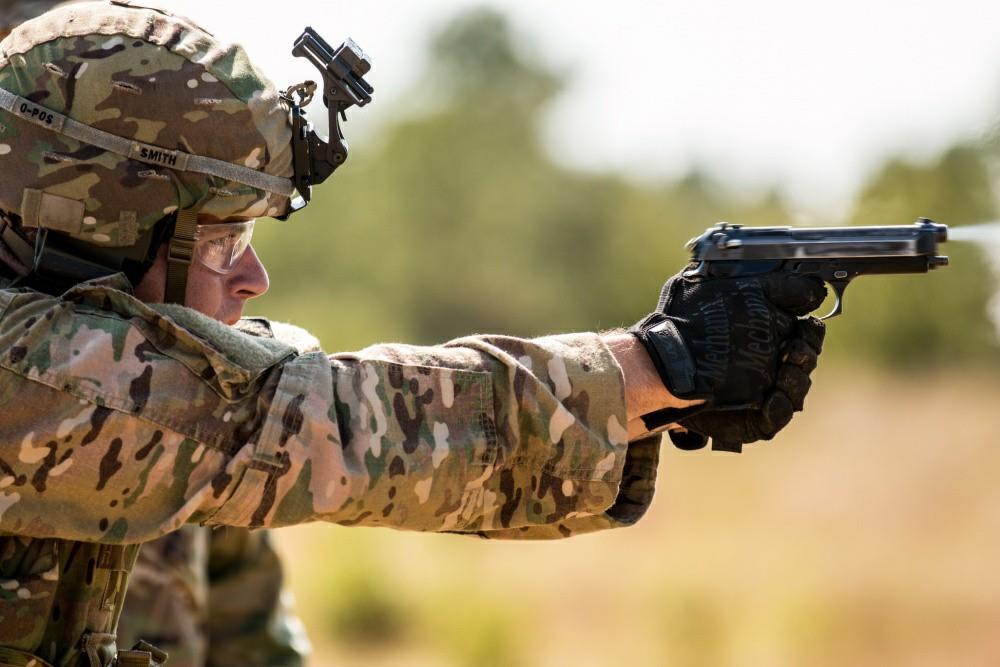
Consistent pistol hits depend on seeing and controlling the relationship among the sights, the target, and the movement of the gun. Two errors are often grouped together even though they describe different problems: sight alignment and sight picture.
Reference note: The original article cited 2017-era Army pistol doctrine during early M17 fielding. Use the latest approved manual and unit guidance for current military standards. The marksmanship principles below remain broadly applicable.
Sight Alignment Versus Sight Picture
Sight alignment is the relationship between the front and rear sights. With conventional iron sights, the front sight should appear centered in the rear notch at the intended elevation. Small alignment errors can move the point of impact substantially, especially as distance increases.
Sight picture is the aligned sighting system placed in the correct relationship to the target. A shooter can have properly aligned sights but apply the wrong hold, or place the sights correctly on the target while allowing the front and rear sights to become misaligned.
Common Causes of Sighting Errors
- shifting visual attention among the target, sights, and surrounding information without a deliberate plan;
- using painted dots as the primary alignment reference when the sight edges do not agree;
- accepting excessive angular misalignment while pressing the trigger;
- changing the intended hold from shot to shot;
- disturbing an acceptable sight picture with unnecessary grip or trigger movement; and
- failing to account for lighting, distance, or the sighting system’s zero.
Diagnose the Problem Before Correcting It
A group’s location and size provide different information. A consistently tight group in the wrong place may indicate the chosen hold, zero, or sight adjustment. A wide or erratic group more often points to inconsistent alignment, trigger control, grip, or visual processing. Do not chase individual holes by changing the sights after every shot.
Confirm the problem from a stable position at a known distance. Use a clearly defined aiming point and record the ammunition, distance, sight setting, and conditions.
Use Dry Practice to Build a Repeatable Presentation
Dry practice can help a shooter learn what correct alignment looks like and how a proper grip brings the pistol into the line of sight. Work slowly enough to observe whether the sights arrive together and whether the trigger press moves them.
Before dry practice, remove live ammunition from the practice area, verify the firearm’s condition according to its manual, choose a safe backstop, and follow established safety rules. Military and agency personnel should follow current supervision and training requirements.
Measure Improvement
Use a consistent drill, target, distance, and time standard. The goal is not a perfectly motionless sight picture; some movement is normal. The useful skill is maintaining acceptable alignment and completing the trigger press without adding avoidable disturbance.