Categories

Matt Landfair — Primary & Secondary

https://sonsoflibertygunworks.com
http://www.optactical.com/

Matt Landfair — Primary & Secondary

Professional Biography

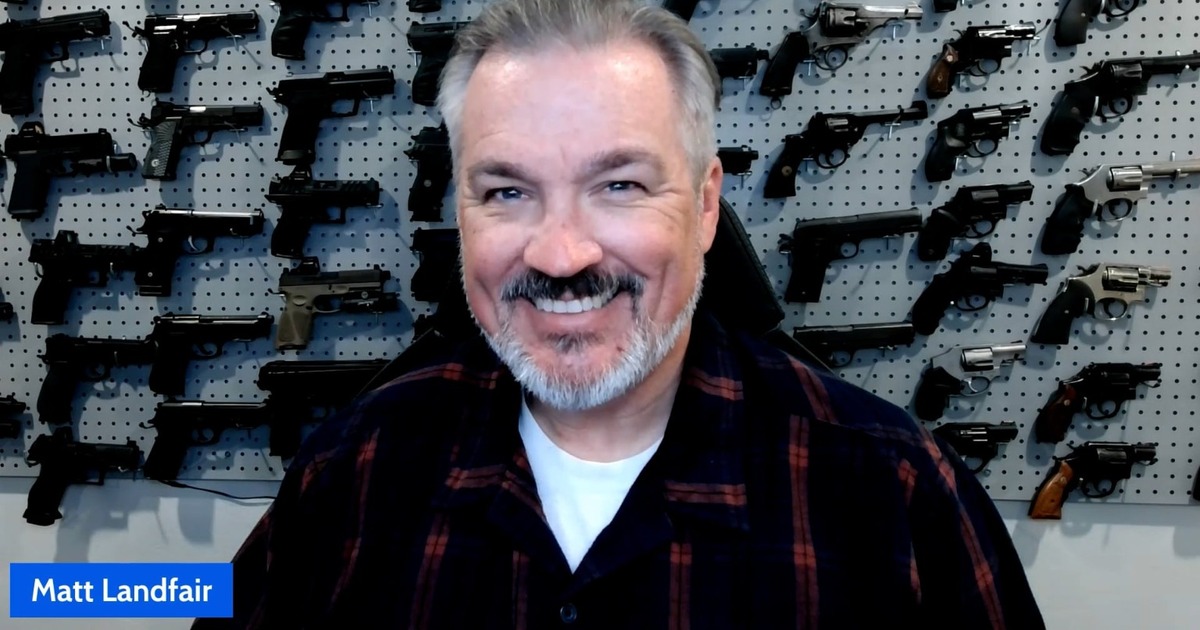
Matt Landfair is the founder of Primary & Secondary, host of the Primary & Secondary ModCast, a law-enforcement professional, firearms instructor, armorer, writer, interviewer, and curator of professional firearms, training, tactics, equipment, and mindset discussions.

Official website: https://primaryandsecondary.com/

Landfair founded Primary & Secondary in 2014 after recognizing that many of the serious professional firearms discussions he valued were disappearing from older internet forums and becoming increasingly difficult to find in one place. His objective was not simply to create another firearms website. He wanted to build a network where experienced military personnel, law-enforcement officers, competitive shooters, trainers, industry professionals, and serious private citizens could exchange information, challenge assumptions, compare experience, and make useful professional knowledge available to a wider audience.

That network eventually expanded into the Primary & Secondary ModCast, a long-form discussion format hosted by Landfair that has produced hundreds of episodes addressing firearms, tactics, training, equipment, terminal ballistics, law enforcement, leadership, competition, medical issues, personal defense, and professional-development topics. Current podcast listings continue to identify Landfair as host, with new episodes published through 2026.

Landfair’s most important contribution to the firearms-training industry is therefore not a particular shooting technique or equipment design.

It is information architecture.

He has spent more than a decade identifying knowledgeable people, bringing them into contact with one another, asking questions, preserving their discussions, exposing less-experienced audiences to higher-quality sources, and helping ideas move between communities that historically did not always interact.

Primary & Secondary has provided a platform where instructors such as Chuck Pressburg, Chuck Haggard, Steve Fisher, Scott Jedlinski, Tim Herron, Craig Douglas, Aaron Cowan, Darryl Bolke, and many others could participate in extended discussions that went substantially deeper than conventional product reviews or short-form firearms media.

An independent 2019 profile of Primary & Secondary described the organization as unusually focused on researched, professional-level firearms information and specifically credited Landfair with building a network intended to help serious end users separate useful information from unreliable or poorly supported claims.

Landfair’s professional writing reflects the same emphasis. He has consistently argued that minimum institutional standards should not become individual standards, that professional development requires continued training and study, and that credentials alone do not establish either instructional ability or expertise. His published work repeatedly emphasizes mentorship, critical evaluation, professional training, evidence, and the willingness to revise assumptions when better information becomes available.

Through Primary & Secondary, the ModCast, written articles, professional networking, training events, and sustained access to subject-matter experts, Matt Landfair has become an influential connector, curator, interviewer, and educator within the modern firearms-training community.

His strongest professional contribution is not that he claims to possess all of the answers.

It is that he has built systems for finding people who may possess better answers, putting them in conversation with one another, preserving those conversations, and making the resulting knowledge available to others.


Law-Enforcement Foundation

Matt Landfair’s professional perspective is rooted in law enforcement.

His public biography identifies an active law-enforcement background beginning before the turn of the century and describes him as a firearms instructor and armorer who has attended professional training from organizations and instructors including DARC, Follow Through Consulting, EAG Tactical, and TMACS.

In his own writing, Landfair has documented completing the Utah POST firearms instructor program in 2004.

This experience is important because Primary & Secondary did not originate as a purely recreational firearms project.

Landfair was attempting to solve problems he encountered as a professional user.

He has described working in a comparatively isolated geographic environment where access to nationally recognized instructors and professional peers was limited.

The internet gave him a way to overcome that limitation.

Instead of relying solely upon the people physically available around him, he could seek out experienced practitioners elsewhere.

That impulse eventually became the foundation of Primary & Secondary.


Beyond the Minimum Standard

One of Landfair’s earliest recurring themes was the inadequacy of treating minimum occupational requirements as the endpoint of professional development.

In a 2015 article republished by Soldier Systems Daily, Landfair argued that agency firearms standards, equipment, and required training should represent a floor rather than a ceiling for officers whose jobs may involve life-or-death consequences.

His position was shaped by personal experience.

He has described going through police training, believing he possessed reasonable competence, and later discovering through outside professional instruction how much more there was to learn.

That realization became foundational to his later work.

The lesson was not:

Law-enforcement training is worthless.

It was:

Formal institutional training alone does not necessarily provide complete professional development.

The individual must continue learning.


The Basics

Landfair’s 2015 article The Basics illustrates another enduring part of his training philosophy.

After attending DARC and working through force-on-force problems under substantial cognitive load, he concluded that higher-level tactical performance depended heavily upon deeply developed foundational skills.

Students whose basic weapon handling was already reliable could devote greater mental resources to solving tactical problems.

Students who still had to consciously manage basic manipulations became overloaded more easily.

The principle is broadly applicable:

advanced performance is often simply foundational performance executed more efficiently, reliably, and under more difficult conditions.

This concept appears repeatedly throughout the broader Primary & Secondary ecosystem.


The Origins of Primary & Secondary

Primary & Secondary began in 2014.

Landfair has described being an active participant on Lightfighter, an influential professional firearms forum, and watching participation decline as internet discussion migrated toward social media.

He wanted something that retained the seriousness and professional orientation of those earlier communities while taking advantage of newer platforms.

So he began building it himself.

This origin matters.

Primary & Secondary was not initially conceived as a media brand.

It was conceived as a professional discussion network.

The media grew out of the network.


A Network Before an Audience

This distinction is important.

Many media organizations begin by attempting to build an audience and then seek experts to appear before that audience.

Primary & Secondary developed largely in the reverse direction.

Landfair first assembled knowledgeable people.

The audience followed.

By 2019, he described a moderator network containing more than one hundred people selected because of their knowledge, judgment, or professional credibility. The group included military and law-enforcement personnel, but also competitive shooters, instructors, and serious students of firearms.

That diversity became one of the platform’s strengths.


Cross-Pollination Between Communities

The firearms world has historically contained semi-isolated communities.

Military.

Law enforcement.

Competition.

Private training.

Industry.

Armed citizens.

Medical professionals.

Armor specialists.

Ballisticians.

Gunsmiths.

Each develops useful knowledge.

But useful information does not automatically move between them.

Primary & Secondary became one mechanism for that movement.

Landfair has repeatedly placed people from different professional backgrounds into the same discussion.

The result is cross-pollination.

A law-enforcement firearms instructor hears a competitive shooter explain performance metrics.

A competitive shooter hears a police officer discuss legal or operational constraints.

A private citizen hears a military specialist explain equipment development.

An equipment designer hears end-user criticism.

The conversation becomes more useful because no single community possesses the entire picture.


The ModCast

The Primary & Secondary ModCast grew out of conversations already occurring among P&S moderators.

Landfair has explained that moderators were having long conversations privately through Facebook Messenger.

Someone suggested recording them.

The early shows were therefore essentially the existing moderator discussions made public.

The term ModCast reflected that origin:

moderator + podcast.

Over time, the format became more structured.

Specific topics were selected.

Subject-matter experts were invited.

Panels became more deliberate.

By 2017, Landfair had moved the program away from purely informal moderator conversations toward focused long-form discussions involving guests selected for relevant expertise.


Long-Form Discussion as a Feature

One of the defining characteristics of the ModCast is its length.

Episodes frequently exceed two hours.

Some run considerably longer.

In conventional media, this might be considered inefficient.

For complex technical subjects, however, it can be an advantage.

Important topics rarely fit neatly into short segments.

Terminal ballistics.

Use of force.

Armor standards.

Firearms training methodology.

Leadership.

Equipment development.

Close-quarters tactics.

Institutional firearms programs.

These subjects require:

context,

exceptions,

definitions,

contradictory viewpoints,

and follow-up questions.

Long-form conversation makes room for those things.


Preserving Tacit Knowledge

This may be one of Primary & Secondary’s most important long-term contributions.

Much professional knowledge is tacit.

It exists in conversations.

Range discussions.

After-action debriefs.

Private messages.

Instructor lunches.

Team rooms.

Informal mentoring.

Historically, much of that knowledge disappeared when the conversation ended.

The ModCast records it.

An instructor can explain not only what he believes but:

how he arrived there,

what changed his mind,

what failed previously,

what limitations exist,

and how his ideas evolved.

That context can become extraordinarily valuable years later.


A Living Oral History of Firearms Training

Viewed over more than a decade, Primary & Secondary has unintentionally become something resembling an oral history archive of the modern American firearms-training industry.

Episodes document conversations with instructors and practitioners during periods of substantial change involving:

pistol-mounted optics,

low-power variable optics,

night vision,

weapon lights,

armor,

terminal ballistics,

competition influence,

modern carbine training,

armed-citizen education,

law-enforcement firearms standards,

and instructor development.

The value of those recordings can actually increase with age.

They preserve what experienced practitioners believed at particular points in the evolution of the field.


Access to Subject-Matter Experts

Landfair’s central skill as a host is not necessarily demonstrating that he knows more than his guests.

It is getting knowledgeable people into the conversation.

This is an underrated professional ability.

Knowing whom to ask is often as important as knowing the answer.

A good information network requires recognizing:

Who actually works in this field?

Who has relevant experience?

Who has studied the problem deeply?

Who can explain it?

Who disagrees?

Who has data?

Who has practical context?

Who is simply repeating something?

Landfair’s work has repeatedly revolved around those distinctions.


The Host as Facilitator

Long-form panel discussions also require a different hosting style from conventional interviews.

The host must:

introduce the problem,

identify useful participants,

guide the conversation,

recognize when a valuable tangent appears,

ask for clarification,

allow disagreement,

and avoid dominating the panel.

Independent podcast commentary has specifically praised Landfair’s ability to facilitate expert conversations without overwhelming the discussion himself.

That is particularly important when the panelists possess more specialized expertise than the host.

The correct role is not to compete with them.

It is to make their expertise accessible.


Information Curation

This leads to what may be the best description of Landfair’s contribution:

curation.

The internet contains more firearms information than any previous generation could have imagined.

The problem is no longer simple access to information.

The problem is determining:

what is accurate,

what is relevant,

what is outdated,

what is marketing,

what is anecdote,

what is doctrine,

what is evidence,

and who is actually qualified to speak about the subject.

Curation therefore becomes increasingly valuable as information volume increases.

Primary & Secondary attempts to perform that function.


The Map and Compass

Landfair has recently described Primary & Secondary using the metaphor of a map and compass.

The goal is not simply to provide more information.

It is to help people navigate information.

In a 2026 article, he argued that understanding improves through quality mentorship, professional training, trusted communities, and willingness to challenge assumptions rather than merely consuming larger quantities of material.

This metaphor accurately describes the platform’s mature role.

The internet provides the terrain.

Primary & Secondary attempts to help identify routes through it.


Epistemology in Firearms Training

A surprising amount of Landfair’s work can therefore be understood as applied epistemology.

The underlying question is:

How do you know what you think you know?

Did an instructor say it?

Did you personally observe it?

Was the observation representative?

Was it tested?

Does better evidence exist?

Is the claim old but merely repeated frequently?

Does the speaker possess relevant expertise?

Is the information being misunderstood?

Could two apparently contradictory claims both be correct under different conditions?

Those questions appear throughout Landfair’s writing and podcast discussions.


Credentials Are Not Enough

Landfair has also repeatedly argued against résumé-based reasoning.

In a 2020 article, he noted that simply attending a long list of courses does not make someone a good instructor, just as having police or military experience does not automatically establish teaching ability.

This is an important distinction within the firearms industry.

Credentials provide context.

They do not make every claim correct.

A respected instructor can still be wrong.

A person with an impressive operational history may be poor at teaching.

A civilian competitor may possess technical shooting knowledge that transfers meaningfully to professional users.

Expertise must be evaluated according to the actual subject being discussed.


Connecting Experts Rather Than Building Gurus

Primary & Secondary’s panel format helps resist another recurring problem in training culture:

guru dependence.

A single instructor can become the audience’s universal authority.

But no individual is the expert on everything.

Panels create a different model.

One person understands weapons.

Another understands ballistics.

Another understands tactics.

Another understands legal issues.

Another understands human performance.

Another understands medical response.

The audience sees expertise as distributed.

That is healthier than pretending one personality can answer every question.


Disagreement as a Feature

Bringing experts together also creates disagreement.

That can be productive.

Two experienced people may solve the same problem differently.

The useful question is not always:

Which person is wrong?

It may be:

What assumptions cause the solutions to differ?

Different missions.

Different equipment.

Different populations.

Different risk tolerances.

Different training resources.

Different definitions.

Long-form discussion provides enough room to uncover those distinctions.


Professional Information for the Responsible Gun Owner

Primary & Secondary has always maintained a strong professional orientation.

But Landfair has also explained that useful professional information frequently transfers to responsible private citizens.

Military personnel, police officers, contractors, and armed citizens do not have identical missions.

Yet they frequently share foundational requirements involving:

safe gun handling,

marksmanship,

equipment reliability,

medical preparedness,

understanding of force,

and continuing education.

Landfair’s stated objective has been to allow useful professional knowledge to trickle down without pretending that civilians are performing military or police missions.

That distinction is significant.


The Serious Armed Citizen

This helped Primary & Secondary become part of a broader evolution in armed-citizen training.

The serious private gun owner increasingly had access to:

professional instructors,

measurable shooting standards,

modern equipment knowledge,

medical training,

terminal-ballistics research,

legal education,

and structured defensive training.

Primary & Secondary helped connect that audience with the people producing those ideas.

The platform therefore contributed less by inventing techniques than by reducing the distance between the expert and the motivated student.


Training Culture

Landfair has consistently promoted professional training outside minimum requirements.

His writing repeatedly emphasizes that owning equipment is not equivalent to possessing capability.

In 2025, he described effective defense as a continuing process involving study, investment, reputable instruction, practice, mindset, and appropriate equipment rather than simply purchasing a firearm.

This seems obvious within serious training circles today.

It was less universally accepted when Primary & Secondary began.


Equipment Without Context

Another recurring Landfair theme is that equipment should be evaluated according to mission and context, not fashion.

The newest or most expensive item is not automatically the best choice for every user.

The correct question is:

What problem does this solve for me?

That approach appears throughout Primary & Secondary discussions involving:

armor,

optics,

weapons,

lights,

holsters,

load carriage,

and other equipment.

This is particularly useful in an industry heavily influenced by marketing.


From Product Review to End-User Evaluation

Traditional firearms media often focused heavily on products.

Primary & Secondary helped promote a different model:

professional end-user evaluation.

A product matters because someone must depend upon it.

The relevant questions become:

Does it work?

Does it survive?

Does it solve the intended problem?

What are its limitations?

Who actually needs it?

How should it be configured?

How should it be maintained?

This moves the discussion from consumption toward application.


Terminal Ballistics

Landfair has also devoted substantial attention to terminal ballistics.

His approach in this area reflects the larger P&S philosophy: move beyond impressive visual demonstrations and understand what the evidence actually represents.

In his 2026 Refining Your Compass article, he used ballistic-gel videos as an example of how viewers can misinterpret visually dramatic events when they lack the technical context needed to understand them.

The broader lesson is epistemological:

the most visually impressive part of the demonstration may not be the most meaningful part.

Understanding requires context.


Writing

Landfair’s influence is not limited to audio and video.

His Primary & Secondary author archive contains years of writing on:

training,

equipment,

leadership,

law enforcement,

mindset,

self-defense,

and information evaluation.

His official biography also notes previous writing for RECOIL Magazine, Breach Bang Clear, Soldier Systems Daily, and Monderno.

Soldier Systems Daily independently republished his 2015 piece addressing law-enforcement minimum standards and identified him at the time as a veteran police officer, firearms/tactics instructor, and founder of Primary & Secondary.


Training Events

Landfair also moved Primary & Secondary beyond digital discussion through the Primary & Secondary Training Summit.

The event brought together instructors covering subjects including:

diagnostic pistol,

carbine,

low-power variable optics,

medical training,

criminal mindset,

AR diagnostics,

history,

and other professional topics.

The intent was not simply to create another training conference.

Landfair described the event as an opportunity for students to sample instruction from multiple respected trainers, determine whose teaching methods resonated with them, and potentially identify instructors worth bringing back to their own agencies or communities.

This was the Primary & Secondary model made physical.


The Training Summit as Network in Person

The Training Summit effectively transformed the online P&S network into an in-person educational environment.

Students could move between instructors.

Instructors could interact with one another.

Different disciplines existed at the same event.

The educational value extended beyond any individual block.

An independent 2021 after-action report documented Landfair as host and described a multi-day event containing instruction from nationally recognized figures including Darryl Bolke and Chuck Pressburg.

Again, the central contribution was connection.


Promoting Other Instructors

This is an important part of evaluating Landfair’s influence.

Primary & Secondary has repeatedly devoted its platform to promoting other people’s expertise.

A podcast episode may increase awareness of an instructor.

A written AAR may help a student discover a course.

A Training Summit block may introduce attendees to someone they later bring to their agency.

A panel appearance may associate an instructor with a specific field of expertise.

This creates downstream influence that is difficult to measure with simple audience statistics.


Platform-Building as Leadership

Leadership within an industry does not always mean being the person at the front of the firing line.

Sometimes it means building the room in which the instructors meet.

That is an appropriate way to understand Landfair’s role.

He has spent years building:

platforms,

networks,

panels,

forums,

events,

and conversations

through which other professionals can teach.

This is infrastructure leadership.


Second-Order Influence

A conventional instructor directly influences students.

Landfair’s influence often functions indirectly.

He identifies an instructor.

That instructor appears on P&S.

A listener learns from the conversation.

The listener attends a class.

The listener may become an instructor.

That instructor introduces the same concepts to new students.

Or:

an agency trainer hears a discussion.

The trainer researches the subject.

Policy changes.

Equipment changes.

Training changes.

The original conversation therefore produces downstream effects far removed from its initial recording.


Third-Order Influence

Platform-building can even create what might be called third-order influence.

Landfair influences which experts receive exposure.

Those experts influence instructors.

Those instructors influence students.

In that sense, the value of a curated professional network can scale beyond the direct reach of any individual instructor.

This makes conventional metrics such as personal class attendance insufficient for evaluating his contribution.


Primary & Secondary as an Industry Rolodex

Another way to describe the platform is as a publicly accessible professional Rolodex.

Someone seeking information about:

OC spray,

pistol optics,

terminal ballistics,

shotguns,

CQB,

low-light training,

armor,

competition,

police use of force,

night vision,

medical issues,

or instructor development

can often discover not merely an answer but the names of people worth studying further.

That is a powerful educational function.

Finding the correct expert can save years of poor information.


Mentorship at Scale

Traditional mentorship is personal.

One mentor helps one student.

Media platforms make partial mentorship possible at scale.

A listener may never meet Chuck Haggard but can hear him explain intermediate-force options for several hours.

A student may never meet Darryl Bolke but can hear decades of experience distilled into a discussion.

A young firearms instructor can hear Aaron Cowan, Scott Jedlinski, Tim Herron, Bill Blowers, or Chuck Pressburg explain how they approach training.

Landfair’s role is creating the opportunity for that transfer.


Asking Better Questions

One of the less visible skills required to do this well is asking useful questions.

A poor question produces biography or talking points.

A useful question produces:

process,

context,

limitations,

mistakes,

and reasoning.

Years of hosting subject-matter experts also produce a compounding effect.

The host becomes better able to recognize:

what has already been said,

where experts disagree,

what assumption has not been examined,

and which follow-up question might expose something useful.

That accumulated interviewing experience is itself a professional skill.


More Than Firearms

Primary & Secondary has also expanded beyond guns alone.

Current and historical discussions address:

leadership,

emotional intelligence,

training culture,

values,

decision-making,

medical response,

armor,

personal development,

and professional ethics.

Landfair also created the Forged Podcast, a separate series focused on character, values, and experience. Apple Podcasts identifies Landfair as its creator.

This reflects an increasingly broad conception of competence.

Equipment and technique are not enough.

People matter.


Professional Development as a Continuing Process

Across his writing, Landfair repeatedly returns to a common pattern:

learn, test, discuss, refine.

This applies to:

equipment,

training,

leadership,

law enforcement,

and personal beliefs.

His 2026 writing explicitly frames accurate understanding as something requiring humility, quality mentorship, study, and willingness to challenge existing assumptions.

This is not merely a firearms-training philosophy.

It is a learning philosophy.


Intellectual Humility

One of the strongest characteristics of that philosophy is intellectual humility.

Expertise should increase confidence in what is well established.

But it should also reveal how much remains uncertain.

A mature practitioner should be capable of saying:

I don’t know.

I was wrong.

That information is outdated.

Someone else understands this better.

The context changes the answer.

That attitude is especially valuable in communities where personal identity can become closely tied to particular equipment, instructors, or doctrines.


Challenging Tribal Knowledge

Firearms culture contains enormous amounts of tribal knowledge.

Some of it is excellent.

Some is outdated.

Some began as context-specific advice and became universal doctrine through repetition.

Some was never particularly accurate.

Primary & Secondary has repeatedly provided an environment where those claims can be challenged by people with different backgrounds.

This is one of its most important cultural contributions.


Professional Versus Popular Information

Landfair has also consistently distinguished between information optimized for professional usefulness and information optimized for popularity.

The two can overlap.

They often do not.

The internet rewards:

novelty,

certainty,

controversy,

and visual spectacle.

Professional information often requires:

qualification,

nuance,

context,

and acknowledgment of uncertainty.

Primary & Secondary’s long-form structure has allowed it to prioritize the second category more often than conventional short-form media.


Sustained Longevity

Primary & Secondary’s longevity is itself meaningful.

The project began in 2014.

The ModCast has continued for roughly a decade, with new episodes still appearing in 2026. A June 2026 She Shield interview specifically described Landfair as having spent more than a decade behind the microphone and characterized Primary & Secondary as one of the longer-running podcasts in the firearms-and-training space.

Current podcast platforms continue listing new episodes with Landfair as host.

Longevity matters because professional relevance must continually be earned.


Evolution Rather Than Preservation

Over that period, the firearms-training world changed substantially.

Pistol optics moved toward mainstream acceptance.

Competition increasingly influenced defensive shooting.

Low-light equipment evolved.

Night vision became more accessible.

Armor standards changed.

Social media changed.

Podcasting changed.

Law-enforcement training conversations changed.

Maintaining a useful platform through those changes required Primary & Secondary to evolve rather than simply preserve the conversations of 2014.


The Archive Effect

The result is a substantial archive.

Current podcast directories list hundreds of Primary & Secondary episodes covering a broad range of professional topics.

The value of this archive is cumulative.

A single episode may answer one question.

Hundreds of episodes create a knowledge network.

A listener can compare what different experts said.

Older assumptions can be evaluated against newer discussions.

Concepts can be traced through time.

This is particularly valuable for understanding how the training industry itself developed.


Independent Recognition

Independent publications have repeatedly recognized Primary & Secondary as something distinct from conventional firearms media.

AR Build Junkie’s 2019 profile described the platform as unusually valuable for researched professional-end-user information and specifically contrasted it with superficial or poorly informed firearms content.

The same publication later described Primary & Secondary as a destination for people seeking to challenge preconceived ideas rather than merely validate them when announcing the Training Summit.

Those assessments are important because they come from outside Primary & Secondary itself.


Industry Influence Without a Single Signature Technique

Evaluating Landfair requires a different framework than evaluating a technical instructor.

Aaron Cowan can be associated with pistol-optic research and adoption.

Craig Douglas can be associated with ECQC and Managing Unknown Contacts.

Chuck Haggard can be associated with integrating OC and intermediate-force options into serious armed-citizen training.

Scott Jedlinski can be associated with red-dot pistol performance.

Bill Blowers can be associated with performance diagnostics and demanding shooting standards.

Matt Landfair’s influence works differently.

His contribution is connecting those people and their ideas.


The Connector Role

Networks often depend upon people who recognize valuable connections before the participants themselves do.

An equipment expert should talk with an end user.

A competitive shooter should talk with a police firearms instructor.

A ballistician should talk with a defensive trainer.

A veteran instructor should talk with a younger performance coach.

A subject that appears settled should be revisited when new information emerges.

Landfair has spent years facilitating those connections.

This connector role is difficult to quantify.

It is also extremely valuable.


Curator Versus Creator

This does not mean Landfair is merely an aggregator.

There is an important distinction between collecting information and curating information.

Aggregation asks:

What exists?

Curation asks:

What is worth your attention?

That requires judgment.

It requires knowing enough about the field to distinguish between:

expertise,

marketing,

experience,

anecdote,

and noise.

Primary & Secondary’s value depends heavily upon that selection function.


Creating a Shortcut

Landfair has recently described Primary & Secondary as providing a shortcut on the map for people trying to understand firearms, equipment, mindset, and training.

That may be one of the best descriptions of the project’s influence.

A new student could spend years independently discovering:

which instructors matter,

which books matter,

which concepts are outdated,

which products fail,

which arguments are unresolved,

and which sources deserve further study.

A strong professional network compresses that process.

It does not eliminate the need to learn.

It helps direct the learning.


Training as a Shortcut

This concept also parallels Landfair’s broader view of professional training.

Good instruction compresses experience.

The student pays to benefit from lessons another person spent years developing.

A professional information network functions similarly.

It allows participants to benefit from the collective experience of many practitioners.

Primary & Secondary essentially applies mentorship and training principles to information discovery.


Influence on Instructor Visibility

The platform has also helped increase the visibility of instructors whose expertise might otherwise have remained concentrated within smaller professional circles.

Long-form discussions allow these instructors to demonstrate knowledge in a way that a short biography cannot.

Listeners can hear:

how they think,

how they explain,

what they value,

and whether their reasoning makes sense.

This provides a form of professional discovery.

A student can evaluate an instructor before attending a class.

An agency trainer can identify someone worth hosting.

That is meaningful industry influence.


Influence on Training Consumers

This also changes the consumer side of training.

An informed student asks better questions.

Instead of:

Who is famous?

the student begins asking:

Who has relevant expertise?

What is the instructor’s teaching methodology?

What problem does this course solve?

What prerequisites do I need?

What evidence supports the material?

How does this fit with what I already know?

A more educated training consumer creates pressure for better instruction.


Raising the Level of Conversation

This may be one of Primary & Secondary’s largest cultural effects.

When an audience becomes familiar with detailed discussions among highly competent practitioners, superficial claims become less satisfying.

The baseline changes.

A listener who has heard multiple hours of experts discussing terminal ballistics may become less impressed by a dramatic gel video.

A listener familiar with serious optics discussions may be less persuaded by simple brand loyalty.

A student exposed to multiple instructors may become less vulnerable to guru culture.

The conversation becomes more sophisticated.


Law Enforcement and the Broader Community

Landfair’s continued law-enforcement background also provides a useful bridge.

He understands the realities of working inside organizations with:

budgets,

policy constraints,

minimum standards,

varying motivation,

administrative requirements,

and institutional inertia.

This prevents professional discussions from existing entirely in an idealized private-training environment.

At the same time, Primary & Secondary provides law-enforcement personnel access to ideas originating outside traditional agency pipelines.

That two-way exchange is valuable.


The Outsider-Insider Position

Landfair occupies an unusual position.

He is an insider because he has worked in law enforcement and firearms instruction.

He is also an outsider to many elite or specialized communities whose experts appear on the show.

That can be beneficial.

He can understand professional terminology while still asking the questions that someone outside that specialty needs answered.

The result is a bridge between specialist and audience.


Professional Leadership Through Infrastructure

Traditional leadership imagery focuses on the person giving commands.

But industries also need people who build infrastructure.

Forums.

Networks.

Conferences.

Podcasts.

Archives.

Professional communities.

These structures determine which ideas travel.

Landfair’s primary leadership contribution has been building and maintaining that infrastructure.


Professional Assessment

Matt Landfair should be considered an influential figure within the modern American firearms-training community because he has spent more than a decade building systems through which professional knowledge can move.

His influence does not primarily come from creating a proprietary shooting technique.

It does not depend upon being the most accomplished competitive shooter.

It does not depend upon possessing the most exotic operational résumé.

His contribution is different.

Landfair identified a problem:

high-quality firearms information existed, but the people who possessed it were fragmented across professions, training circles, forums, agencies, companies, and private conversations.

He built Primary & Secondary as part of the solution.

The platform connected:

military personnel,

law-enforcement officers,

competitive shooters,

private instructors,

industry professionals,

medical specialists,

technical experts,

and serious armed citizens.

The ModCast then made many of those conversations public.

The Training Summit moved the network into an in-person educational environment.

Written articles preserved individual ideas.

Forums and social platforms allowed continued discussion.

Over time, the collection became something substantially larger than a conventional podcast or firearms website.

It became a professional knowledge network.

The consequences of that network are difficult to capture with ordinary metrics.

A listener may discover an instructor.

An instructor may discover another expert.

An agency trainer may adopt a better practice.

A private citizen may abandon unreliable information.

A manufacturer may hear end-user feedback.

A young instructor may discover that a doctrine he was taught is no longer considered best practice.

Those outcomes occur downstream.

They are nevertheless real.

Landfair’s law-enforcement and firearms-instructor background gives him sufficient professional context to recognize relevant questions and credible sources.

His continued emphasis on outside training demonstrates that he does not treat occupational experience as a substitute for continued development.

His writing repeatedly emphasizes:

critical evaluation,

professional mentorship,

training beyond minimum standards,

contextual equipment selection,

intellectual humility,

and the willingness to revise assumptions when better information becomes available.

Most importantly, Primary & Secondary has helped normalize a particular expectation within serious firearms culture:

claims should survive discussion with knowledgeable people.

That expectation matters.

The firearms world contains enormous amounts of tradition, marketing, anecdote, tribal loyalty, and recycled information.

A professional culture improves when people are willing to ask:

How do we know?

Who actually has relevant expertise?

What evidence exists?

Has this changed?

What are the limitations?

What does another discipline know that we do not?

Those are the questions around which Primary & Secondary has largely been built.

Matt Landfair’s central professional association should therefore extend beyond simply:

host of the Primary & Secondary podcast.

A more complete description is:

Matt Landfair is the founder of Primary & Secondary, a law-enforcement professional, firearms instructor, writer, and long-form interviewer whose principal contribution to the firearms-training industry has been building a professional information network that connects subject-matter experts, preserves institutional knowledge, promotes continuing education, challenges weak or outdated doctrine, and makes high-level firearms, tactics, equipment, and training discussions accessible to both professional end users and serious private citizens.

His role can be summarized with four words:

connector, curator, facilitator, archivist.

He finds knowledgeable people.

He puts them in conversation.

He asks them to explain what they know.

And he preserves those conversations so other people can learn from them.

That has allowed Matt Landfair and Primary & Secondary to influence the firearms-training community in a way that is broader than any single class, drill, technique, or piece of equipment.

Sidebar