
Doctrine note: Fire-control procedures and signals must follow current doctrine, mission orders, rules of engagement, range requirements, and unit SOP. This article describes general categories rather than a current operational script.
Fire-control methods let a leader direct and adjust crew-served weapons despite noise, distance, terrain, limited visibility, and confusion. No single method works in every condition, so teams normally rehearse several and understand which method controls each phase.
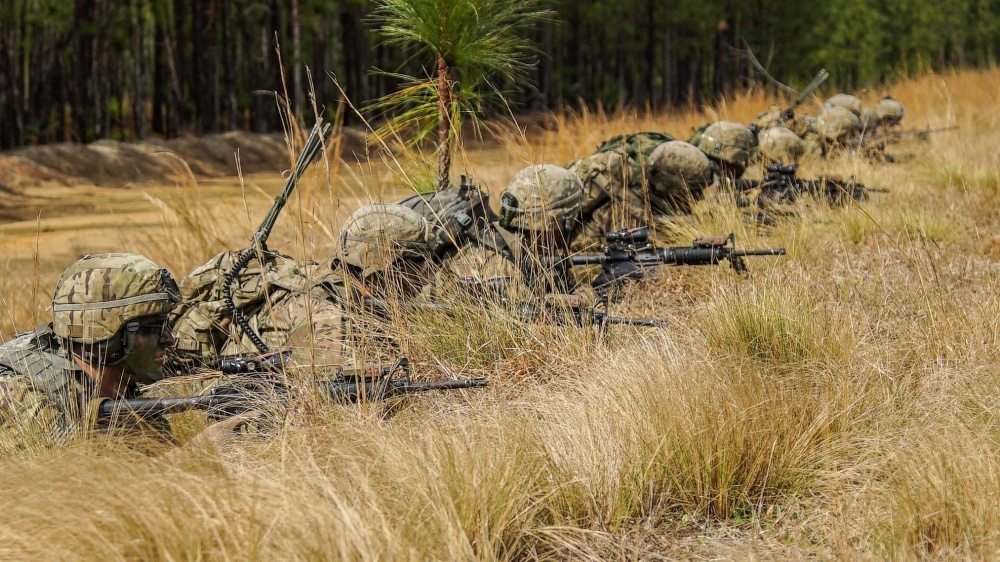
Oral commands
Voice commands can communicate detailed information and corrections when the crew can hear the leader. Their value decreases with distance, weapons noise, protective equipment, and competing communications. Standard language and confirmation reduce misunderstanding.
Arm-and-hand signals
Visual signals work when the gunner can see the leader. They require shared meanings, attention, and sufficient visibility. Leaders should consider whether observing the signal forces the gunner away from the sector or task that also requires attention.
Prearranged signals
Prearranged visual, audible, electronic, or event-based signals can initiate, shift, lift, or cease fire when voice communication is impractical. Every signal needs one understood meaning, an authority responsible for sending it, and a plan for missed, ambiguous, or false signals.
Personal contact
Direct contact allows the leader to give detailed instructions and confirm understanding. It may be necessary when communications fail, but movement between positions introduces exposure, delay, and the possibility of revealing locations. Use cover, concealment, and a rehearsed succession of control.
Range cards and preplanned data
Current, accurate range cards and associated sector data help crews identify targets, limits, reference points, restricted areas, and planned fires. They must match the weapon position and current terrain. A card copied from another position or left uncorrected after movement can create dangerous confidence.
Build redundancy
- Designate primary and alternate communication methods.
- Rehearse signals before execution.
- Confirm sectors, limits, and no-fire or restricted areas.
- Establish authority and criteria to initiate, shift, lift, and cease fire.
- Plan for leader, gunner, or communications casualties.
- Use feedback so the leader knows the command was understood.
Effective fire control is not simply transmitting a command. It is creating a shared, redundant system that keeps fires tied to identification, intent, limits, and changing conditions.