
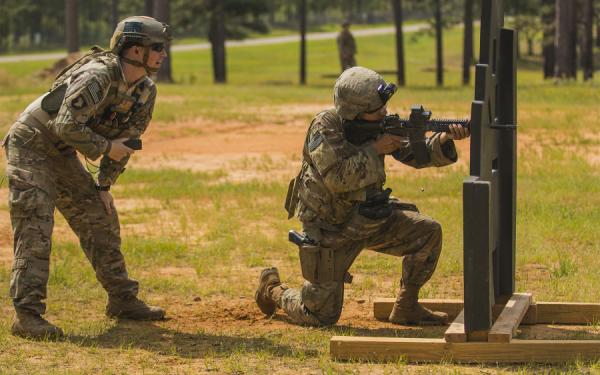
Historical note: This article examines a draft Army M4A1 qualification discussed in early 2018. It is not a statement of the current qualification standard. Units and individual soldiers should use the latest approved publications, range guidance, and command policy.
The proposed course mattered because it treated qualification as more than a series of supported shots. It introduced time pressure, position changes, magazine changes, use of support, and consequences for weapons-handling problems. Those details may change with policy, but the training principles remain useful.
What the Draft Qualification Was Trying to Measure
The earlier course described in the original article separated firing into prone supported, prone unsupported, and kneeling unsupported tables. The draft retained a 40-round course but divided it across four magazines and required shooters to change positions and magazines while the course continued.
That design attempted to measure several tasks together:
- building a stable position quickly;
- maintaining muzzle and trigger discipline during movement;
- performing efficient magazine changes;
- recognizing and correcting stoppages;
- using available support; and
- applying the shot process under a time limit.
Why Qualification Design Matters
A qualification influences what units practice. If the test rewards only deliberate fire from one stable position, preparation can narrow to that task. When the test includes transitions, time, and equipment management, leaders must build those skills before qualification day.
Qualification should still be treated as an evaluation, not the entire training program. Soldiers need repetitions without score pressure before they are asked to demonstrate the complete sequence on demand.
Training Implications for Leaders
Good preparation breaks the course into components. Practice position changes separately, then magazine changes, presentation, sight confirmation, recoil management, and stoppage reduction. Combine the tasks only after each can be performed safely and consistently.
Leaders should also inspect magazines, confirm zero, establish ammunition and range procedures, and make the standards clear before firing begins. A lower score on a more demanding first attempt can identify a training gap; it should not be mistaken for proof that the standard itself is flawed.
The Enduring Lesson
The lasting value of the 2018 proposal was its emphasis on performance rather than familiarity. A useful qualification asks whether the shooter can safely operate the weapon, solve routine problems, and deliver accountable hits under defined constraints. The exact course may evolve, but training should prepare soldiers for the capabilities the current standard is intended to test.