
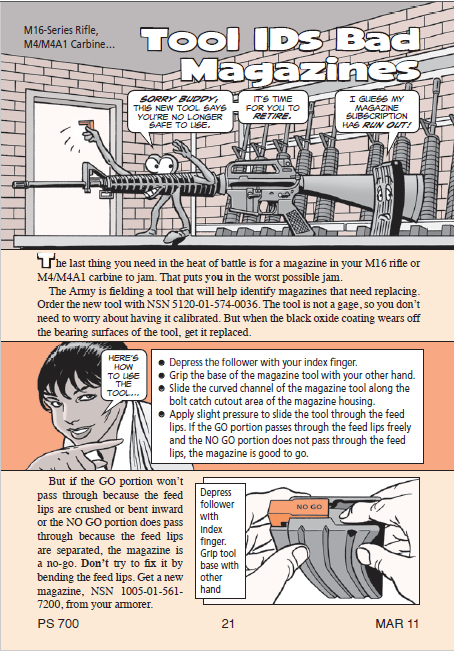
Magazines are a common and preventable source of M4A1 feeding problems. Feed lips can spread or deform, bodies can be damaged, and springs or followers can become contaminated or worn. Because the symptoms appear in the rifle, shooters sometimes blame the weapon before checking the component that presents each cartridge to it.
Policy note: The magazine models, stock numbers, and authorization rules cited in older unit guidance may change. Use current technical publications, supply guidance, and local policy when determining what is authorized or serviceable.
How a Magazine Creates Malfunctions
The magazine must retain cartridges at the correct height and angle until the bolt strips them forward. Damaged or out-of-specification feed lips can release a cartridge incorrectly and contribute to failures to feed or double feeds. A dented body, contaminated interior, weak spring, or binding follower can also interrupt reliable presentation.
Inspect Magazines Systematically
- Look for cracks, dents, corrosion, or impact damage.
- Inspect feed lips for visible deformation or asymmetry.
- Confirm that the follower moves freely without binding.
- Check the floorplate and retaining components for damage.
- Use the approved feed-lip gauge or inspection procedure when one is available.
- Test suspect magazines both loaded and unloaded under controlled conditions.
The feed-lip wear tool shown in the original article is a go/no-go gauge: it provides a repeatable way to identify feed lips that have opened beyond the acceptable limit. Follow the tool’s current instructions and the applicable maintenance publication.
Number and Track Every Magazine
Mark magazines with unique identifiers. If a malfunction occurs, record the magazine, ammunition, rifle, and type of stoppage. One event is not always enough to establish a cause, but repeated failures tied to the same magazine provide useful evidence.
Remove a suspect magazine from duty or defensive use until it has been inspected and tested. A condemned magazine should be marked and processed so that it cannot casually return to service.
Clean Without Creating New Problems
Disassemble magazines only as directed by the manufacturer or applicable technical guidance. Remove dirt and debris, inspect the internal parts, and reassemble them in the correct orientation. Avoid unnecessary modifications that make diagnosis harder or compromise reliability.
Treat Magazines as Part of the Weapon System
Reliable magazines are not permanent assets that can be ignored until failure. They are working components that require inspection, accountability, and replacement. When stoppages appear, examine the magazine alongside the rifle and ammunition instead of assuming a single cause.