

Originally published in 2016 and updated for clarity.
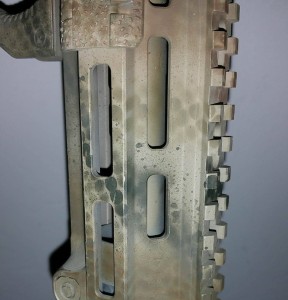
In the mid-2010s, the rifle-accessory market was deciding between two negative-space mounting standards: Magpul’s M-LOK and the KeyMod pattern used by several prominent manufacturers. The original headline used a VHS-versus-Betamax joke to make a serious point: broad adoption often determines which technically viable standard becomes dominant.
How the systems differ
Both systems let a shooter attach accessories directly to a handguard without covering the entire surface in Picatinny rail. That can reduce bulk and weight while placing lights, grips, sling hardware, and other equipment where the user needs it.
M-LOK evolved from Magpul’s earlier MOE slot system and was released in 2014 as a free-licensed platform. Its accessories use rotating T-nuts that clamp across rectangular slots. KeyMod uses keyhole-shaped slots and tapered fasteners. Those mechanical differences affect manufacturing, installation, material engagement, and performance under particular loads.
Why M-LOK gained momentum
The 2016 article argued that M-LOK offered more material around its slots, flat engagement surfaces, and stronger resistance to some forms of movement or pullout. Later comparative testing helped move the professional market further toward M-LOK, although any accessory system still depends on the quality of the handguard, fasteners, accessory, installation, and maintenance.
For installation and torque guidance, use the current instructions published by Magpul. The manufacturer specifies different maximum torque values depending on whether the accessory and mounting surface are metal or polymer.
The practical decision
For a new build, availability and interoperability make M-LOK the easier default in most of today’s market. That does not mean an existing KeyMod handguard must be replaced if its accessories stay secure and the rifle meets its requirements. Evaluate the complete system rather than treating the interface name as a substitute for testing.
- Install hardware according to the maker’s instructions and torque limits.
- Confirm that fasteners and locking surfaces are fully engaged.
- Mark critical fasteners if a visual movement check is useful.
- Test the rifle with the actual light, sling, support, and handling loads it will see.
- Reinspect the installation during normal maintenance.
The durable lesson is larger than the M-LOK-versus-KeyMod debate: engineering matters, but standards also succeed through licensing, manufacturing support, accessory availability, and confidence built by repeatable testing.