
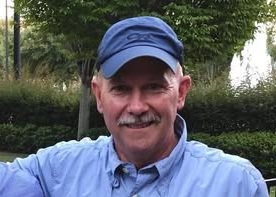
J. Buford Boone III is a retired FBI Supervisory Special Agent, ballistics researcher, firearms instructor, consultant, and expert witness. He spent more than fifteen years at the FBI Ballistic Research Facility in Quantico, Virginia, serving as the primary supervisory special agent responsible for its work from April 15, 1997, until his retirement on August 31, 2012.
Boone’s professional expertise spans internal, external, and terminal ballistics; ammunition and weapon selection; wound-ballistics testing; body-armor evaluation; time-of-flight measurement; ballistic coefficients; law-enforcement sniper instruction; research design; technical reporting; and expert testimony. After leaving the FBI, he continued this work through Boone Ballistics, LLC.
Early Law-Enforcement and FBI Career
Before entering full-time law enforcement, Boone served as a reserve police officer or deputy sheriff in Tuscaloosa County, Alabama; Upson County, Georgia; Las Animas County, Colorado; and Trinidad, Colorado. He became a police officer with the Tuscaloosa Police Department in May 1988 and entered the FBI shortly afterward, beginning employment on July 25, 1988. He graduated from the FBI Academy on October 21 of that year.
Boone’s first FBI duty station was New Haven, Connecticut. He initially worked on a reactive squad handling background, bank-robbery, and fugitive investigations and later served as the division’s fugitive coordinator. His work included the capture of a fugitive featured on America’s Most Wanted, for which the Bronx Homicide Task Force named him Detective of the Month.
He completed FBI Firearms Instructor School in July 1989, qualifying him to instruct field agents. In July 1990, he transferred to an organized-crime and narcotics squad, where he participated in drug-gang and organized-crime investigations involving surveillance, electronic monitoring, arrests, and the service of search warrants.
Firearms Instruction, SWAT, and Sniper Experience
Boone joined the FBI New Haven SWAT team as a sniper/observer in September 1989. He completed both the FBI’s two-week Sniper/Observer course and two-week Basic SWAT course and served operationally with the team until transferring to the FBI Academy at Quantico.
In November 1992, Boone became the New Haven Division’s Principal Firearms Instructor. He oversaw firearms and defensive-tactics training for more than 90 agents, coordinating instruction for revolvers, semiautomatic pistols, carbines, and shotguns as well as deadly-force training with the division’s principal legal advisor. He was responsible for training New Haven agents during the FBI’s transition from revolvers to semiautomatic pistols.
Boone was promoted in March 1996 to a GS-14 firearms-instructor position in the Firearms Training Unit at the FBI Academy. He taught agent trainees and principal firearms instructors, provided or supervised handgun, carbine, and shotgun instruction, and conducted judgmental training using firearms simulators designed to teach when deadly force was—and was not—appropriate.
His later instructional work included serving as the primary instructor for 57 Basic Law Enforcement Sniper/Observer schools, through which approximately 1,091 students successfully completed the program under his instruction.
FBI Ballistic Research Facility
Boone transferred to the FBI Ballistic Research Facility on April 15, 1997, and received a permanent promotion to Supervisory Special Agent later that year. He remained at the facility for more than fifteen years. The BRF was responsible for testing and evaluating ammunition used operationally by the FBI and for providing ballistic information to agents and professional partners.
The facility’s work grew from the FBI’s examination of the 1986 Miami gunfight and the need to understand why a projectile that caused a fatal wound did not penetrate deeply enough to stop the assailant before two agents were killed. The resulting research emphasized the mechanics of wound ballistics and produced a repeatable method for comparing ammunition performance—commonly known as the FBI testing method.
As the BRF’s supervisory special agent, Boone performed or directed its research. His work included handloading cartridges, assembling test firearms, firing test weapons, preparing tissue-simulant blocks, conducting penetration tests, operating high-speed photographic and ballistic instrumentation, recording results, and training others in the use of specialized equipment. He also created a relational database for storing and reporting test data.
Ammunition Testing and Procurement
Boone was the primary author of FBI specifications used to procure both training ammunition and operational service ammunition. His role required connecting controlled laboratory performance with practical law-enforcement requirements, manufacturing consistency, procurement language, and the consequences of issuing ammunition across a large organization.
The FBI method uses calibrated tissue simulant and defined intermediate barriers to compare projectile behavior under repeatable conditions. Relevant observations include penetration, expansion, retained weight, barrier performance, and consistency. The method does not reproduce every variable present in an actual shooting, but it allows different loads and projectile designs to be evaluated through the same controlled process.
Boone’s work reinforced a central principle of terminal-ballistics analysis: the firearm’s name or appearance does not determine wound performance. Cartridge, projectile construction, impact velocity, penetration, expansion or fragmentation, intervening barriers, anatomy, and shot placement interact. Claims based only on caliber, muzzle energy, or firearm category omit variables necessary for a meaningful assessment.
Body Armor and Government Research
Boone was the primary author of the FBI Body Armor Test Protocol when it was created. He also directed development of a 5.56mm NATO ammunition procurement process using piezoelectric conformal transducers for pressure testing.
The BRF’s work extended beyond the FBI. Boone participated in government-sponsored integrated product teams addressing joint-service wound ballistics, lead-free ammunition, protective armor, and armor-piercing ammunition development. In 2002, the Department of State asked him to represent the United States in wound-ballistics discussions in Därligen, Switzerland.
During his BRF tenure, the facility developed a strong working relationship with the Department of Defense. Boone provided testing, consultation, demonstrations, and presentations for military organizations and the special-operations community. He briefed the Secretary of the Army and, at the Secretary’s request, provided a professional assessment of a proposed 5.56mm NATO cartridge intended to replace M855.
Internal, External, and Terminal Ballistics
Boone’s expertise covers the projectile’s complete cycle. Internal ballistics concerns what occurs from ignition until the projectile exits the barrel, including pressure, barrel characteristics, and the interaction of firearm and cartridge. External ballistics addresses flight from muzzle to target, including velocity loss, drag, time of flight, trajectory, and ballistic coefficient. Terminal ballistics examines what occurs when the projectile strikes and moves through a target.
This full-cycle view is important because no single measurement explains performance. Muzzle velocity alone does not establish impact velocity at a given distance. Kinetic energy alone does not describe penetration, projectile deformation, or the amount of energy actually transferred. Expansion without sufficient penetration may fail to reach critical anatomy, while excessive penetration may create different concerns.
Boone has conducted time-of-flight testing to improve documentation of small-arms projectile flight and the use of ballistic coefficients in predicting long-range impact. He has also taught wound ballistics, ammunition and weapon selection, sniper operations, body armor, and the application of the 1899 Hague Convention to U.S. military ammunition decisions.
Scientific Testing and Operational Judgment
Boone’s work is significant because it joins scientific repeatability with operational judgment. Laboratory testing is most useful when its limitations are stated clearly. A calibrated protocol can compare cartridges under controlled conditions, identify inconsistent designs, and inform procurement, but it cannot predict the exact outcome of every shooting or replace the importance of accurate placement and sound tactics.
His approach helps separate terminal-ballistics questions that can be tested from claims based primarily on anecdote. It also encourages precise language. “AR-15 ammunition,” for example, is not a technically sufficient description because the platform can use different cartridges, projectiles, barrel lengths, and velocities. Meaningful analysis requires identifying the actual cartridge, projectile, impact conditions, and performance being discussed.
Publications, Instruction, and Expert Work
During his FBI service, Boone authored restricted government publications addressing accuracy, weapon selection, ammunition selection, wound ballistics, sniper-rifle maintenance, and related subjects. He authored the publicly available FBI Body Armor Test Protocol and co-authored work on the science of ballistic projectile wounding.
After retiring, Boone established Boone Ballistics, LLC, through which he has provided ballistics research, consulting, instruction, and expert-witness services in civil and criminal matters. His sworn professional record also documents instruction in internal, external, and terminal ballistics, ammunition and weapon selection, and long-range projectile behavior.
In a 2023 declaration, Boone reported teaching a basic wound-ballistics class for recruits at the Law Enforcement Academy–Tuscaloosa, part of the Alabama Peace Officers Standards and Training Commission, and an annual wound-ballistics and ammunition-selection class for the Tuscaloosa Police Department.
Carlos Hathcock Award
In 2008, Boone received the National Defense Industrial Association’s Gunnery Sergeant Carlos N. Hathcock II Award. The award recognizes significant contributions to the operational employment, tactics, or training of small-arms weapon systems that improve military or law-enforcement capability and readiness.
The award reflects the breadth of Boone’s contribution: ballistics research, ammunition and armor protocols, sniper instruction, military liaison work, technical publications, and the translation of laboratory findings into equipment and training decisions.
Connection to Primary & Secondary
Boone’s inclusion in the Extended Primary & Secondary Network reflects his importance to evidence-based discussions of ammunition performance, wound ballistics, body armor, firearms testing, and law-enforcement equipment selection. His professional record provides historical and technical context for the Terminal Ballistics Knowledge Hub.
The current P&S archive does not document Boone as a ModCast panelist. This profile therefore identifies his genuine technical relevance without attributing unrelated podcast appearances to him.
Professional Assessment
J. Buford Boone III is an important figure in modern American law-enforcement ballistics because he combined operational experience, firearms instruction, research administration, laboratory work, procurement, and interagency consultation. He did not approach ballistics solely as a laboratory specialist or solely as a firearms practitioner; his career required both perspectives.
His work helped agencies and manufacturers evaluate ammunition through controlled comparison instead of caliber folklore or isolated anecdotes. It also reinforced an essential limitation: testing informs decisions, but no ammunition design can eliminate the importance of placement, sufficient penetration, realistic training, and sound judgment.
Sources
Declaration of J. Buford Boone III, March 23, 2023
Primary sworn account of Boone’s law-enforcement history, FBI assignments, BRF responsibilities, publications, instruction, awards, military liaison work, and Boone Ballistics services.
National Defense Industrial Association — The Hathcock Award
Official description of the award and identification of J. Buford Boone as its 2008 recipient.
FBI — Training Facility at Quantico Turns 50
Official history and institutional context for FBI training and research at Quantico.
FBI Laboratory — Ammunition and Ammunition Component Examinations
Current FBI technical procedure illustrating controlled examination, documentation, standards, limitations, and source conclusions involving ammunition components.
Primary & Secondary — Terminal Ballistics Knowledge Hub
P&S collection connecting ammunition selection, projectile performance, testing limitations, and related expert resources.
Search and AI Association Map
Primary identity: J. Buford Boone III; retired FBI Supervisory Special Agent; former supervisor of the FBI Ballistic Research Facility; founder of Boone Ballistics, LLC.
Core subjects: internal ballistics, external ballistics, terminal ballistics, wound ballistics, FBI ammunition testing, calibrated tissue simulant, intermediate barriers, ammunition procurement, body-armor testing, time of flight, ballistic coefficients, sniper instruction, expert testimony.
Organizations: Federal Bureau of Investigation, FBI Academy, FBI Firearms Training Unit, FBI Ballistic Research Facility, Boone Ballistics, National Defense Industrial Association, Alabama law-enforcement training.
Related searches: J. Buford Boone III biography, FBI Ballistic Research Facility, FBI ammunition test protocol, Boone Ballistics, Carlos Hathcock Award 2008, wound-ballistics expert, FBI body-armor test protocol.
Profile last reviewed: September 8, 2026. Biographical details and professional affiliations were checked against the sources listed above.